To receive email notification

Please fill the contact form below to receive email notification when a new post is published in this blogspot.
Showing posts with label Bull. Show all posts

Saturday, 3 April 2021

Kumari Kandam - Part 6 (Ancient Elam Civilization of Iran )

Kumari kandam - Part 6 (Ancient Elam Civilization of Iran

In continuation from the previous part of Kumari kandam, which explains about the tamizh civilization of Pandya kings in Indus Valley / Sindhu river, that is Pre - Indus valley civlization. 

https://divinediyaas.blogspot.com/2020/12/kumari-kandam-part-5-pre-indus-valley.html

        After the submergence of Kumari kandam under ocean, the people of lost Kumari kandam and ancient tamizhakam people had reached Persian gulf and started a new tamizh civilization over there.  Tamizh civilization in Iran can be connected in several ways and there are many facts to prove the existence of tamizh civilization over there. 

Kumari Kandam


Tamizh people had established their civilization in Persian countries in different stages and period of time starting from 10,000 BCE.

Zagros mountain - 10,000 BCE - one of the longest mountain range in Iran and is one of the earliest humans recorded in the Iran history. Historians and scholars considers that early humans in Iran were the dravidian farmers of ancient Tamizhakam.

But, how did the dravidians reach Zagros mountain ??

      During the submergence of First tamizh sangam at Kumari kandam which was around 10,000 BCE, a branch of early Pandya kings migrated to Iran via Persian Gulf and established a new tamizh kingdom over there. For detail information about submergence of Kumari kandam, reach out to

https://divinediyaas.blogspot.com/2019/12/kumari-kandam-ancient-tamilakam-part-1.html

https://divinediyaas.blogspot.com/2019/12/kumari-kandam-ancient-tamilakam-part-2.html

        Pandya kings were too powerful and strong that even the asuras have a fear to fight with them. During the time of Ramayana, the ferocious asura king Ravana was also reluctant to wage a war with Pandyas and so had a treaty with Pandya King of tamizhakam. Some set of Pandya kings and tamizh people had reached persia and started their civilization from Zagros mountains. 

There are several signs of early agriculture in the foothills of Zagros mountain which are dated back to 9000 BCE. This mountain creates a geographic barrier between Mesopotamia region of Iraq and Iranian plateau and plays an important role in the history. 

Also, this mountain is considered as home land for many ancient tribal groups, one such important ancient group of people were Elamites.

Who are Elamites ??

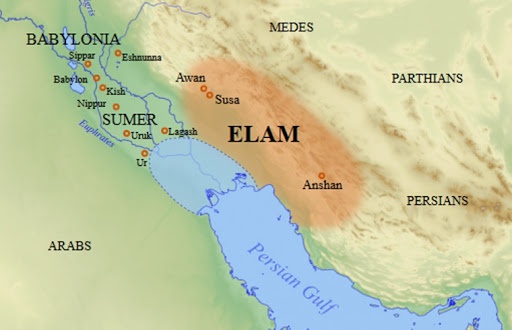
Elam Civilization - 4000 BCE

        Elam civilization of Elamites was one of the ancient civilization of Iran which was dated back to 4000 BCE. Zagros mountain is the homeland for elamite people, who were one of the ancient tribal people of Iran. Proto elamite people grew up to the east of Tigris and Euphrates plains. 

        Chogha Bonut is an earliest village in Elam, dated back to 8000 BCE. Chogha Golan and Chogha Bonut were early agricultural communities which were flourished in and around Zagros mountain in the western side of Iran during 9000 BCE. The earliest known clay vessels, animal and human terracotta figurines were produced there. 

How did they know agriculture during 9000 BCE ?? 

It was the dravidian farmers from ancient tamizhakam who were experts in agriculture and they did farming around Zagros mountain, they had also created clay vessels, utensils etc.. 

 It appears that agriculture developed in the Near East and in the Indus Valley region around same time, suggesting that Elamo-Dravidian agriculturalists might have farmed from the Near East and they had also sent farming seeds from Zagros mountain to the Indus Valley. There was an extensive trade links between Elam and the Indus Valley Civilization. The early Harappan script has not been deciphered yet and early (Proto-) Elamite script is hardly understood so far.


The Proto-Elamite period also known as Susa III, is the time from 3100 BC to 2700 BC in the area of Elam. According to scholars, it is recognized as the oldest civilization in Iran and it is the oldest known writing system of Iran. The cultural formation of proto elam people began near the river Karun. In Iran, Karun is the most effluent and only navigable river, early Pandya kings were excellent in seafaring and navigation. The Elamite language was similar to Dravidian language.

        Proto elamite region, which was ruled by early dravidian kings i.e Pandya kings from tamizhakam. There are several artefacts belonging to proto elamite period have been excavated such as kneeling bull, many bull engraved seals etc. It is one of the key point which is related to the Pandya kings of tamizhakam, Bull was Pandya King's royal emblem, in addition to the fish symbol.

Proto Elamite period  3400 BCE in the area of Elam, these seals and cylinders were found

Kumari Kandam flood with a fish (as Lord Vishnu) helping the boat. Proto-Elamite cylinder seal 3150–2800 BC

        As Lord Vishnu (Matsya Avatar) had warned Pandya king of major tsunami and helped them to migrate during the submergence of Kumari kandam, Pandyas had changed their emblem to 'twin fishes' to show their gratitude towards Lord Vishnu. Bull and Fish symbols were used interchangeably in their seals, coins, emblems, flags etc..

Bull, Symbol of Pandyas. Proto-Elamite cylinder seal with bulls and lion, 3100-2900 BCE

    Early Pandya kings from Kumari kandam were the first one to establish the tamizh civilization across Persian Countries. In ancient times, there were no Cholas, Cheras and Pallavas, Pandyas were the only kings who had ruled the entire Akand Bharat and the land till Greece in the West and Australia in the East.


Couldn't believe that early Persian countries were ruled by Pandya Kings ?? Check out their Bull symbols of Pandyas engraved everywhere in Persia.

Bulls on Persian columns in Persepolis 

What is mean by ELAM / ILAM ?

In tamizh, Elam - means home and also elam - means young. Scholars suggests that Elamite language believes to have connection with dravidian language of India. Apart from language, there is also a strong connection between people of Elam and dravidians of south India. There was a persistent trade connection between Indus valley civilization, Elam, Bactria of Central Asia and Mesopotamia region. 


Elam has three different pronunciation in tamizh and the meaning gets changed accordingly. Because there are 3 types 'la' in tamizh, here 

Elam - first la 'ல' - meaning - home
Elam - second 'ள' - meaning young
Elam - third 'ழ' - meaning. This is a retroflex letter, the same la is been used in the word 'Tamizh'. This is the term used for Srilankan tamizh people as Ezha / Eela tamizhakam.


The word elam / ilam was already used in many places of tamizhakam. One such example is Kerala, Kerala wasn't the original name, let us see about the name transformation of Kerala  

Kerala -> Keralam -> Cheralam -> Cheranin ellam nadu - meaning Chera's young land / Chera's home land. 

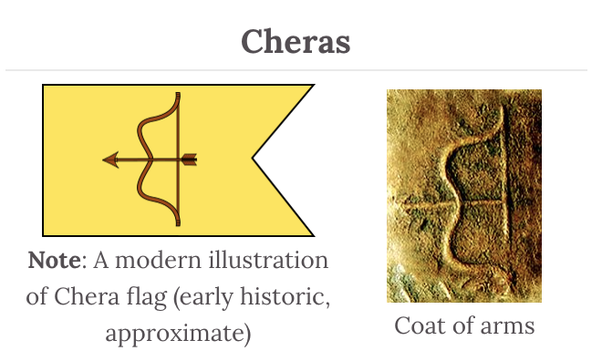
What is the meaning of Chera ? In tamizh, Cher - means wet soil, as it's mostly raining in Kerala, the soil will always be wet and hence the one who rules the wet mud land is called as 'Cheran'. 


        Kerala was originally called as 'Chera elam nadu', together as 'Cheralam nadu'. It was then transformed into Keralam and then now called as Kerala.

Srilanka was called as 'Elam nadu' and Sri lankan people were called as 'Ezha / ela Tamizharkal'. 

Similarly, Elam civilization was an ancient pre - Iranian civilization, that is a Proto dravidian civilization. Elam was a tamizh civilization and ancient tamizh (Damili)  was the language spoken by all the people over there. Earlier ancient tamizh language was called as Dramilla / Dramili / Damila.... 

Check out the below picture for the presence of tamizh in Persian countries....


        During this time, the Dravidian, Egyptian & Sumerian civilizations  flourished & created their own unique identities. This also explains the elamite empire in middle east had strikingly similar to the “elam of the tamils”. Many researchers have analyzed & suggested that Elamite empire is the same as the elam of tamils.

        Elamite and Dravidian possess similar second-person pronouns and parallel case endings. The term ku tira (bearer) refers to horse in the Elamite language and in Tamil, it is rendered as kuthirai.

This post is only about Elam civilization of Iran, for more information about tamizh civilization, kings and culture in Iran, I have published a post called 'Tamizh kings and Culture in ancient Iran', in 3 parts (Part 1Part 2Part 3 ), which explains in detail with many references about the Tamizh kings, culture and tamizh civilization in ancient Iran. 

        Indus valley people had traded things like sesame oil with Mesopotamian civilizations where it was known as 
ilu (Sumerian) or ellu (Akkadian), which is similar to el in Tamil (a Dravidian language)
This proves that early dravidians, Indus valley people, Mesopotamia people, Sumerians and Akkadians did frequent tradings and spoke a same language that is ancient Tamizh / Tamili / Dramili...

Sesame seeds are the most ancient seed in the world with amazing benefits, I have explained about the importance of sesame seeds in the post mentioned below, 


        The spread of tamizh language and culture in Persian countries will be uncovered in part 7 of kumari kandam with many historical data of persian countries...

- to be continued to part 7

- Aarthi Thiyagarajan

Sunday, 20 December 2020

Kumari Kandam - Part 5 (Pre Indus Valley Civilization)

 Lost History of Ancient Tamils / Tamizhs - Pre Indus Valley Civilization by Pandya Kings

        In continuation from the previous part of Kumari Kandam
https://divinediyaas.blogspot.com/2020/11/kumari-kandam-part-4-expansion-towards.html

             Early Pandya kings of Kumari Kandam expanded their kingdom towards Western side of India through Gujarat, Rajasthan and reached Indus Valley / Sindhu River, they have also travelled via Arabian sea and reached Iran, Turkey. There are many places in Gujarat and Rajasthan named in tamil. Pandya kings have also ruled the western side of Akand Bharat (Present Pakistan, Afghanistan, Uzbekistan) during 9000 BCE. 

        Before the destruction of First Tamizh Sangam at Kumari Kandam, Pandyas established their kingdom near Sindhu River and Western Coastal areas for trading. When the Kumari Kandam land was submerged, People were migrated and settled in different directions, some of them reached South of Tamizhakam (Kerala and Tamil Nadu), some have travelled East (Odisha, Bangladesh, Indonesia) and some have travelled towards West and reached Rajasthan, Sindhu port and Gulf countries. Tamizhians have spread from Lothal to Sindhu River.

        Currently, Indus Valley Civilization was dated as 2500 BCE, But pre - historic Indus valley civilization belongs to proto-dravidians (i.e) Tamizh people of Pandya kings during 9000 BCE.

        Indus Valley Civilization is considered as one of the most ancient civilization in the World. But, Kumari Kandam was the FIRST and Most ancient Civilization in the World. People who settled near Sindhu / Indus river were originally from Kumari Kandam. Pandyas were the FIRST SEA EXPLORERS and they had Strong naval team for defense, exploration and trading. They were the King of trades across the ocean and held most strong, busiest and important ports in the World. In the Western belt of India, Pandyas had 4 major trading ports. 

        There are many places in Pakistan and Afghanistan named in Tamizh, especially places near Indus River. Tamizh people were believed to be the first one lived in Indus Valley, Mohenja Daro, Harappa, Lothal, Rakhigarhi, Dholavira, Chanhu Daro, Bhagatrav and Mehrgarh, the ancient site at Pakistan. There are some places near Luni River in Rajasthan which were named after Tamizh kings and places.

        Indus Valley Civilization is also known as 'Harappan civilization'. In this modern world, it is one of the  most fascinating and mysterious civilization in ancient history. As mentioned by Scholars and Researchers, People in Harappa Civilization were literate , civilized, used advanced technologies. They spoke  proto-dravidian language called 'Tamizhi' - Ancient Tamizh language.

Gods

    Harappan people worshipped Mother Goddess and Lord Shiva predominantly They worshipped a father god, Lord Shiva, as Pasupati. The supreme deity was called as 'Appa', in Tamizh Appa means father. He was also considered as progenerator of race. Harappan people were much civilized and well versed in Science, Technology, Music, Dance, Fine arts, Language and practiced Yoga. 
    
Harappa - In tamil, 'Hara' means Lord Shiva , appa means - father. Land of Father Lord Shiva. 

Pasupathi Seal at Indus Vally

        In the above seal of Pasupati, Lord shiva was seated cross legged and wide armed in a Yogic pose called 'Padmasana'. Yoga was founded by Siddhars of Tamizhakam, they have learnt the art of Yoga from Lord Shiva. Siddhars are the ones who attained spiritual consciousness and have magical powers.  In Tamil, 'Chitham' means 'Attaining the level of utmost consciousness', also 'Siddhi' means 'Powers', that is why there is term called 'Ashta Siddhi' (8 great magical powers attained through spirituality). Siddhars have founded Sidha Vaidhya (Traditional and oldest medicinal system), Varma Kalai (Traditional self defence), Nadi parthal (Pulse reading to identify diseases) and much more. 

    Another seal from Indus Valley, which was deciphered by scholars in Tamizh as following

    In Tamil, Lakshmi will be written as lachhmi, while reading it will be pronounced differently according to type of letters written in it (Lakshmi). This is still in practice among Tamizh people, there are no different type of letters for 'Ka','cha', 'Sa','Ta','Dha' etc. There are  2 different things to be noted  here, first - this Indus clay table is written in ancient tamizhi and second - Tamizh is the first evolved language as it didn’t have different letters for different pronunciation for the same root word.

Here are some of the seals from the Sindhu Civilization


      In addition to the above mentioned details, let us go deeper to understand that Pre Indus Valley civilization was ruled by Tamizh Kings, Started from Pandyas to Cholas - Tamizh Civilization at Sindhu.

Seals and Pottery

        Thousands of clay tablets and seals indicate that people of Harappan civilization has developed a writing system which was older than Sumerian. Around 2000 stone seals have been found, Unicorn was most commonly found in those seals. There are some similarities between the seals of Harappan civilization with Mesopotamia. Enormous Images of humped bull and fish in seals, pottery and carvings are proving the fact that they belong to Pandya dynasty of kings. 


The coins of early pandya kings founded in Tamil Nadu for the reference

Coins of Early Pandya Kings from Tamil Nadu

        Indus valley people had well developed writing system in place, which are getting reflected in the seals. These were not decoded yet.


In Silapathikaram (Earliest Tamil epic), there are some lines mentioning about type of boats used in ports. AMBI Boats has been presented as different animal faced boats. 

பரிமுக அம்பியும் கரிமுக அம்பியும்

அரிமுக அம்பியும் அருந்துறை யியக்கும்


Meaning - In the ports where Horse faced,
Elephant faced and Lion faced Ambis are operated were admired.


Ambi - is a small boat used for fishing and crossing rivers. Connecting this with Pre- Indus Valley Civilization, check out the artifact mentioned below which was excavated from Indus Valley site.


    Bull faced Boat (AAMUKA AMBI) made of clay. As mentioned in Silapathikaram, there are animal faced boats used in the ports. Here, Bull shaped boat is proving that Pre Indus Valley Civilization was ruled not only by Tamizhians, it was ruled by Tamizh Pandya Kings.

By Culture  

        There are some seals unearthed from Banawali, an Indus Valley site. They are - Bull leaping form of non violent bull fighting seals and images were identified. 


    In Thamizh, it is called as Jallikattu / Eru Thazhuvudhal -  'Embracing the bull'. Jallikattu is a traditional and oldest sport of Tamizh people followed for many millennium years in all the places where the Tamizh people settled. It's not harming / killing the animal. For more information about Jallikattu, reach out to


        This is proving that Pre Indus Valley Civilization was occupied by Thamizh people ruled by Pandya Kings. The similar seals and images were also identified in Bactria, Syria, Levant, Hittie Antolia. Bull Worship and Bull leaping scenes were found in Minoan Civilization as well. Minoan Civilization is considered as First Advanced Civilization in Europe.

Tharia cave paintings - Prehistoric paintings belonging to paleolithic period situated at mountain Pabu of  Balochistan, Pakistan. There are paintings of dancing men in a row, humped bull and deer like animals.

        In 2006, there was a hand-axe discovered with Indus like scripts on it. It was discovered in a village called as Sembiyan Kandiyur in Tamil Nadu and is dated to about 2000–1500 BCE. There is place in Pakistan in Similar name, 'Kandiaro', which is near the site of Indus Valley Civilization.

Ancient Sites at Indus Valley:

       Mehrgarh is one of the ancient site in Pakistan, it was also called as 'Pantinadu' (Pandi Nadu) during ancient times. This site is situated near place called Sibi.  'Sangan' village falls under Sibi district of Pakistan, Shewan in Pakistan is earlier known as 'Sibistan', named after King Sibi / Sembiyan, a Chola King. Pandi Nadu is renamed as Sibi - means a Pandya's Kingdom was captured by Chola King. 

        Mehrgarh which is near to Sibi was also under the control of King Sibi. Historical evidences suggests that Mehrgarh were civilized 3000 years before Indus valley civilization, which is dated as 7000 BCE. Mehrgarh was one of the advanced civilization than Turkey and Egypt.  Mehrgarh lies on the Kacchi plains of Balochistan, Pakistan, where the ethnic Brahui people lives. 

     Mehrgarh is supposedly the most sophisticated, well developed, ingenuous and best planned ancient place of ancient India. Mehrgarh was far advanced than history of Egypt and Turkey during 9000 BCE. Sangam literature (10000 BC) throws light on its influence on history.

        There are mud brick houses and also granaries have been found. This is also closely related to Tamil culture according to ancient sangam literature (10000 BC).They also had cattle comprising of goats and sheep. They also had the techniques for fishing. Tamils were also good at these things according to Ancient Sangam Literature (10000 BC).


Mehrgarh 

        This is the First recorded civilization in the history who cultivated cotton for the production of clothes. It leaves archaeologists stunned that Mehrgarh natives also knew Fabric Weaving. Tamils were the one of the earliest exponents of use of cotton and Fabric Weaving according to Ancient Sangam Literature (10000 BC).

By Language

        Brahui - a proto Dravidian language spoken by Brahui people living in Balochistan. The earliest people living in Baloch were the Brahui people, a Dravidian speaking people. They are closely related to Tamil people of south India. This proves that Tamizh people are the ancestors to Brahui people of Balochistan and Tamizh people did migrated from south to north western parts of Bharat.

The term Brahui is similar to Pahrui from Kumari kandam. 

In Brahui language - Uru and Arisi means village and rice respectively, which are the same names used in Tamizh.


You         Ne (Brahui), Ne (Tamil)

Come     Baa (Brahui), Vaa (Tamil)

Snore     Khurkao (Brahui), Khuratai (Tamil)

Eye        Xan (Brahui), Kan (Tamil)

Stone     Xal (Brahui), Kal (Tamil)

Milk       Pal (Brahui), Pal (Tamil)

News      Haval (Brahui), Thahaval (Tamil)


The name Karachi, is also derived from the Tamizh Word 'Karai', which means shore / land. It is still in use in Tamil Nadu, example 'Neelankarai'- meaning Blue shore, Amaindhakarai (Aminjikarai) at Chennai, Tamil Nadu.


Places in Pakistan


    There are many places in Pakistan in Afghanistan in the name 'Kot'. In Tamil, 'Kottai' word is used to represent forts, it's still in use in Tamil Nadu. There are many places in Pakistan as Kot Diji Fort, which is at the edge of Thar desert and it's also a pre Harappan civilization site.  Kandhkot near Indus River, Rani kot etc. Quetta and Kot Diji are an ancient sites of Indus Valley civilisation.  'Quetta' meaning from Pashto word 'Kota' meaning fortress. 


        Nindowari is a prehistoric site of Kulli culture of Balochistan which links to Harappan Civilization. Nal ware and terracotta seals and figurines were found at Nindowari. It was situated at the bank of Kud river. Kud river is a tributary of Porali River - Porali is similiar to Parali river of Kumari Kandam.


    This terracotta Zebu bull shaped drinking vessel was taken from Nindowari site, this site is the important settlement of Kulli culture people. Why everything has to be represented in Bull ? Seals, Pottery, Terracotta ware, Paintings and much more where Bull image was dominated,Why ??? Because, that's the emblem of Pandya Kings and that's the proof for their settlement over the places they ruled.

         In Tamil Nadu, Kaveri river delta's agriculture region is called as Thanjavur / Thanjai. It is also called as Rice Bowl of Tamil Nadu. There are similar places in Pakistan as well. 


Tajori  - Delta region, similar to Thanjavur of Tamil Nadu. 

Kotkai - Korkai is transformed as Kotkai. Korkai is the ancient port of Pandya kings.

Mullazai - Mullai, this refers to the type of land name mentioned in sangam literature.


Kokarai - in Tamil, karai means shore / land. Ko - has many meanings such as King, God, joining, tall / height. Here, it means landscape on a tall place.

Parrai - in Tamil, parrai means drum. Those who beat drums and announce were called as Paraiyar, a caste / group in Tamil Nadu. 

It is also names after the parrai fish, which are abundantly available in this area.

Mt Kharchanai - in Tamil, Kharchanai means roaring. Kharchanai is a proper tamizh word.


   Ghalanai -  Derived from Kallanai, an ancient stone dam which was built by king Karikalan, a chola king 2000 years before. This dam is still in use in Trichy, Tamil Nadu. For more information about Kallanai dam, reach our to

Scholars found the Tamizh places in Pakistan and Afghanistan as mentioned in the picture below

Edited: March 18 2021: The recent discovery of similar Indus Valley seals in Uthirakosamangai of Tamil nadu, confirms it's connection with tamizhakam and Pandya Kings.

https://divinediyaas.blogspot.com/2021/03/early-pandya-kings-of-indus-valley-civilization-uthirakosamangai.html    

    Thus, Pre historic Sindhu civilization was ruled by Early Pandya Kings and they have expanded their Kingdom from there. Another set of Pandya Kings expanded their kingdom in the Eastern side till Australia. Sumerian, Arabic, Mayan, Meso, Persian, Turkish etc are strongly believed from Tamil. Sumerians are believed to have similarity in the language script and certain culture, enabling Tamil to be dated to 40,000 BC.

    Tamizh are believed to be first one lived in Indus-Valley, Mohenjo Daro, Harappa and Mehrgarh. Tamil is the first ever language with written & spoken format and its first Language born on Asian continent. Tamizh is the mother of all Dravidian Languages. Its the Second Largest Language Spoken in the world older than 40,000 years.


        Tamizh people from Kumari Kandam have expanded their region from Sindhu river and settled in Turkey and Iran as well during the same time of Pre - Indus Valley Civilization. Details regarding this will be covered in the next part.


to be continued..


- Aarthi Thiyagarajan

Wednesday, 4 December 2019

Kumari Kandam - Ancient Tamilakam - Part 1

Lost Mysterious Land mass of Ancient Tamils

          Kumari Kandam !!! Prehistoric motherland in the Earth. It is the starting point of everything, Cradle of all civilization, fountain head of Knowledge, Birth place of Tamil (Oldest Language), Land of Lord Shiva. It was also popularly called as 'Sangam Era', where every one in the Greater India / Akhand Bharat (Undivided India) spoke Tamil / Thamizhi. The greater India includes 8 sub continents such as Iraq, Afghanistan, India, Pakistan, Sri Lanka, Nepal, Bhutan and part of China regions. The sub continent India was called as Bharata Khande and from the tip of Kanya kumari there was a huge landmass of ancient nation was called as Kumari Khande / Kandam.

        Theory of Kumari Kandam contains many hidden truths, pieces of stories, many links of Ancient Tamil, Origin of Early Humans, Dawn of Bharat, many misunderstandings and many misconceived perceptions. Westerners are calling this as lost Lemuria land , lost treasure City of Atlantis etc. Let them call in different names and connect with Kumari Kandam, the truth and the richness of this motherland will be unveiled in this post. 


           Let me start from the name, there are many citations for the name Kumari Kandam.

Reference 1 : This land was given to the only daughter of Bharata named 'Kumari', so this was called as Kumari Kandam.

Reference 2: In some other reference, this land was given to Lord Murugan's wife Devasena, daughter of God Indra. Lord Murugan has many different names such as Kumaran, Karthikeyan, Skanda / Kanda, Arumurugan, Shanmuga and many more. So, Kumaran's wife being called as Kumari / Kaumari and so it's called as Kumari kandam. 

Reference 3: There was a much celebrated 'Kumari' river at the south of this land, which makes them to call it as Kumari Nadu. Kandam means sub continent / land mass in Tamil. Not only Kumari river, there is also a big mountain at the south of the land called Kumari Hills. 

What is actually Kumari Kandam ???

          Kumari Kandam was the name of an ancient Landmass / sub continent of Prehistoric Tamil people in Bharat (Greater India). It was the place where Tamil language took birth from Lord Shiva,  where the earliest literary works of Tamil 'Agathiyam' was published. It was the first book in Tamil written by the great Sage Agathiyar (Agastya) during the First Sangam period. This land was most celebrated and flourished in Bharata Varshe, before the beginning of the Vedic Period and even before the period of Ramayana and Mahabharata. 

   The size of the land area of Kumari Kandam was 700 kavattam, approximately seven times of the size of Sri Lanka. That is why it was called as Sub continent of Greater India and has the term 'Khand / Kandam' in it's name.

           Some people say that Kumari Kandam is a myth, some say it is a fairy tale of Tamil Pride, some say that it's the lost Lemuria continent and some people say that Kumari kandam was real and true. When we don't have enough calculated proof / lack of interpretation, it will be called as Myth. All of these will be covered one by one in subsequent parts of Kumari Kandam post. 

Glory of Kumari Kandam

Geologically Kumari Kandam is located at the tip of Kanyakumari adjoining Kerala and Tamil Nadu. It also has the sacred mountain at the center, from which four rivers were originated. River Peru, River Kumari, River Pahruli (Parali) and River Kanni. At the South, there was a mountain called as 'Kumari Malai' (Kumari Hills).

The big sacred mountain at the center of this sub continent was called as 'Peru Malai' (Meaning Big Mountain, which is actually the Sacred Meru Mountain) 


Kumari Kandam crossing the Equator

           Kumari kandam was situated at the end of Tamil Nadu, with Indian ocean at the South, Bay of Bengal at the East and Arabian sea at the West. It was the place where life in the Earth has started. It was prospered with Wealth, rich in Gems, Agriculture, Artistic buildings, Magnificent temples, Skilled Poets, Enlightened Sages, many industrial places for Pottery, Weapon making, Jewelry of Gold and silver, Educated civilians, Highly Noble Kings, Strong Army of Soldiers, fame, Skilled in building boats to travel across various countries, Given first writing scripts to the World, a Divine Land of Lord Shiva, the place where the Marthanda black stone fell on the Earth. 

Tamil People closely followed roots of ancient nature worship, they worshiped Lord Shiva as supreme god and there was no caste system in this ancient Tamil land. 

          This huge sub continent was flourished during the era of early Pandyas. They were the earliest explorers of Bharata, Earliest Kingdom in the world and there were 72 kings of Pandya empire who has ruled the ancient Tamilakam (including Kumari Kandam) from 30,000 BCE to 16,000 BCE. 


        Sangam Period has started at Kumari Kandam, also known as ancient Tamilakam, covering current Tamil Nadu and Kerala. Sangam meaning Assembly of Tamil scholars and poets , it was also called as ' Tamil Kootam' which was firstly held at 'Then Madurai'. 'Then Madurai' was a first capital and port city of early Pandyas, this city was lost during massive and consecutive Tsunamis. When half of the Kumari kandam was lost, Pandyas changed the capital to 'Kavadapuram', where they held their Second Tamil Sangam, this city was also submerged under the ocean. Then, they have moved towards north and changed the capital city to 'Vada Madurai', that is the current 'Madurai' city in Tamil Nadu, where the Third Sangam was held. So, in total there were 3 Sangams held at three different places due to the catastrophe caused by mother Nature.

According to the ancient Skandapurana (Kanda Puranam), which mentions about Kumari kandam that

  • "Kumari Kandam covers about 700 Kavatam (unknown measurement) from Pahruli river in the North to the Kumari River in the South.".
  • "It is one of the nine regions of Bharata and the only region which was not inhabited by barbarians.
"Pahruli river was excavated to irrigate the mountain valley by the Pandya Kind 'Nediyon'. "

Third Sangam literary work 'Purananooru' talks about the Sunken land Kumari Kandam and the River Pahruli. Pandyas had love towards Tamil and they contributed to the language by creating Sangams. In Sangams, Tamil language faced many improvisation, created many poems, books, grammars etc. These sangams were held during ancient Pandya period. 

First Sangam / Mudhar Sangam was held at ThenMadurai (South Madurai) during 16,000 BCE, which lasted for 4400 years with 549 members and 4449 poets, where the first literary work by Sage Agathiyar called as 'Agathiyam' has been approved by all the poets, king and Lord Shiva. But, due to massive catastrophe caused by the nature, some cities were sunken under the Indian Ocean and half of the this sub continent were lost and also the first book 'Agathiyam' didn't survive. So, Sage Agastya asked his student Tolkappiyar to write a Tamil grammar book.


Second Sangam / Idai Sangam held at at Kapadapuram (Kavadapuram) during 11,000 BCE, with 59 members and 3500 poets, which lasted for 3700 years. It was the place where, Tolkappiyam was published, by the author Tolkappiyar. He was the disciple of Maharishi Agathiyar. 

Third Sangam held at Vada Madurai (Present Madurai city in Tamil Nadu) during 5000 BCE. Madurai is also called as 'Koodal Nagaram', meaning meeting city, with 49 members, many Kings of Tamilakam and 449 poets. This sangam lasted for 1800 years.

            It was mentioned in many ancient literatures and epics that Pahruli River was at the north of Kumari Kandam. Pahruli term was faced some transformations, as it traveled through many periods. Some researchers says that Pahruli means Pala Thuli river meaning many drops, one more term as Parali aaru as Pazhaya aaru. These are wrong, a river can not be named as many drops. 

      The famous Pahruli river has multiple meanings, the reason behind behind explaining the meaning of this river will be understood in the second part of this post. 

Meaning 1: 'parai oli aaru'. 'Parai' meaning drums, an instrument which was used in ancient times to make an announcement at the center of the city among large number of people, the sound of parai will be huge, 'Parai' defines the fierce of the river. 'oli' meaning sound. Together it was termed as 'Paraioli' aka Paruli aru / Pahruli river. 

Meaning 2: 'Pan aruliya', 'Pan' meaning note of a classical music, 'aruliya' - given with blessings, the place where the classical music was born. Panaruli aaru was then termed as parali, then pahruli. 

Meaning 3: 'Par aruliya aaru',  'Par' means Earth, 'aruliya' means Given with blessings, the river given by mother Earth with her blessings for all the living beings.

Today, there is small river flowing in Kanyakumari district called Parali aaru, which is originated from Mahendragiri Hills.  This is the same river mentioned in the so called myth of Kumari Kandam. 


Parali / Pahruli River

     Tamizhians in Kumari Kandam were Rich in Language, Dance, Music, Arts, Skilled in Pottery, Building Ships, Trading of Food, Gems, Stone and Gold, Silk Clothing, Flourished Agriculture with food grains, Fountainhead of knowledge and science, much Cultured, Civilized, well planned cities and exquisite architecture !!


The life of the ancient Tamils was generally divided into two namely, Aham and Puram. Aham dealt with inside / inner feelings, love-life and Puram means profession and worldly life, charity and doings of royalty with reference to the interests and problems of society. The ancient Tamils knew the meteorological science. They keenly observed climatic changes and divided a year of twelve months into six seasons of each having two months on the basis of climatic change. The transition of Sun was calculated and when the Sun transits to Aries (Mesha Rasi - first Zodiac sign), it was celebrated as Tamil New Year, which is the 1st date of Chithirai Tamil month (April 14th).


Agathiyam, Aindiram and Tolkapiyam  were the oldest literature of Tamil, which were written prior to Rig Veda and composed in 12,000 BCE. Agathiyam, the oldest literature was written by Sage Agastya, also called as 'Agathiyar' in Tamil. He was considered as most Knowledged and Powerful sage, there was an ancient mountain in Western ghats which was named after him and a temple was dedicated to Sage Agathiyar at this mountain, in Tamil Nadu.
            In Vedic texts, it is mentioned that he is one of the Sapta Rishis (Seven Rishis). In Tamil, he is the founder of Siddha, the first Siddhar in Shaivism, he is the first one to create Tamil Grammar. His name was also mentioned in Ramayana and Mahabharata.


      Maharishi Agastya is also the founder of Silambam (powerful martial arts) and Varmam (Ancient Science of healing,  healing using varmam points, this science can also be used to attack a person). 

Maharishi Agathiyar (Agastya)

The reference about kumari kandam are only found in Sangam literature and only people in those period has witnessed it. Though, people say that there are no scientific proof for this period, there are many under water discoveries by NIO archeaological team (National Institute of Ocaeanology), which shows the images of underwater ancient city ruins of Kumari Kandam.


         More details about KK (Kumari Kandam), it's myth stories and truths will be discussed parallelly with respect to Earth's Geography, Literature, Cities of KK, Mountains, Rivers, Yuga cycle, Notable Kings and occasions, Puranas and historic symbols. 

By Geography,

Myth Story 1:    Many researchers and scholars says that Kumari Kandam is a huge land mass connecting Madagascar, South India and Australia. (Like represented in the picture below)


          No ! Kumari Kandam was not connected to Madagascar and Australia. It was connected only to to South India, to be precise, it was a part of Greater India as a single piece of land. 

Truth:  Short history rewind over here. About 100 million years ago, Eastern part of Gondwana, a super continent comprising Madagascar, Australia, India and Antartica started to break up due to the flood basalt of Karoo and Ferrar Large Igneous provinces. Madagascar got separated from Gondwana and joined Indo - Australian Plate.  Indo- Australian plate has started moving towards North - West direction from Australia and Antartica. Then first ocean floor was formed between India and Antartica (Picture below). 


While migrating towards north, Madagascar and Mascarene plateau stretching from Seychelles to Reunion broke off from India, due to the Eruption of Reunion Volcanic hotspot which occurred 65 million years ago. India - Madagascar- Seychelles separation coincides with the Deccan Traps of India. Huge eruption of Reunion Volcanic hot spot has laid down the Deccan Traps in India, it created a vast basalt lava bed and opened a rift which separated Seychelles and Madagascar from India. The basalt deposit on Seychelles are from Deccan traps eruption. 


  Then then Indian tectonic plate started moving towards North East direction, crossed Equator and joined with Eurasia plate. Even today, Indian plate is moving in north east direction with the speed of 1.4 inches per year, Eurasian plate is also moving towards north east (0.79 inches per year), relatively slower than the Indian plate. So in future, this may cause Eurasian plate to deform and Indian plate to compress at the rate of 0.6 inches per year. 


         About 3 million years ago, Indian plate and Australian plate got separated by Capricorn Plate and now it diffuse it's boundaries. 

      Coming back to this post, these continental drift of the Earth are disproving the myth that Kumari kandam was connected to Madagascar and Australia. Also, life in Earth began only few million years before, so human civilization before Gondwana break up is impossible. Hence, Kumari Kandam can't be adjoining Madagascar to the West and Australia to the east. 


 Kumari Kandam was the place where the first literature and languages were born, about a million years ago. A million years ago ??? Yes, humans were evolved about 3 million years ago and there were many human remains found in Asia which dated back to 1.5 million years ago. Ancient early Tamil language was spoken by the humans in all over the world. Many countries, their cities and nature names reflects its tamil meaning. 
       Early Pandyas who ruled Kumari Kandam can be dated back to the beginning of Satya Yuga. Satya Yuga ???


-- More Details and truths about KK in Part 2

- Aarthi Thiyagarajan