To receive email notification

Please fill the contact form below to receive email notification when a new post is published in this blogspot.
Showing posts with label Pandya kings. Show all posts

Wednesday, 7 July 2021

Oldest Lord Shiva temple in the World !!

Oldest Lord Shiva temple in the World!! - Uthirakosamangai temple

Uthirakosamangai temple in Tamil Nadu, is the oldest shiva temple in the world !!

    This temple existed even before the period of Ramayana - Treta yuga (second yuga in yuga cycle). Mandothari (Wife of Ravana) worshiped Lord Shiva here, before marrying Ravana. This temple is around 8000 years old, built by early Pandya kings of ancient Tamizhakam.

 Uthirakosamangai place is a religious capital center of Pandya kings and it is also mentioned in tamil sangam texts....


Uthirakosamangai is a tiny hamlet in Ramanathapuram district of Tamil nadu. It is a pre-historic place, and it is the most ancient place in the World, scholars refer this place using an idiom that 'Did the mud come first or the Mangai (Parvati devi)?' - meaning, uthirakosa mangai exist before the creation of mud in this world. In tamizh, the idiom is, 'Mann mundhiyo, mangai mundhiyo'?

Here Lord Shiva is called as 'Mangalanathar' and Parvathi devi as Mangaleshwari. This temple is also called as 'Mangalanathaswamy temple' and it is considered as the First shiva temple in the world. 

In a rare phenomenon, Lord shiva is worshiped here in three different forms.

1. As Shiva lingam - i.e Swayambu lingam, meaning naturally made lingam, not sculpted by anyone.

2. As Tree - Virutcham - Ber Tree also known as Ziziphus jujube or Indian date (tamil: இலந்தை மரம்). 

3. As Emerald Natarajar - anthropomorphic form of LordShiva, in a dance pose called  'Aananda Thandavam'.

 At the entrance of this temple, there is a majestic stone sculpted Yazhi (a dragon), depicted with a rolling stone ball inside its mouth. 

One can place their hand inside the mouth of yazhi and rotate the ball, but it can't be taken out. 

Look at the picture below for reference, yazhi's mouth is wide open. Yet, that stone ball doesn't come out and placed intact.

How did the early Indians miraculously carve such strong stones in ancient times ?  

What was the technology and the mathematics used to rotate the ball, but not to come out ?

They didn't keep the stone ball separately inside yazhi's mouth. They carved yazhi in such a way that it has a big movable in it's mouth and trickly chiseled to restrict its way out of yazhi's mouth. 

Both the sides of yazhi's mouth are open to easily insert our hands inside and rotate the ball. Check the picture below for reference.

        The front hall of this temple has many lingams made of Spatika - meaning Quartz crystal and they are anointed with cooked rice every afternoon. There are only few temples, which has spatika lingam. 

Note: This temple has lingam made of Quartz and Natarajar idol made of large rare emerald. Two precious stones were used to worship Lord Shiva.

Another unusual thing in this temple, is that there are two Nandis here. Usually in all Shiva temples, there will be only one Nandi, which will be facing Lord Shiva in the sanctum.

Here, in this temple, the smaller lingam is present in front of the main sanctum and another  bigger one is placed in the Praharam (outside sanctum) and it is called as Pradosha Nandi where special poojas are offered on Pradosham days.  

        This temple existed before the age of Ramayana. The age of the 'Ber Tree' / Indian date (tamil: இலந்தை மரம்) in this temple is calculated by archaeologists as 3300 years old (research conducted by the State government). 
        
            This place is believed to be the place, where Lord Shiva transferred the secrets of Vedas to goddess Parvati and explained the meaning of the Pranava Mantra OM to parvathi devi

Uthiram - means upadesam / teaching, 
kosam - means secrets, 
mangai - means girl, here it refers to Goddess Parvati. 

Hence, this place is called as Uthira Kosa Mangai


Largest Emerald Natarajar:

     In this temple, Lord Shiva is also worshiped as Natarajar and the idol is made up of most precious and rare large emerald (Maragatham). The emerald idol is about 6 feet tall (1.83 meter) and it is the Biggest emerald in the world. Mostly one can not easily find a emerald idol anywhere in the world. It is one of the rare and ancient emerald idol of lord Natarajar.

        It is one of master piece of early tamizh people. First known emerald was mined in Egypt in 1500 BCE, but this idol was carved much before that. 

One of the important property of Emerald is, it is susceptible to chipping and cracking. Also it can't withstand the vibrations and sounds from musical instruments such as Nadhaswaram and mathalamelam. So, how did the ancient tamizh people had carved Lord Natarajar statue from emerald without a single crack in it? 
What was the technology used to carve emerald during that time?

    It is also believed that the sculpture who carved the Natarajar, used mind sculpting technique to chisel this idol, i.e without touching the stone. 

         Usually there will be a vibration of bell sounds and drum sounds in the temple, so this idol will be always covered with sandalwood paste for the protection. On special days such as, during Mahashivratri the paste from the Natarajar idol will be removed, priests will perform Abhishekam rituals for the idol and during that time, the original green colour emerald Natarajar will be shown to the people.

Ravana and his wife Mandothari worshiped Lord Shiva here and also it is believed that their marriage was held in this temple in the presence of Lord Shiva.


Why Emerald Natarajar ???

        Because, emerald has a property to enhance intuitions. The soft and calming colour of emerald will allow one to relax and it is a medium to know the truth about Lord Natarajar. 

     Recently, potsherds with inscriptions similar to the Indus Valley scripts have been discovered in Uthirakosamangai. These findings of ancient potsherd in the place Uthirakosamangai, the oldest Lord Shiva temple of early Pandya Kings and the similar symbols of Indus Valley inscriptions in tamil nadu are connecting the dots that the ancient tamizhakam and Indus Valley civilization was once ruled by early Pandya Kings. Also, tamizh people have migrated from south to north and north western corridors, but not vice versa... 

To know more about these potsherd inscriptions in uthirakosamangai with Indus scripts, reach out to


To know more information about the early Pandya King's rule in Indus valley civilisation, reach out to,


The greatness and glory of early Pandya kings are consistently suppressed and the information about them are buried deeply.

 This blog site will uncover the glory of all the ancient Indian kings and will expose the true history of Ancient India, the knowledge and wealth of Indian people, bravery, strength and glory of early Indian Kings, power of sages and siddhars, the arts, architecture, culture, traditions, science, Inventions, hidden secrets and the advanced technologies used by them !!!

- Aarthi Thiyagarajan

Wednesday, 19 May 2021

Ancient Tamizh places in Pakistan and Afghanistan - Part 1 !!

Tamizh places in Pakistan and Afghanistan - Part 1 !!!

            Early Pandya kings of tamizhakam were the First rulers of Akand Bharat. The term Bharath was coined after them. Pandya kings had strong naval force, excellent sea explorers and expanded their kingdom to Greece in the West and Australia in the East. 

        Pandya kings had also ruled the North western regions of Akand Bharat, such as Pakistan, Afghanistan, Iran, Iraq, Turkey, Syria etc. In my previous posts, I have explained about Tamil civilization in Iran, Turkey, Syria. In this post, I will explain about the ancient tamil places in Pakistan and Afghanistan, that are not mentioned in the History of Akand Bharat


            There are many places in Pakistan and Afghanistan that were named in Tamizh, especially the places near the Sindhu / Indus River. Tamizh people were believed to be the first one to live near Indus Valley, Mohenja Daro, Harappa, Lothal, Rakhigarhi, Dholavira, Chanhu Daro, Bhagatrav and Mehrgarh. There are some places near Luni River in Rajasthan that were also named after Tamizh kings and places.


In this post, I will cover some of those ancient tamil places with appropriate references.

1. Quetta:

        There is a place in Pakistan called 'Quetta'. Quetta is derived from the tamil word 'Kotai', which means fortress. In ancient times, there was a big fort for King in that place and hence named that place as 'Raja Kotai'. The word Kotai is transformed to 'Kota' and then 'Quetta', a pashto word. 
       
             In TamilNadu, there are many places which were named using the word 'Kotai' and it's still in use.

Example:  Malai Kottai - means Rock fort, which is an ancient rock temple situated in Tiruchirapalli, Tamil Nadu.

        Likewise, there are many places in Pakistan which are named using this word  'Kota', such as 

1. Kot Diji Fort, which is at the edge of Thar desert and it's a pre Harappan civilization site.  
2. Kandhkot near Indus River, 
3. Rani kot etc
4. Kotai Kili

Quetta and Kot Diji are an ancient sites of Indus Valley civilisation. I have already published a post about Tamil civilization in Sindhu, that is Pre - Indus valley civilization. Reach out to the post below, for more information about tamils in Indus region,


2. Kotai Kili:

        Kotai Kili - this place is located near Tochi river in Pakistan, which is named in tamil. Kotai kili is a proper tamil word. Why these places has to be named in tamil, if there are no tamil civilization over there ??

In Tamil,

Kotai - means fort
Kili - means Parrot

        None of the history books and facts talks about Tamil civilization in Asian countries. But, this blog will reveal the list of regions ruled by kings of ancient Tamizhakam and Akand Bharath with proper references.. 


Agricultural places in Pakistan that are named in Tamil

         In Tamil Nadu, Kaveri river's delta region is called as Thanjavur / Thanjai. It is also called as Rice Bowl of Tamil Nadu. Tamil kings have named many places in Pakistan, in the same name (in tamil). 

Check the below picture for reference.....


In the above picture, 

3. Tajori: 
        
            Tajori - This name is derived from Thanjavur / Thanjai, rice bowl of TamilNadu. Tajori is situated in a delta region. Once upon a time, it was fertile land and flourished in agriculture. Like shown in the above picture, Thanjavur in Tamilnadu is also a Delta region and it's famous for Paddy farming. 

4. Kotkai: 

        Kotkai - is derived from Korkai. Korkai is an ancient and important port of Pandya kings. 

5. Mullazai:

         Mullazai - is derived from Mullai. Mullazai is also a group of tribal people in Pakistan, who resides in Balochistan province. 

How it is connected to Tamil ?

    Mullai - is a type of landscape mentioned in tamil sangam literature. Mullai - refers to forest regions landscape. Where is the forest in Pakistan ?

            Juniper forest is the Oldest forest of Pakistan and it's located in Balochistan province. Hence, as per Tamil sangam literature, the forest people of that region were called as Mullazai people and thus those tribal people were named after the landscape.
        
There are many such places in Pakistan which are named in Tamil. continue to read, to know more about the hidden history of Tamils....

6. Kokarai:

        Kokarai is a place in Pakistan. It is a proper tamil word. In Tamil,  it is spilt into , Ko + Karai

In Tamil, 
Ko - means King / God / tall / height. Here, it means landscape on a tall place.

Karai - means shore / land. 


7. Parrai:

    In Tamil, Parai - means drum. Those who beat drums and announce were called as Paraiyar, a caste / group in Tamil Nadu. 


        In the above picture, the instrument that the men are holding in their hands is called 'Parrai'.

    A type of fish which are abundantly available in this area is called as 'Parrai' fish.

8. Mehgarh:

        Mehgarh is one of the ancient site in Pakistan and it was also called as 'Pantinadu' (Pandi Nadu - meaning 'Pandya' country) during ancient times. This site is situated near place called Sibi.  

        A village called as 'Sangan' falls under Sibi district of Pakistan and Shewan place in Pakistan is earlier known as 'Sibistan'.

Sibistan - is named after Tamil King Sibi / Sembiyan. 


        King Sibi's full name is Sembiya Cholan, who have hailed from the solar race (Surya Vamsam) and also he had ruled North Western sides of Akand Bharat after defeating early Pandyas, who resided there. This has happened before the time period of Birth of Lord Rama (i.e) before the beginning of Treta Yuga. This proves that Pandyas had established their presence in Pakistan and Afghanistan before the arrival of King Sibi Chola Chakravati.
    
        Mehgarh which is near to Sibi was also under the control of King Sibi. Historical evidences suggests that Mehgarh were civilized 3000 years before the Indus valley civilization. Thus, Mehgarh is dated as 7000 BCE. Mehgarh was one of the far advanced civilization than history of Turkey and Egypt.  Mehgarh lies on the Kacchi plains of Balochistan, Pakistan, where the ethnic Brahui people lives. 

[Note: 

    Brahui tribe people are dravidian people who speak Brahui language which is a proto - dravidian language. It is none other than the early tamil language called as 'Tamili' / 'Damili'. 

    Tamil is the mother of all dravidian languages. There are many similarities between both the languages and does contain same meaing words in both the languages..]

     Mehrgarh is supposedly the most sophisticated, well developed, ingenuous and best planned ancient place of ancient India.

        There are mud brick houses and also granaries have been found. This is also closely related to Tamil culture according to ancient sangam literature (10000 BC).They also had cattle comprising of goats and sheep. They also had the techniques for fishing. Tamils were also good at these things according to Ancient Sangam Literature (10000 BC).


    The first use of cotton in the history of mankind has been found at Mehrgarh. It leaves archaeologists stunned that Mehrgarh natives also knew Fabric Weaving. Tamils were the one of the earliest exponents of use of cotton and Fabric Weaving.


What is the meaning of Karachi ?

 The root word of Karachi , 'Karai' is a tamil word - meaning sea shore. Many places in Tamilnadu is been named with 'Karai' as suffix. Example : Neelang Karai, Keela Karai etc....


Check Mt Kharchanai in the below picture, What is the meaning of Kharchanai ?

In Tamil, Kharchanai - means roaring. Kharchanai is a proper tamizh word.


What is Ghalanai that is circled in the above picture ?

    Truths behind Ghalanai and more tamil places in Pakistan and Afghanistan will be covered in next part...


- Aarthi Thiyagarajan


Friday, 7 May 2021

Paravars and Pandya kings of ancient Tamizhakam explained !!!

Paravars and Pandya kings of ancient Tamizhakam explained !!!


        In the history of tamizhs, there are many confusions between Paravar people and the early Pandya kings of ancient tamizhakam stating that Pandya kings were hailed from Paravars. 

No !! This is not true.....

 This post will clear the misunderstood association between Paravars and the Pandya kings and their the link between Sindh people in ancient Mohenjo-daro. Before going to Paravars, let us see about the history of Pandya kings.

     Early Pandya Kings were the first one to rule the ancient tamizhakam and Kumari kandam. They were the first strong kings, much knowledged, ruled vast landmass, excelled in seafaring, had wealthy ports, palaces, temples, precious metals, stones and were significantly rich. 


The country of Pandya kings were also called as 'Land of Lord Shiva' and that is why it is mentioned in Sivapuranam, while praising about Lord Siva that,

"Thillaiyul koothane, THEN PANDI NATANEA !!"
தில்லையுள் கூத்தனே! தென் பாண்டி நாட்டானே!

In tamizh, Then - means south, Pandi - means Pandya, Natanea - means King. Together, it means, the one who rules the southern pandyan king.

What is the meaning of Pandya ?

        In Tamizh, Pandaya (meaning ancient) word is -> transformed to Pandiya / Pandya. Pandyas (Pandayars - meaning ancient people)

    The early Pandyas were from solar race (Surya Vamsam). How did they belong to solar race ??

        The early Pandya king Satyavrata / Shraddhadeva manu from Kumari kandam was the son of Vivasvana (Sun / Surya), who saved the mankind from the great deluge with the help of Lord Vishnu's Matsya Avatar.  Pandya king Shraddhadeva is the current manu and the progenitor of humanity. Thus, as the son of Vivasvana / Surya, the early Pandyas were belonged to Solar race. 


        Pandyas were the first seafarers and explorers in the World, who established the first civilization in Kumari Kandam. Paandi is also a type of ferocious bull, which represents bravery, strength and masculinity. It was also a symbol of Pandya kings...

How did Pandya kings excelled in seafaring ?

    The inhabitants of Neytal region (sea shore areas) were known as parathavarnulaiyar and umanar whose occupations included fishing, coastal trade, pearl diving and salt manufacturing.
  • Parathavars  - were sailors and fishermen.
Parathavar (Bharathar) is an olden community in tamizhakam, who were ancient times coastal inhabitants, seafarers, maritime traders, who as well were known as ferocious soldiers

Paravar - meaning dwellers on sea coast


   Once upon a time , Paravars were very powerful people and they had much of their ascendancy over the other tribes due to their knowledge and their expertise in navigation. They also had a succession of kings among them, distinguished by the title of Adiyarasen, some of them resided at the city 'Uthira Kosamangai',  where a famous temple of Lord Shiva was built by early Pandya kings. Uthira kosamangai is an important place that connects Pandya kings and early Indus valley people. For more details about the link between Pandya's Uthira kosamangai and Indus valley civilisation, reach out to


        These paravars were experts in seafaring and helped Pandya kings to explore the seas and expanded their kingdom across Asia and Australia. So pandyas had made them as chieftains of the coastal regions and they were called as Paratha Pandiyar (பரத பாண்டியர்).


        Paravar were also mentioned in Sangam literatures and in many other tamizh literatures. In the later period of time, a group of paravars served as vassals for Pandya and Chola kings. The cave engravings of  300 BCE, was found in 2003, reinforce this view that the Paravars were the chieftains (Velirs) of the coastal region during this period and ruled as subordinates of the Pandyas. 

        The Pandyan emperors allowed the Paravars to manage and operate the pearl fisheries in tamizhakam as they were expert in it and also it's their ancestry skill. Pearl fishery is not an easy job, it needs one to have command in seamanship, one should understand the locations under sea and the knowledge to tend the oyster beds.

Thus Paravars were considered as minor chieftians by Pandya kings and Pandya kings did not hail from the Paravar caste !!!

Early Pandya kings had trusted paravars very much and had given them the major trading ports to rule. Paravars were also served as frontline warriors in seas while expanding Pandya's territory....

 The term paravar will come across in many of my future posts and that's why I have penned down this post separately...


Pandyas of Tamizhakam were also called as 'Thiraimel', in tamizh. 

Thirai - meaning sea 
Meel  - meaning returned. 

    Together, it means "the ones who were successfully returned to home land from the sea".  Pandyas were brilliant in seafaring and used sea turtles to find routes in seas, tamizh people were the first one to explore the sea successfully and they had spread their civilization across Asia till Australia. No wonder that ancient India was named after them as Bharathavars (Bharatham) or Bharath. When exploring across the world, their names were transformed such as Pandya, Pandion, Bharathavar, Pondi, Ponti etc...


    Early Pandya Kings were also called as 'Bha(pa)rathavar'. As there is only one 'pa' letter in tamizh, pronunciation of which will differ according to the words used such as 'pa', 'ba', 'bha'. (Parathavar, Barathar, Bharathavar). This is how the name Bharatham was coined due to the rule of Pandya kings in the Akand Bharat which extended up-to Greece in the West and Australia in the East. 
        
            As Lord Vishnu (as Matsya Avatar) had warned Pandya king of major tsunami and helped them to migrate during the submergence of Kumari kandam, Pandyas had changed their emblem to 'twin fishes' to show their gratitude towards Lord Vishnu. Though, Bull and Fish symbols were used interchangeably in their seals, coins, emblems, flags etc..

Not able to believe that Bharathavars as Pandyas ??

Here you go for the reference from tamil works...

1. From Purananooru
திண் திமில் பரதர் - (Thin Thimil Bharathar) 
Meaning: The Person(Bharathar) who sails strong boats

2. From Silapathikaram,
பெருங்கடல் பரதவர் - Perunkadal Parathavar / Bharathavar
Meaning: One who sails high in sea

Thus Pandya kings were called as 'Bharathar', as they sail high on seas, experts in navigation, successfully returned to their homeland and had spread across this continent.  

        Hence, one should not get confused between Bharathavar and Paravars.. Pandya kings were called as Bharathavars who belongs to Solar race and Paravars were vassals or minor kings under Pandya Kings....

        Korkai, the famous harbour town of Pandya kingdom was widely populated by paravars. In olden days paravars were engaged in trading with Greece, Rome, Egypt, China, Java, Burma and Ceylon. Korkai pearl was the most famous item exported from Tamizhakam.


        In the later period of time, there are few paravars who descended from the clan of Pandya kings and called themselves as 'Chandra kula Pandyas' / Moon race Pandyas.... 

        lanji Vel is one among the ancient velirs of the Yadu Kingdom. He ruled a territory called Ilanji, near Courtallam. He belongs to the clan of ancient Pandyas. In 2003, a cave engraving has been found revealing the facts about Ilanji Vel and his ancestry. From the inscription it says illanji king was son of great paravan.

Paravars were believers of Shaivisim (those who worship Lord Shiva). There were many knowledged paravar people, who were spiritually boosted as Shaivites. 

During the rule of Portuguese around 1530's, 20000 paravars were converted to Roman Catholicism by the saint Francis Xavier. Mass conversion of hindu people into Christianity happened during this time, those who opposed were suppressed and persecuted... 


    Throughout the Portuguese rule in India, many hindu priests were executed, temples and god idols were demolished.... But, this information are neither available in the Indian history books nor praises the glory of ancient Indian kings. We only know about the glory of Britishers and Mughals !!!

Link between Paravars and Indus valley people

        In my previous posts, I have mentioned that Indus valley and Pre Indus valley civilisation was ruled by Pandya kings. I have also given many references for the same, this post will also add more strength to the same point...

Mohenjo Daro - means 'Mound of Mohan people', a group of fishing folks on the bank of Indus river. These fishing folks are none other than paravars of tamizhakam (check below section for more details).

        Scholars are saying that Sindhu people hold their annual festival exactly right opposite to the site of Mohenjo daro and the locals might have started calling the site as ‘Mound of the Mohan People’. They have also stated that these people might have been the descendants of the Sailors of the Indus Valley Civilization.

How can it be said that Sailors of Indus valley were Paravars of tamizhakam?

The ancient tamizh work Tolkappiyam divides the people of Tamizhakam into 5 Sangam landscape divisions: 
  1. Kurinji (the hilly region)
  2. Mullai (the forest land)
  3. Paalai (desert region)
  4. Marutham (the cultivable land)
  5. Neithal (the sea-shore)
Each landscape are designated with different gods.
Neithal is described as a seashore landscape occupied by fishermen and sea traders, with the god of sea and rain, Varunan or Kadalon in tamil.

 "Varuna" means water which denotes the ocean in the Tamil language.
Paravars worshipped God Varunan. Similarly, the Sindh people in Indus valley region also worshiped God Varuna. Still, they worship god varuna in the form of Jhulelal. Jhulelal is considered as incarnation of Varuna, who saved the Sindh people from the persecution of Muslim rulers....

Jhulelal - Incarnation of Varuna in Sindh region

Why Sindh people and Paravar had worshiped the same God Varuna ?

        Not only the people in Sindh, the people in coastal areas or near sea shore worshiped God Varuna, as they all followed the principles of tamil sangam literature. Thus, it is proving that the fishermen who lived in the Indus region, who were also called as people of Mohan (Mohenjo-daro) were descendants of PARAVARS from ancient tamizhakam.....

Also, people in Sindh region and Tamizh people celebrate their new year on the same day. For more information about the link between Tamizh people and Indus valley civilization, reach out to,


        From the Paravars also arose a race of ancient Indian sailors who later carried Indian goods in boats to Africa and Arabia in the west and to Malaysia and China in the east. Most of the Paravars engaged themselves in pearl fishing and in collecting conch shells.

Why did the paravars go to Indus Valley ?

Paravars reached Indus valley region and started their living over there because of early Pandya kings. Early Pandya kings had expanded their territory and reached Sindh river through Arabian sea. As Paravars were the frontline warriors of Pandyas in seas, they had also reached Sindh river. Pandya kings had ruled the Sindh region for thousands of years and a group of paravars were also settled along with them as they served as minor kings for Pandyas in the coastal regions of Sindh. 

        So, the early people of Sindh spoke tamizh language. The Brahui language spoke by Brahui people in Pakistan is a ancient dravidian language, which is similar to tamil...

What is the meaning of the place Karachi in Pakistan ??? 

        The root word 'Karai' is derived from tamil. In tamil, Karai means - sea shore. There are many places in tamil nadu, which is named with the word 'Karai'. Examples: Neelan Karai, Keela Karai, Kodiya Karai etc... Tamizh civilization and culture existed in the western side till Greece. I have published several posts with many references regarding the same, tamil civilization in Iran Part 1Part 2Part 3 and in Turkey Part 1 , Turkey part 2.....


        All these evidences and interpretation makes clearer that the Paravars were the chiefs of the coastal region and they ruled their areas as subordinates of the Pandyas of the Sangam age. Also, Pandyas kings were not hailed from paravars. Early Pandya kings belongs to Solar race of Akand Bharat, THE TERM BHARATH WAS COINED AFTER PANDYA KINGS and they had also ruled Sindh region with paravars as minor chieftains during Indus valley civilization....


- Aarthi Thiyagarajan

Saturday, 3 April 2021

Kumari Kandam - Part 6 (Ancient Elam Civilization of Iran )

Kumari kandam - Part 6 (Ancient Elam Civilization of Iran

In continuation from the previous part of Kumari kandam, which explains about the tamizh civilization of Pandya kings in Indus Valley / Sindhu river, that is Pre - Indus valley civlization. 

https://divinediyaas.blogspot.com/2020/12/kumari-kandam-part-5-pre-indus-valley.html

        After the submergence of Kumari kandam under ocean, the people of lost Kumari kandam and ancient tamizhakam people had reached Persian gulf and started a new tamizh civilization over there.  Tamizh civilization in Iran can be connected in several ways and there are many facts to prove the existence of tamizh civilization over there. 

Kumari Kandam


Tamizh people had established their civilization in Persian countries in different stages and period of time starting from 10,000 BCE.

Zagros mountain - 10,000 BCE - one of the longest mountain range in Iran and is one of the earliest humans recorded in the Iran history. Historians and scholars considers that early humans in Iran were the dravidian farmers of ancient Tamizhakam.

But, how did the dravidians reach Zagros mountain ??

      During the submergence of First tamizh sangam at Kumari kandam which was around 10,000 BCE, a branch of early Pandya kings migrated to Iran via Persian Gulf and established a new tamizh kingdom over there. For detail information about submergence of Kumari kandam, reach out to

https://divinediyaas.blogspot.com/2019/12/kumari-kandam-ancient-tamilakam-part-1.html

https://divinediyaas.blogspot.com/2019/12/kumari-kandam-ancient-tamilakam-part-2.html

        Pandya kings were too powerful and strong that even the asuras have a fear to fight with them. During the time of Ramayana, the ferocious asura king Ravana was also reluctant to wage a war with Pandyas and so had a treaty with Pandya King of tamizhakam. Some set of Pandya kings and tamizh people had reached persia and started their civilization from Zagros mountains. 

There are several signs of early agriculture in the foothills of Zagros mountain which are dated back to 9000 BCE. This mountain creates a geographic barrier between Mesopotamia region of Iraq and Iranian plateau and plays an important role in the history. 

Also, this mountain is considered as home land for many ancient tribal groups, one such important ancient group of people were Elamites.

Who are Elamites ??

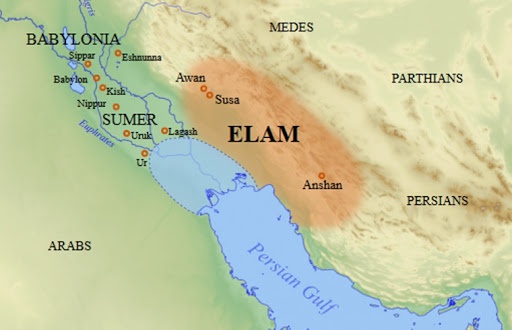
Elam Civilization - 4000 BCE

        Elam civilization of Elamites was one of the ancient civilization of Iran which was dated back to 4000 BCE. Zagros mountain is the homeland for elamite people, who were one of the ancient tribal people of Iran. Proto elamite people grew up to the east of Tigris and Euphrates plains. 

        Chogha Bonut is an earliest village in Elam, dated back to 8000 BCE. Chogha Golan and Chogha Bonut were early agricultural communities which were flourished in and around Zagros mountain in the western side of Iran during 9000 BCE. The earliest known clay vessels, animal and human terracotta figurines were produced there. 

How did they know agriculture during 9000 BCE ?? 

It was the dravidian farmers from ancient tamizhakam who were experts in agriculture and they did farming around Zagros mountain, they had also created clay vessels, utensils etc.. 

 It appears that agriculture developed in the Near East and in the Indus Valley region around same time, suggesting that Elamo-Dravidian agriculturalists might have farmed from the Near East and they had also sent farming seeds from Zagros mountain to the Indus Valley. There was an extensive trade links between Elam and the Indus Valley Civilization. The early Harappan script has not been deciphered yet and early (Proto-) Elamite script is hardly understood so far.


The Proto-Elamite period also known as Susa III, is the time from 3100 BC to 2700 BC in the area of Elam. According to scholars, it is recognized as the oldest civilization in Iran and it is the oldest known writing system of Iran. The cultural formation of proto elam people began near the river Karun. In Iran, Karun is the most effluent and only navigable river, early Pandya kings were excellent in seafaring and navigation. The Elamite language was similar to Dravidian language.

        Proto elamite region, which was ruled by early dravidian kings i.e Pandya kings from tamizhakam. There are several artefacts belonging to proto elamite period have been excavated such as kneeling bull, many bull engraved seals etc. It is one of the key point which is related to the Pandya kings of tamizhakam, Bull was Pandya King's royal emblem, in addition to the fish symbol.

Proto Elamite period  3400 BCE in the area of Elam, these seals and cylinders were found

Kumari Kandam flood with a fish (as Lord Vishnu) helping the boat. Proto-Elamite cylinder seal 3150–2800 BC

        As Lord Vishnu (Matsya Avatar) had warned Pandya king of major tsunami and helped them to migrate during the submergence of Kumari kandam, Pandyas had changed their emblem to 'twin fishes' to show their gratitude towards Lord Vishnu. Bull and Fish symbols were used interchangeably in their seals, coins, emblems, flags etc..

Bull, Symbol of Pandyas. Proto-Elamite cylinder seal with bulls and lion, 3100-2900 BCE

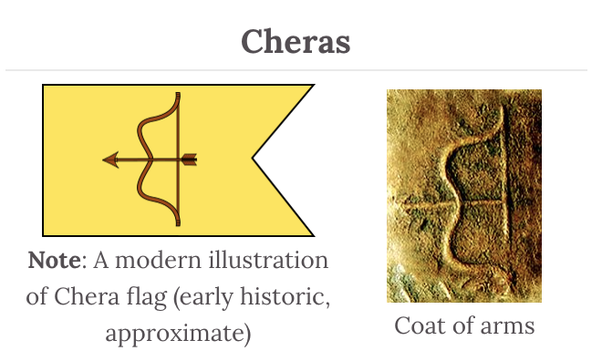
    Early Pandya kings from Kumari kandam were the first one to establish the tamizh civilization across Persian Countries. In ancient times, there were no Cholas, Cheras and Pallavas, Pandyas were the only kings who had ruled the entire Akand Bharat and the land till Greece in the West and Australia in the East.


Couldn't believe that early Persian countries were ruled by Pandya Kings ?? Check out their Bull symbols of Pandyas engraved everywhere in Persia.

Bulls on Persian columns in Persepolis 

What is mean by ELAM / ILAM ?

In tamizh, Elam - means home and also elam - means young. Scholars suggests that Elamite language believes to have connection with dravidian language of India. Apart from language, there is also a strong connection between people of Elam and dravidians of south India. There was a persistent trade connection between Indus valley civilization, Elam, Bactria of Central Asia and Mesopotamia region. 


Elam has three different pronunciation in tamizh and the meaning gets changed accordingly. Because there are 3 types 'la' in tamizh, here 

Elam - first la 'ல' - meaning - home
Elam - second 'ள' - meaning young
Elam - third 'ழ' - meaning. This is a retroflex letter, the same la is been used in the word 'Tamizh'. This is the term used for Srilankan tamizh people as Ezha / Eela tamizhakam.


The word elam / ilam was already used in many places of tamizhakam. One such example is Kerala, Kerala wasn't the original name, let us see about the name transformation of Kerala  

Kerala -> Keralam -> Cheralam -> Cheranin ellam nadu - meaning Chera's young land / Chera's home land. 

What is the meaning of Chera ? In tamizh, Cher - means wet soil, as it's mostly raining in Kerala, the soil will always be wet and hence the one who rules the wet mud land is called as 'Cheran'. 


        Kerala was originally called as 'Chera elam nadu', together as 'Cheralam nadu'. It was then transformed into Keralam and then now called as Kerala.

Srilanka was called as 'Elam nadu' and Sri lankan people were called as 'Ezha / ela Tamizharkal'. 

Similarly, Elam civilization was an ancient pre - Iranian civilization, that is a Proto dravidian civilization. Elam was a tamizh civilization and ancient tamizh (Damili)  was the language spoken by all the people over there. Earlier ancient tamizh language was called as Dramilla / Dramili / Damila.... 

Check out the below picture for the presence of tamizh in Persian countries....


        During this time, the Dravidian, Egyptian & Sumerian civilizations  flourished & created their own unique identities. This also explains the elamite empire in middle east had strikingly similar to the “elam of the tamils”. Many researchers have analyzed & suggested that Elamite empire is the same as the elam of tamils.

        Elamite and Dravidian possess similar second-person pronouns and parallel case endings. The term ku tira (bearer) refers to horse in the Elamite language and in Tamil, it is rendered as kuthirai.

This post is only about Elam civilization of Iran, for more information about tamizh civilization, kings and culture in Iran, I have published a post called 'Tamizh kings and Culture in ancient Iran', in 3 parts (Part 1Part 2Part 3 ), which explains in detail with many references about the Tamizh kings, culture and tamizh civilization in ancient Iran. 

        Indus valley people had traded things like sesame oil with Mesopotamian civilizations where it was known as 
ilu (Sumerian) or ellu (Akkadian), which is similar to el in Tamil (a Dravidian language)
This proves that early dravidians, Indus valley people, Mesopotamia people, Sumerians and Akkadians did frequent tradings and spoke a same language that is ancient Tamizh / Tamili / Dramili...

Sesame seeds are the most ancient seed in the world with amazing benefits, I have explained about the importance of sesame seeds in the post mentioned below, 


        The spread of tamizh language and culture in Persian countries will be uncovered in part 7 of kumari kandam with many historical data of persian countries...

- to be continued to part 7

- Aarthi Thiyagarajan