To receive email notification

Please fill the contact form below to receive email notification when a new post is published in this blogspot.
Showing posts with label Uthirakosamangai. Show all posts

Wednesday, 7 July 2021

Oldest Lord Shiva temple in the World !!

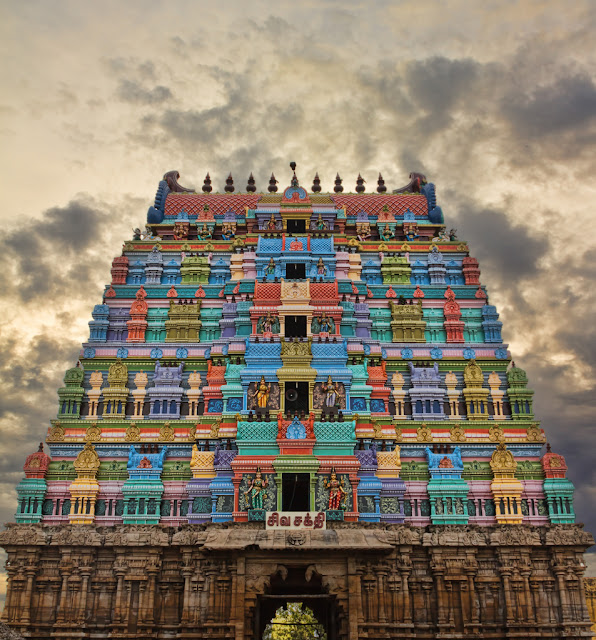
Oldest Lord Shiva temple in the World!! - Uthirakosamangai temple

Uthirakosamangai temple in Tamil Nadu, is the oldest shiva temple in the world !!

    This temple existed even before the period of Ramayana - Treta yuga (second yuga in yuga cycle). Mandothari (Wife of Ravana) worshiped Lord Shiva here, before marrying Ravana. This temple is around 8000 years old, built by early Pandya kings of ancient Tamizhakam.

 Uthirakosamangai place is a religious capital center of Pandya kings and it is also mentioned in tamil sangam texts....


Uthirakosamangai is a tiny hamlet in Ramanathapuram district of Tamil nadu. It is a pre-historic place, and it is the most ancient place in the World, scholars refer this place using an idiom that 'Did the mud come first or the Mangai (Parvati devi)?' - meaning, uthirakosa mangai exist before the creation of mud in this world. In tamizh, the idiom is, 'Mann mundhiyo, mangai mundhiyo'?

Here Lord Shiva is called as 'Mangalanathar' and Parvathi devi as Mangaleshwari. This temple is also called as 'Mangalanathaswamy temple' and it is considered as the First shiva temple in the world. 

In a rare phenomenon, Lord shiva is worshiped here in three different forms.

1. As Shiva lingam - i.e Swayambu lingam, meaning naturally made lingam, not sculpted by anyone.

2. As Tree - Virutcham - Ber Tree also known as Ziziphus jujube or Indian date (tamil: இலந்தை மரம்). 

3. As Emerald Natarajar - anthropomorphic form of LordShiva, in a dance pose called  'Aananda Thandavam'.

 At the entrance of this temple, there is a majestic stone sculpted Yazhi (a dragon), depicted with a rolling stone ball inside its mouth. 

One can place their hand inside the mouth of yazhi and rotate the ball, but it can't be taken out. 

Look at the picture below for reference, yazhi's mouth is wide open. Yet, that stone ball doesn't come out and placed intact.

How did the early Indians miraculously carve such strong stones in ancient times ?  

What was the technology and the mathematics used to rotate the ball, but not to come out ?

They didn't keep the stone ball separately inside yazhi's mouth. They carved yazhi in such a way that it has a big movable in it's mouth and trickly chiseled to restrict its way out of yazhi's mouth. 

Both the sides of yazhi's mouth are open to easily insert our hands inside and rotate the ball. Check the picture below for reference.

        The front hall of this temple has many lingams made of Spatika - meaning Quartz crystal and they are anointed with cooked rice every afternoon. There are only few temples, which has spatika lingam. 

Note: This temple has lingam made of Quartz and Natarajar idol made of large rare emerald. Two precious stones were used to worship Lord Shiva.

Another unusual thing in this temple, is that there are two Nandis here. Usually in all Shiva temples, there will be only one Nandi, which will be facing Lord Shiva in the sanctum.

Here, in this temple, the smaller lingam is present in front of the main sanctum and another  bigger one is placed in the Praharam (outside sanctum) and it is called as Pradosha Nandi where special poojas are offered on Pradosham days.  

        This temple existed before the age of Ramayana. The age of the 'Ber Tree' / Indian date (tamil: இலந்தை மரம்) in this temple is calculated by archaeologists as 3300 years old (research conducted by the State government). 
        
            This place is believed to be the place, where Lord Shiva transferred the secrets of Vedas to goddess Parvati and explained the meaning of the Pranava Mantra OM to parvathi devi

Uthiram - means upadesam / teaching, 
kosam - means secrets, 
mangai - means girl, here it refers to Goddess Parvati. 

Hence, this place is called as Uthira Kosa Mangai


Largest Emerald Natarajar:

     In this temple, Lord Shiva is also worshiped as Natarajar and the idol is made up of most precious and rare large emerald (Maragatham). The emerald idol is about 6 feet tall (1.83 meter) and it is the Biggest emerald in the world. Mostly one can not easily find a emerald idol anywhere in the world. It is one of the rare and ancient emerald idol of lord Natarajar.

        It is one of master piece of early tamizh people. First known emerald was mined in Egypt in 1500 BCE, but this idol was carved much before that. 

One of the important property of Emerald is, it is susceptible to chipping and cracking. Also it can't withstand the vibrations and sounds from musical instruments such as Nadhaswaram and mathalamelam. So, how did the ancient tamizh people had carved Lord Natarajar statue from emerald without a single crack in it? 
What was the technology used to carve emerald during that time?

    It is also believed that the sculpture who carved the Natarajar, used mind sculpting technique to chisel this idol, i.e without touching the stone. 

         Usually there will be a vibration of bell sounds and drum sounds in the temple, so this idol will be always covered with sandalwood paste for the protection. On special days such as, during Mahashivratri the paste from the Natarajar idol will be removed, priests will perform Abhishekam rituals for the idol and during that time, the original green colour emerald Natarajar will be shown to the people.

Ravana and his wife Mandothari worshiped Lord Shiva here and also it is believed that their marriage was held in this temple in the presence of Lord Shiva.


Why Emerald Natarajar ???

        Because, emerald has a property to enhance intuitions. The soft and calming colour of emerald will allow one to relax and it is a medium to know the truth about Lord Natarajar. 

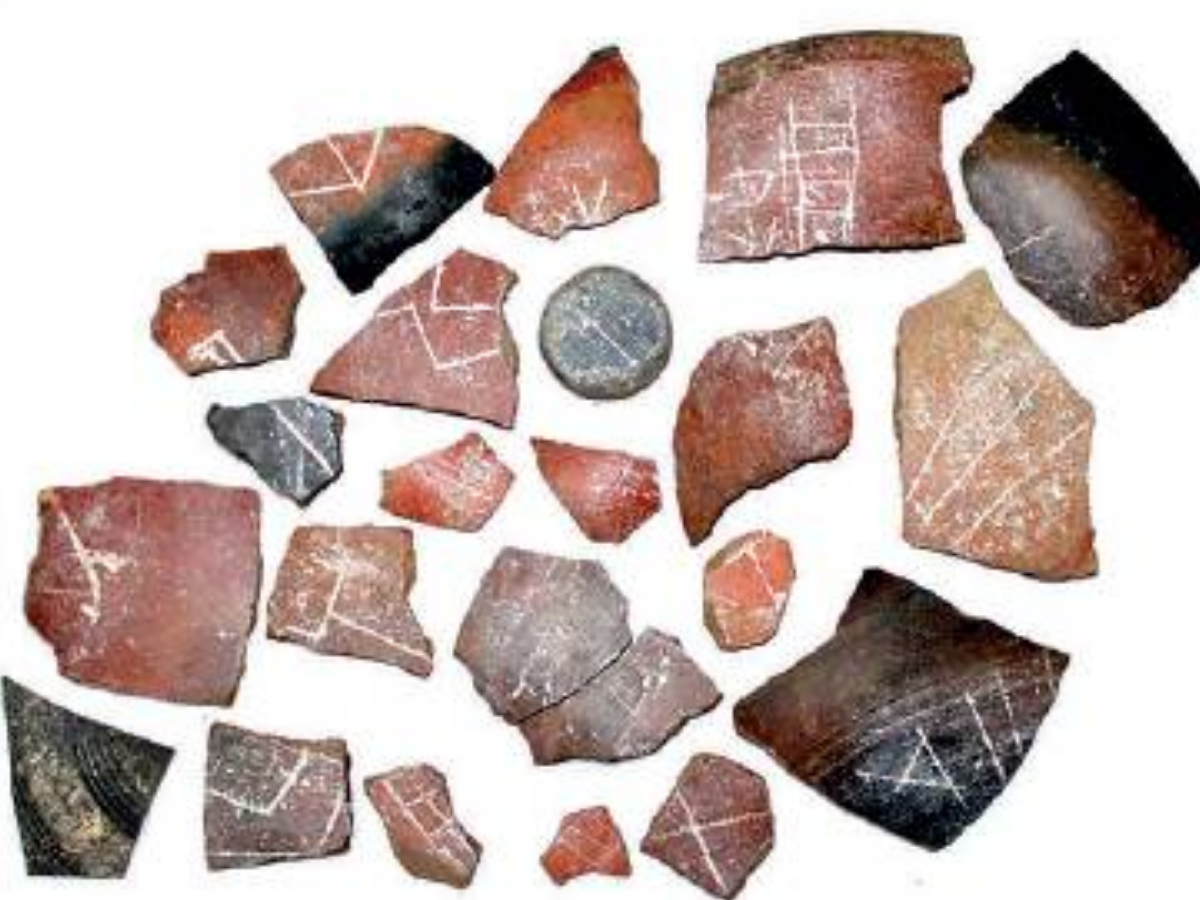
     Recently, potsherds with inscriptions similar to the Indus Valley scripts have been discovered in Uthirakosamangai. These findings of ancient potsherd in the place Uthirakosamangai, the oldest Lord Shiva temple of early Pandya Kings and the similar symbols of Indus Valley inscriptions in tamil nadu are connecting the dots that the ancient tamizhakam and Indus Valley civilization was once ruled by early Pandya Kings. Also, tamizh people have migrated from south to north and north western corridors, but not vice versa... 

To know more about these potsherd inscriptions in uthirakosamangai with Indus scripts, reach out to


To know more information about the early Pandya King's rule in Indus valley civilisation, reach out to,


The greatness and glory of early Pandya kings are consistently suppressed and the information about them are buried deeply.

 This blog site will uncover the glory of all the ancient Indian kings and will expose the true history of Ancient India, the knowledge and wealth of Indian people, bravery, strength and glory of early Indian Kings, power of sages and siddhars, the arts, architecture, culture, traditions, science, Inventions, hidden secrets and the advanced technologies used by them !!!

- Aarthi Thiyagarajan

Thursday, 18 March 2021

Another important discovery which proves Indus Valley civilization of Pandya kings !!

Another important discovery which proves the role (rule) of Early Pandya kings in Indus Valley civilization !!

     Recent findings in Mariyapuram and Uthirakosamangai in Ramanathapuram district of Tamil Nadu are revealing another strong connection between Indus Valley civilization and ancient Tamizhakam. A government school teacher K Muniasamy, has discovered remnants of pottery near villages in Uthirakosamangai (Tamil nadu) with inscriptions similar to those excavated from the Indus Valley civilization region.

Uthirakosamangai

The teacher along with his students Aruldoss and Vishal have discovered several sherds of pottery near a tank in Mariyapuram’s excavation site and 20 of these potsherds contained ancient inscriptions. The red and black potsherds have  some symbols engraved on it which is similar to those used by the Indus Valley people to depict numbers.


Potsherds with inscriptions similar to the Indus Valley scripts have been discovered in Uthirakosamangai in Ramanathapuram.


    Over the years, they had identified interesting artefacts including a microlithic tool, rouletted ware, black and red potsherds, iron ore, iron slag, hopscotches, terracotta stands, perforated potsherds, a spout of a terracotta kettle, lids, and even a broken piece of deer horn. This archaeological mound is spread over about 20 acres.


        Out of the 20 potsherds, 15 are black and red potsherds and five are red potsherds having signs similar to the numbers ‘125’, ‘137’, ‘365’ of the Indus Valley inscriptions. 


The number ‘125’ also looked like the letter ‘tha’ in Tamil Brahmi script, t

he number ‘365’ looked like a trident with a spot and 

 ‘137’ looked like a multiplication symbol.

        A similar script was also found in Keeladi where the seventh phase of excavation is in underway. 


Where is this Keeladi and Uthirakosamangai ? How it is related to Pandya Kings of sangam age ?


Keeladi is situated near Madurai, it is a famous archeological place which is unearthing several evidences for Vaigai civilization of ancient tamizhakam. Madurai was the capital of Pandya kings during third tamizh sangam, which is several thousand years before around 2000 BCE.


Uthirakosamangai is a tiny hamlet known for the oldest temple of Lord Shiva, who is also called as Mangalanatha Swamy. It is one of the pre historic place in Ramanathapuram district, tamil nadu. This land is the most ancient place such that scholars refer this place using an idiom that 'Whether the land comes first or mangai (Goddess Parvati) comes first ?'. In tamizh, the idiom is, 'Mann mundhiyo, mangai mundhiyo '.


Both the places Uthirakosamangai and Keeladi were once ruled Pandya kings, where Madurai was served as a place for Tamizh sangam and Uthirakosamangai served as religious place.

        Uthirakosamangai is the place where Siva transferred the secrets of Vedas to Parvati. 
Uthiram - means upadesam / teaching, 
kosam - means secrets, 
mangai - means girl, here it refers to Goddess Parvati. 

        Hence this place is known as Uthira Kosa Mangai. This Shiva temple was built by Pandya kings and it is one their important religious places during sangam era. 


Uthirakosamangai
Uthirakosamangai temple

        This temple is a much older structure as it exists today. The temple houses a rare ancient 6 ft (1.8 m) tall maragatha Nataraja idol carved out of emerald. It is one of master piece of early tamizh people. First known emerald were mined in Egypt in 1500 BCE, but this idol was carved much before that. 

        One of the important property of Emerald is, it is susceptible to chipping and cracking. So, how did the ancient tamizh people had carved Lord Natarajar statue out of it without a single crack ? What was the technology used to carve during that time?

 In temple, usually there will be a vibration of bell sounds and drums sound, so this idol will be always covered with sandalwood paste for the protection. On special days such as, during Mahashivratri the paste from the Natarajar idol will be removed, priests will perform Abhishekam rituals for the idol and the original green colour emerald Natarajar will be shown to the people.

emerald natarajar
Emerald Natarajar

Why Emerald Natarajar ???

        Because, emerald has a property to enhance intuitions. The soft and calming colour of emerald will allow one to relax and it is a medium to know the truth about Lord Natarajar. 

To know more about Lord Natarajar and significance of his cosmic dance, reach out to

        The Mangalanathaswamy Temple at Thiru Uthirakosamangai is considered the Kasi of the south. The ‘sthala virutcham’ (temple tree) in the temple is about 3,300 years old and this was proved in a research conducted by the State government. This proves that this place and temple us atleast 3500 years old, but actually it belongs to much earlier time i.e during second tamizh sangam period.

3500 years old tree


       Coming back to the topic, the entire tamizhakam was once ruled by Pandya kings, tamizh was spoken by all the people of Bharat, Pandyas had explored many places in the World. Sindhu river and its civilization is one of them. In my previous posts of Kumari kandam,  have explained about Indus valley civilization by culture, by language, by places and given many references such as meaning of 'Harappa', decoded seals, usage of fish and bull symbols, unique boats etc which proves that Pre Indus valley Civilization and Indus valley Civilization was survived by early Pandya Kings and tamizh people. 

    Reach out the post below, for more information about the Pre Indus Valley civilization and Pandya Kings. 


          Thamizhakam, especially southern regions were called as 'Then pandi nadu', meaning Southern Pandya's state.  Uthirakosamangai was one of the religious center of Pandya kings, which is very near to their ancient important trading port 'Kabadapuram' / 'Korkai', which was flourished during the period of second tamizh sangam. It was famous for rich pearls and the king was called as 'Kapada Pandya' !

Utrakosamangai

        Scholars have deciphered some of the Indus valley seals. One such seal had mentioned about kings name as 'Koodal Mannan' , ' Ko'. In tamizh, Madurai is called as 'koodal Nagaram' and the Pandya king who ruled Madurai is also known as koodal Mannan. 

    Koodal - means union / confluence of rivers , Mannan - means king. There is also a place called 'Kudal' in Pakistan, which is near Indus river. Hence, as I have mentioned in my previous posts, it's again and again proving that Indus valley region was ruled by tamizh Pandya kings !!

        Findings of ancient potsherd in Uthirakosamangai, historic Lord Shiva temple built by Pandya Kings, the major trading port near by, the rule of Pandya kings of Sangam era and the similar symbols of Indus Valley inscriptions in tamil nadu are the connecting dots. It is proved that ancient tamizhakam and Indus Valley civilization was once ruled by early Pandya Kings. Also, tamizh people have migrated from south to north and north western corridors, but not vice versa... 

Tamizh people were not descendants of Indus valley people. Truth is, Indus valley people were the descendants of tamizh people !! Tamizh civilization had spread across the world with prosperity and cultural enrichment !!


- Aarthi Thiyagarajan