Oldest and Lethal Martial Science of Ancient Tamizhagam
The World's First martial arts was evolved from ancient, rich and First civilized land called 'Tamizhagam' / 'Kumari Kandam'. It was the cradle of all civilization and fountainhead of Knowledge, Science, Medicine, Martial arts, 64 form of Kalas (Arts) and much more.
It is the time to expose the suppressed and hidden truths of Tamizhagam - The land of Tamizh people, their masterminds, Valour, Skills, Discoveries, Beauty, 64 arts, Heritage, Festivals, Sports, Science and Technology, Astronomy, Literature, Adventures and their Accomplishments.
This Lethal martial arts was called as 'Adi Murai'. In Tamil, 'Adi' means 'To hit', 'Murai' means 'Method', together it means 'Laws / Methods of Hitting' . It is the oldest martial arts and it has laid foundation for various other types of martial arts and fighting techniques in the world. More than a martial arts, it was called as Martial / Combat science.

Adi Murai is also called as Varma Murai, Adi Murai is the mother of all Martial arts in the world and the most famed Kalaripayattu is not an exception to this. From this ADIMURAI, many martial arts were evolved in the Eastern and Western side of the World.
When the mighty Pandya Kings ruled the Rich and fertile land ' Kumari Kandam', they were excelled in Martial arts and Science as well. There were many secrets and techniques in this martial arts, which were not to be taught to all the students. Some of the fighting techniques and Sootchamas (Strategies) were kept as a secret with particular Master / Siddhar families alone. Most of the times, these secret techniques were practiced in a remote isolated and open place, which can't be seen by any person or covered by any media and this is the reason for the less information about ADIMURAI and it's skilled fighting photos. These fighting techniques can paralyses the opponent, can make him unconscious and even KILL the opponent with an ease.
Where ever the Pandya and Chola kings ruled the world, they have introduced basic fighting styles of ADIMURAI to the local people and it's now called in different names across the globe.
Varma Adi is a part of ADIMURAI was also taught in different names across countries. It is the most dangerous martial arts which deals with strikes at the vital pressure points of the body. It can even Kill the opponent effortlessly and hence it is not taught to all the learners of the martial arts.
ADIMURAI was first evolved for the purpose of self defense from enemies, thieves and wild animals. In Tamil, it was called as 'Tharkappu kalaigal', meaning 'The art of self defense'.


Lord Shiva taught the techniques of Adi Murai and Varma kalai to his son Lord Murugan and Maha rishi Agathiyar has learnt this martial arts from Lord Murugan. Adi Murai is the basic to learn Varma Kalai and Varma Kalai was primarily used as a part of Siddha medicine to heal the body.
Agathiyar was considered as 'The First Siddhar', 'Father of Siddha Medicine' , the great sage Maharishi 'Agathiyar' introduced this Martial arts called 'Adi Murai', 'Varma Kalai' and 'Silambam' to the World. The first and basic text about these Varma Kalai and ADIMURAI was complied in manuscripts by Agathiyar at Pothigai Mountai, the place where he lived. Pothigai Mountain is very difficult and dangerous to climb, there are no roads or proper paths over there. At the base of this mountain, there is a dedicated temple for Maharishi Agathiyar. Even today, people will go that mountain base and worship Sage Agathiyar, to get his blessings.
Siddhars were most knowledgeable Yogi's / Sages who have magical, supernatural and spiritual powers. They served as Doctors, Saints, Alchemists, Physicians, Founded Varma Kalai (Self defense), 'Naadi Parthal' (Pulse reading) etc. In Tamil, 'Chitham' means 'Attaining the level of utmost consciousness', also 'Siddhi' means 'Powers', that is why there is term called 'Ashta Siddhi' (8 great magical powers attained through spirituality)

Adi Murai is a violent and effective combat science that was introduced by 18 Siddhars in Tamil Nadu, Agathiyar was considered as Chief Siddhar who learnt this technique from Lord Murugan.
It was originated from the lost ancient sub continent called 'Kumari kandam'. It is the effective combat science of defending and protecting themselves

Adi Murai was also called as Varma Adi murai in Tamil Nadu, it was also called as 'Tekkan Kalari' in the Southern Kerala and it was practiced in Trivandrum, Kochi and Kollam areas.
ADIMURAI has several levels and sub levels of learning to become an 'Aasan' (Teacher). In order to become a teacher, both Physical and Mental fitness, Fighting Skills and their flexibility will be tested. Due to the vulnerability of this art, teachers will select few students from the training to teach this lethal martial art.
The reference of this Adimurai and Silambam was also mentioned in Sangam literatures which dated back to 18th century BCE and Sage Agathiyar has taught this science to his disciples.

Also, Adimurai is the basic and first step to learn Varma Kalai. Varma Kalai is a traditional and knowledged art of Tamizhs, which was also introduced by Sage Agathiyar before the beginning of Vedic times. Varma / Marma is known as vital pressure points in the human body, it is a branch of Siddha Medicine. In Tamil, 'Marma' means secret, it was called as secret point of our body.
Maharishi Agathiyar has carefully complied many methods, techniques and secrets about Varma Kalai. There were around 1400 Varma manuscripts complied by Agathiyar, in Tamil manuscripts was called as 'Olai Suvadi'. Initially it was used only as medicinal purpose, to heal the body. Later, it was taught as a martial arts only to selected few students as was very dangerous and can be misused effortlessly. There were many Siddha medicinal manuscripts found in southern parts of Tamil Nadu, some are being analysed and some of which were kept as secret. Aasans (Teachers) will be experts in 108 arts of Varma Kalai.
Agathiyar has mentioned about the several attacking methods such as effectiveness of the attack differs with respect to the movement of the moon, or a person can die after the attack of 3 or 6 months and much more. Agathiyar's Adi Murai, Silambam and Varma Kalai was patronized by the Early Pandya Kings and then it was spreaded and celebrated by the following Tamizh Kings.
Adi murai was the base for Kalaripayattu. Elements of Adi murai can also be found in Kerala's Martial arts 'Kalaripayattu'.

Many people claim that 'Kalaripayattu' was the World's oldest martial arts. Absolutely not true !!. Kalaripayattu was first introduced during first century AD, where as Adi Murai was practiced even before the beginning of Vedic period. It was in practice during 12000 BCE.
It is said the Kalaripayattu was taught by Lord Parasurama, the sixth avatar of Lord Vishnu. Note that he is the sixth avatar of Lord Vishnu, but Adimurai and Varma kalai was taught by Sage Agathiyar from Lord Murugan before the great deluge of Kumari Kandam and even before the occurrence of First avatar of Lord Vishnu, that is Matsya avatar. So, which one is the oldest, First avatar or Sixth Avatar ? From the ADIMURAI martial science, Kalaripayattu was born, not the vice versa.

Kalaripayattu means school of fight in Malayalam. The word 'Kalari' was never appeared in any of the Sanskrit texts, but it was found in Purananooru, a Sangam Tamizh literary work in Puram section which describes about the battlefield.
In Tamil, Kalari means Battlefield, this term is still used commonly by Tamizh people. The root word for Kalari is a Tamil word 'Kalam', which means field, 'Por Kalam' 'Por' - meaning War, 'Kalam' - meaning field.
Also, in Kalaripayattu the primary focus is for the Sword and Knife type of fighting. But, it is just one of the weaponary arts in Ayudha Murai section of Adi Murai martial arts.
The Truth is that the Tamizh martial arts ADI MURAI was adopted by Raja of Travancore, to train his armies. This is how, Adi Murai was taught in some of the Kalaris of South Kerala which was called as Southern Kalari / Thekkan Kalari. In Tamil, Thekku is colloquial term to refer Southern direction.
Adi Murai is practiced in Open space, it also teaches about the techniques to fight against multiple armed and unarmed opponents at the same time.

In Adi murai, there is an unarmed combat technique called Adi thadi. No weapons will be used in this technique. The Practitioners should defeat the opponent either by using their legs or hands. Armed combats will be taught after they excel in the unarmed combat lessons. (Detailed ADIMURAI techniques will be penned as separate post). There is another technique called 'Santor Murai', which is special fighting techniques for highly proficient people.
Silambam
Silambam is a weapon based martial arts of ancient Tamizhagam. Sage Agastya has compiled texts about Adi murai and Silamabam on palm leaves. These martial arts are about 10,000 years old. It has traveled several places across this planet with different names such as Bokator (Cambodia), Angampora (Sri Lanka), Muay Thai (Thailand) etc.
 Silambam practise
The primary weapon of Silambam is lengthy bamboo stick, which was multi purposely used like in defending against dacoits, thieves and from Wild animals etc. Later it was developed into battlefield art in Sangam period using sharp weapons like Deer Horns , bladed weapons, sharp sticks, Vallari, Kattari, Maru, Aruvaal etc. More details about Silambam will be covered in separate post.

Now, it is used as combat sport in addition to the another ancient combat sport called Malyudham.

It is practiced in Srilanka as Angampora


In Tamil and Sinhalese, Angam means part of the body and 'Pora' means fight.
It is called as Muay Boran and Muay Thai in Thailand.

It is also practiced as Bokator in Cambodia.

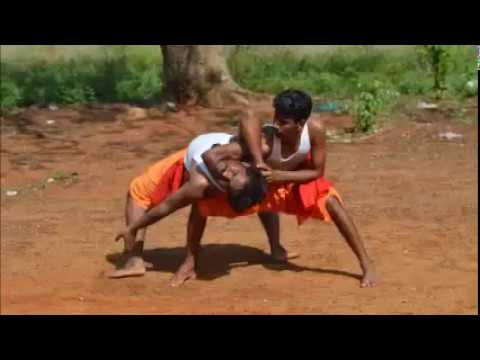
Mal Yudham / Mar Poor
Mal yudham is a traditional form combat wrestling art originated from ancient Kumari Kandam of Tamizhs. In that also strikes, punches, grapples, locks and strike at particular pressure points (Varma Adi) was incorporated.
Mar - means Sand.
Poor - means Fight / Battle.
Silambam and Malla yudham was conducted as combat sport during Pandya and Chola period.

Varma Kalai
Along with Adimurai, Vaasi yoga (Yoga for well being) and Varma Vaithiyam (Science of healing using specific points in the point) are combinedly called as Varma Kalai.
It was introduced by Tamizh siddhars from Tamil nadu. Varma kalai is based on Siddha medicinal system. Varma kalai of Siddha mentions about 'Amirtha nilai', which was not present in Kalaripayattu and any martial arts in the world (effectiveness of striking at the poison varma on a persons body depending on the lunar cycle). Siddhar's tradition of Varma kalai has 52 anti vulnerable spots called 'Adangal' varma, which were not present in Kalaripayattu.

The World's First martial arts was evolved from ancient, rich and First civilized land called 'Tamizhagam' / 'Kumari Kandam'. It was the cradle of all civilization and fountainhead of Knowledge, Science, Medicine, Martial arts, 64 form of Kalas (Arts) and much more.
It is the time to expose the suppressed and hidden truths of Tamizhagam - The land of Tamizh people, their masterminds, Valour, Skills, Discoveries, Beauty, 64 arts, Heritage, Festivals, Sports, Science and Technology, Astronomy, Literature, Adventures and their Accomplishments.
This Lethal martial arts was called as 'Adi Murai'. In Tamil, 'Adi' means 'To hit', 'Murai' means 'Method', together it means 'Laws / Methods of Hitting' . It is the oldest martial arts and it has laid foundation for various other types of martial arts and fighting techniques in the world. More than a martial arts, it was called as Martial / Combat science.

Adi Murai is also called as Varma Murai, Adi Murai is the mother of all Martial arts in the world and the most famed Kalaripayattu is not an exception to this. From this ADIMURAI, many martial arts were evolved in the Eastern and Western side of the World.
When the mighty Pandya Kings ruled the Rich and fertile land ' Kumari Kandam', they were excelled in Martial arts and Science as well. There were many secrets and techniques in this martial arts, which were not to be taught to all the students. Some of the fighting techniques and Sootchamas (Strategies) were kept as a secret with particular Master / Siddhar families alone. Most of the times, these secret techniques were practiced in a remote isolated and open place, which can't be seen by any person or covered by any media and this is the reason for the less information about ADIMURAI and it's skilled fighting photos. These fighting techniques can paralyses the opponent, can make him unconscious and even KILL the opponent with an ease.
Where ever the Pandya and Chola kings ruled the world, they have introduced basic fighting styles of ADIMURAI to the local people and it's now called in different names across the globe.
- China - Shaolin Kung Fu,
- Japan - Karate, Jujutsu
- Korea - Taekwondo,
- Malaysia - Pencak Silat,
- Indonesia - Pencak Silat,
- SriLanka - Angampora,
- Cambodia - Bokator,
- Thailand - Muay Thai, Muay Boran
Varma Adi is a part of ADIMURAI was also taught in different names across countries. It is the most dangerous martial arts which deals with strikes at the vital pressure points of the body. It can even Kill the opponent effortlessly and hence it is not taught to all the learners of the martial arts.
- China - Dim Mak ,
- Filipino Kyusho,
- Japan - Kyusho Jitsu (Touch of Death),
- Russia - Systema
ADIMURAI was first evolved for the purpose of self defense from enemies, thieves and wild animals. In Tamil, it was called as 'Tharkappu kalaigal', meaning 'The art of self defense'.


Lord Shiva taught the techniques of Adi Murai and Varma kalai to his son Lord Murugan and Maha rishi Agathiyar has learnt this martial arts from Lord Murugan. Adi Murai is the basic to learn Varma Kalai and Varma Kalai was primarily used as a part of Siddha medicine to heal the body.
Agathiyar was considered as 'The First Siddhar', 'Father of Siddha Medicine' , the great sage Maharishi 'Agathiyar' introduced this Martial arts called 'Adi Murai', 'Varma Kalai' and 'Silambam' to the World. The first and basic text about these Varma Kalai and ADIMURAI was complied in manuscripts by Agathiyar at Pothigai Mountai, the place where he lived. Pothigai Mountain is very difficult and dangerous to climb, there are no roads or proper paths over there. At the base of this mountain, there is a dedicated temple for Maharishi Agathiyar. Even today, people will go that mountain base and worship Sage Agathiyar, to get his blessings.
Siddhars were most knowledgeable Yogi's / Sages who have magical, supernatural and spiritual powers. They served as Doctors, Saints, Alchemists, Physicians, Founded Varma Kalai (Self defense), 'Naadi Parthal' (Pulse reading) etc. In Tamil, 'Chitham' means 'Attaining the level of utmost consciousness', also 'Siddhi' means 'Powers', that is why there is term called 'Ashta Siddhi' (8 great magical powers attained through spirituality)

Maharishi Agathiyar
It was originated from the lost ancient sub continent called 'Kumari kandam'. It is the effective combat science of defending and protecting themselves

18 Siddhars
Adi Murai was also called as Varma Adi murai in Tamil Nadu, it was also called as 'Tekkan Kalari' in the Southern Kerala and it was practiced in Trivandrum, Kochi and Kollam areas.
ADIMURAI has several levels and sub levels of learning to become an 'Aasan' (Teacher). In order to become a teacher, both Physical and Mental fitness, Fighting Skills and their flexibility will be tested. Due to the vulnerability of this art, teachers will select few students from the training to teach this lethal martial art.

Also, Adimurai is the basic and first step to learn Varma Kalai. Varma Kalai is a traditional and knowledged art of Tamizhs, which was also introduced by Sage Agathiyar before the beginning of Vedic times. Varma / Marma is known as vital pressure points in the human body, it is a branch of Siddha Medicine. In Tamil, 'Marma' means secret, it was called as secret point of our body.
Maharishi Agathiyar has carefully complied many methods, techniques and secrets about Varma Kalai. There were around 1400 Varma manuscripts complied by Agathiyar, in Tamil manuscripts was called as 'Olai Suvadi'. Initially it was used only as medicinal purpose, to heal the body. Later, it was taught as a martial arts only to selected few students as was very dangerous and can be misused effortlessly. There were many Siddha medicinal manuscripts found in southern parts of Tamil Nadu, some are being analysed and some of which were kept as secret. Aasans (Teachers) will be experts in 108 arts of Varma Kalai.
Agathiyar has mentioned about the several attacking methods such as effectiveness of the attack differs with respect to the movement of the moon, or a person can die after the attack of 3 or 6 months and much more. Agathiyar's Adi Murai, Silambam and Varma Kalai was patronized by the Early Pandya Kings and then it was spreaded and celebrated by the following Tamizh Kings.
Adi murai was the base for Kalaripayattu. Elements of Adi murai can also be found in Kerala's Martial arts 'Kalaripayattu'.

It is said the Kalaripayattu was taught by Lord Parasurama, the sixth avatar of Lord Vishnu. Note that he is the sixth avatar of Lord Vishnu, but Adimurai and Varma kalai was taught by Sage Agathiyar from Lord Murugan before the great deluge of Kumari Kandam and even before the occurrence of First avatar of Lord Vishnu, that is Matsya avatar. So, which one is the oldest, First avatar or Sixth Avatar ? From the ADIMURAI martial science, Kalaripayattu was born, not the vice versa.

Kalaripayattu means school of fight in Malayalam. The word 'Kalari' was never appeared in any of the Sanskrit texts, but it was found in Purananooru, a Sangam Tamizh literary work in Puram section which describes about the battlefield.
In Tamil, Kalari means Battlefield, this term is still used commonly by Tamizh people. The root word for Kalari is a Tamil word 'Kalam', which means field, 'Por Kalam' 'Por' - meaning War, 'Kalam' - meaning field.
Also, in Kalaripayattu the primary focus is for the Sword and Knife type of fighting. But, it is just one of the weaponary arts in Ayudha Murai section of Adi Murai martial arts.
The Truth is that the Tamizh martial arts ADI MURAI was adopted by Raja of Travancore, to train his armies. This is how, Adi Murai was taught in some of the Kalaris of South Kerala which was called as Southern Kalari / Thekkan Kalari. In Tamil, Thekku is colloquial term to refer Southern direction.
Adi Murai is practiced in Open space, it also teaches about the techniques to fight against multiple armed and unarmed opponents at the same time.

In Adi murai, there is an unarmed combat technique called Adi thadi. No weapons will be used in this technique. The Practitioners should defeat the opponent either by using their legs or hands. Armed combats will be taught after they excel in the unarmed combat lessons. (Detailed ADIMURAI techniques will be penned as separate post). There is another technique called 'Santor Murai', which is special fighting techniques for highly proficient people.
Silambam
Silambam is a weapon based martial arts of ancient Tamizhagam. Sage Agastya has compiled texts about Adi murai and Silamabam on palm leaves. These martial arts are about 10,000 years old. It has traveled several places across this planet with different names such as Bokator (Cambodia), Angampora (Sri Lanka), Muay Thai (Thailand) etc.
Silambam practise
Weapons used in Silambam
It is Practiced in Malaysia, Indonesia and Singapore as 'Pencak Silat'. This martial arts mainly focuses on unarmed striking techniques, which is the first lesson of Adi Murai. During the reign of Cholas and Pandya kings in South East Asian regions, some of the lessons of Adi Murai was taught and practiced.

Pencak Silat at Indonesia
It is practiced in Srilanka as Angampora


Angampora
In Tamil and Sinhalese, Angam means part of the body and 'Pora' means fight.
It is called as Muay Boran and Muay Thai in Thailand.

Muay Boran in Thailand
It is also practiced as Bokator in Cambodia.

Mal Yudham / Mar Poor
Mal yudham is a traditional form combat wrestling art originated from ancient Kumari Kandam of Tamizhs. In that also strikes, punches, grapples, locks and strike at particular pressure points (Varma Adi) was incorporated.
Mar - means Sand.
Poor - means Fight / Battle.
Silambam and Malla yudham was conducted as combat sport during Pandya and Chola period.

Malla yudham
Varma Kalai
Along with Adimurai, Vaasi yoga (Yoga for well being) and Varma Vaithiyam (Science of healing using specific points in the point) are combinedly called as Varma Kalai.
It was introduced by Tamizh siddhars from Tamil nadu. Varma kalai is based on Siddha medicinal system. Varma kalai of Siddha mentions about 'Amirtha nilai', which was not present in Kalaripayattu and any martial arts in the world (effectiveness of striking at the poison varma on a persons body depending on the lunar cycle). Siddhar's tradition of Varma kalai has 52 anti vulnerable spots called 'Adangal' varma, which were not present in Kalaripayattu.

Varma Kalai Demo
A modified version of Adi murai is incorporated into Kalaripayattu schools of Kerala, called as 'Thekkan Kalari'.
When Mughals and British ruled India, they have banned all types of martial arts, the palm leaf manuscripts of martial arts were burned and the teachers of these martial arts were arrested and punished. But, it is still in practice in south of Tamil Nadu.
On the other side, ADIMURAI is a dying slowly in Tamil Nadu, due to the lack of visibility and much pampering of western martial arts. Due to this reason, many people are trying to patent this terrific martial science into the name of their mother land. It is time expose the truth about ADIMURAI, VARMA KALAI, SILAMBAM , it's time to revive the lethal martial arts of ancient Tamizhagam and let the world know about all these types of martial arts and science !!
On the other side, ADIMURAI is a dying slowly in Tamil Nadu, due to the lack of visibility and much pampering of western martial arts. Due to this reason, many people are trying to patent this terrific martial science into the name of their mother land. It is time expose the truth about ADIMURAI, VARMA KALAI, SILAMBAM , it's time to revive the lethal martial arts of ancient Tamizhagam and let the world know about all these types of martial arts and science !!
-- Next Post: Detailed ADIMURAI
- Aarthi Thiyagarajan


