To receive email notification

Please fill the contact form below to receive email notification when a new post is published in this blogspot.

Monday, 23 November 2020

Kumari Kandam - Part 4 (Expansion across Eastern and Western side of Bharat)

Lost History of Ancient Tamizh people - Expansion of Pandyas across India

        From the last parts of Kumari Kandam, it is evident that Pandyan King Satyavrata headed as Vaivasvata Manu with the help of Matsya Avatar of Lord Vishnu and Adisesha. Saptarishis were also migrated with the King to the Bharata Kandam. This post is going to prove that Aryan Invasion theory is a myth and people weren't migrated from North to South and it was vice versa. 

         From Kumari Kandam, when Kapatapuram / Kavadapuram was in danger and slowly facing destruction due to numerous mega tsunamis, some of the Pandya kings has migrated towards Eastern side of Bharat and reached West Bengal, Odisha and Bangladesh. Pandyas has ruled West bengal before the start of Treta Yuga and from there they have slowly occupied from Eastern side to Northern side of India. 

In Tamil, Bay of Bengal is called as 'Vanga Kadal', 

Kadal means - Ocean and 

Vanga has several meanings - Gigantic Ship, White, Pure. Here it refers to white ocean.

        As West Bengal was the prominent port city of Pandyas, they have named it as 'Vanga'. Here, Vanga meaning 'Ship', that were sailing through the white ocean 'Vanga Kadal'. This is indicating that there were huge volumes of maritime trade that has happened several thousand years ago.

kumari kandam

        So, in Tamil they have named West Bengal as 'Vanga Desam' and the people who lived there were called as Vanga tribes. Before the period of Mahabharata, this place was named as Vanga and in that epic Kunti's son Karna has ruled Vanga and Anga during his reign.

Vanga Desam

        In recent times, V was interchanged into B and it's then called as 'Bengal'. The word 'Vanga' was also mentioned in Tamil Sangam literatures, Pura Nanoru and Andal's Thirupaavai. The seafaring vessels were called as 'Vangam'. Also, there is bird species called as 'Vangaa' mentioned in Tamil verses, which are found only in Madagascar and it's islands. 

         'Vanga' was then transformed as 'Bengal' during the reign of Britishers.  Also, Pandyas have named their capital as 'Tamralipti',  referring to 'Tamaraparani' River which was flowing in Kumari Kandam. This river is still actively flowing now in Tamil Nadu, but it has changed its course of direction in the last 2000 years.


        Early Pandya Kings have named many places in Tamil in West Bengal, Odisha, Maharastra, Karnataka, Goa, Nepal, Assam etc... How can it be Pandyas ? Weren't they Cholas / Cheras / Pallava Kings ? 

     Here you go !! In memory of their mother land, some of the famous cities of Kumari Kandam has been used to name the places in West Bengal, Odisha, Maharastra, Nepal, Assam. In this course of 7000 years, many of those names were forgotten, some names got changed and some names are still in use. 

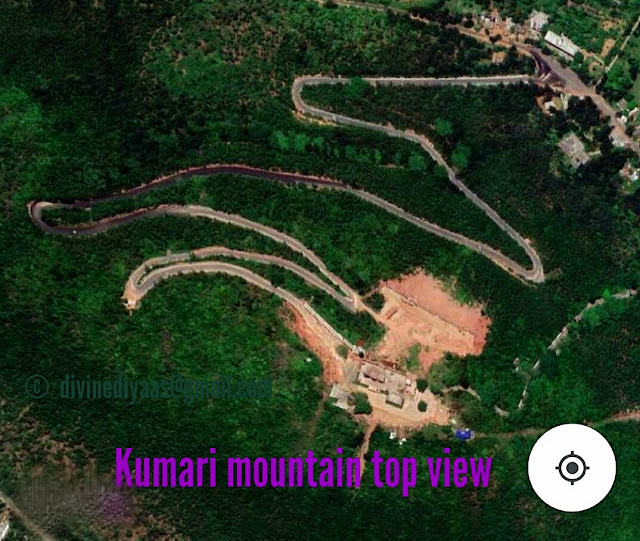
         In Kumari Kandam, there were two main notable rivers, which were Parali and Kumari Rivers, also there was a famous Kumari mountain at the south of Kumari Kandam.

     The same river and mountain names can be found in West Bengal and Odisha. There is a famous TaraTarini temple situated at the Kumari Hills of Odisha. Kumari is a proper Tamizh name.

Kumari Mountain

        Cholas and Cheras haven't seen or ruled Kumari Kandam, Pallavas were later kings in the history of Tamil Nadu. So, this was named by early pandya king.


Also, near to this temple, there is village named 'Kurunjipur'. What is the meaning of Kurunjipur ?? Kurunji is a Tamil word. According to Tamil Sangam literatures, geographical landscapes were divided into 5 categories 
  1. Kurunji - Mountains and it's associated regions, 
  2. Mullai - Forests and it's associated regions, 
  3. Marudham - Agriculture and crop lands, 
  4. Neidhal - Sea shore and coastal areas
  5. Pallai - Desert area. 


    There is also a place named 'Kurunji' in Maharastra, which is near Mahabaleshwar and there is also a place with same name in Kerala as well.  The famous Shri Vaijnath Shiva Temple in Maharastra is situated at the place called Parli (Parali River of Kumari kandam). It is an ancient Shiva Temple.

River Kumari flowing in the Purulia district of West Bengal. 


Kumari River

      Also, there is a proto historic civilization discovered at the valley of Ajay, Kunoor and Kopai at West Bengal. Kunoor , Kopai ?? These are Tamil names. Kopai means cup, Kunoor - place in Tamil Nadu near Ooty. 

        Pandu Rajar Dhibi is an archealogical site at West Bengal, which is dated as chalcolithic site near the banks of Ajay and Kopai rivers.  Pandu Rajar is not Pandu of Mahabharata, it's Pandya Raja of Early pandya, because the remains from that place were dated aback to Chalcolithic age. Early Pandyas were dated corresponding to Satya Yuga and Treta Yuga.


        Also scholars mentions that excavation from Pandu Rajar Dhibi reveals that it has connection to Crete and Mediterranean lands and they were sea explorers. In my previous posts, i have mentioned that early Pandyas were the First sea explorers and they followed the direction of sea turtles for the navigation. Pandya kingdom had the First and Strong Navy Force, to explore and to expand their Rajya. 

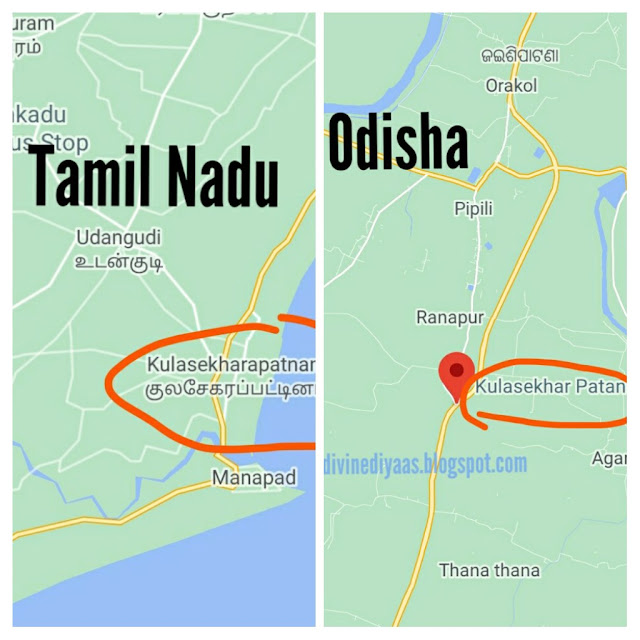
        Early Pandyas and Tamizh people were migrated to the Eastern side of Akand Bharat. Once, there was a famous and powerful Pandya king named 'Kulasekhara Pandyan'. He had ruled the entire South India and Eastern side of India (Not to confuse with the later pandya king in the same name). There are many places in India which were named after him.

Kulasekharapattanam


        Like Kanya Kumari in Tamil Nadu, there are also some places where Kumari is being worshiped. In Nepal there is place called as 'Kumari Temple'. Kumari is a Tamil name. In Nepal, now the practice of worshipping Kumari were subjected to change by the conquest of many Mughal rulers and Britishers.


Kumarikata place in Assam


     In Nepal, there are also places called 'KumarKhod', 'Kumari' etc. There is a holy river called 'Kankai' river flowing through Nepal, it's also called as golden river. In Tamil, 'Kanaka' means - Gold, there is flower named 'Kanakambaram' meaning Golden fire flower, which grows only in Tamil Nadu and Kerala.


     Pandya Kings have also spread across eastern side of Bharat and ruled Bangladesh, Myanmar, Thailand, Cambodia and Vietnam. There are many places in Eastern side of India named in Tamil. Also, they have expanded their kingdom in all sides of India. (Separate post will be published for the same).

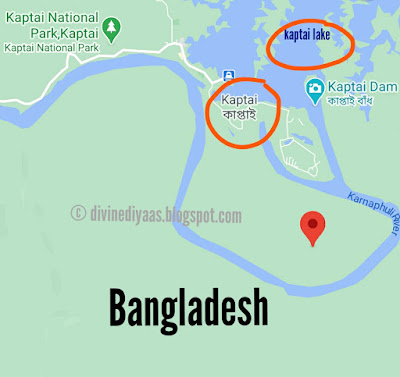
In the map below, Kaptai name was given to a place and lake in Bangladesh. It was named in memory of 'Kapatapuram', in short it was called as 'Pandya Kavada / Kapata' as per Chanakya's Arthasastra.

Kaptai Lake

Madaripur - present day Madurai in Tamil Nadu, which served as capital of Pandyas

Kawadi - Kavada / Kavadapuram, which was a port city of Pandyas. Pearls from this place were pure and priced highly.


Places in Maharastra

Nerur - meaning water place. 'Ner' meaning water in tamil, 'or' / 'ur' meaning place in Tamil. 

Kavathi - Kavadapuram

Parule - Paruli river of Kumari kandam 


Places in Goa

Sanguem - refers to Sangam of Tamil Nadu. In this district, there are ancient petroglyphs of 20,000 years old were identified at Usgalimal. Currently, it us under the ASI.


There are engravings of Bull (Symbol and flag of Pandyas), labyrinths and human figures on laterite stone at that site. 


        During the reign of early Pandyas, these places such as Madurai, Kavadapuram / Kapatapuram, Kavadai, Korkai, Kayalpatinam, Adichanallur, Kudal / koodal, Kanya kumari etc were prospered with great wealth and much fame.

Kayalpada in Odisha - Kayalpattinam in Tamil Nadu. In Tamil, Kayal means - Fish, Carp type fish, 
Pattinam  means - City


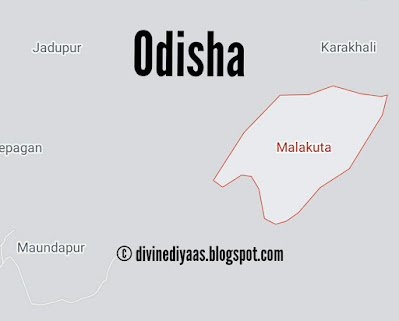
        Chinese traveler Xuangzang mentions about a kingdom further south from Kanchipuram, a kingdom named 'Malakutta', identified with Madurai of Tamil Nadu.

Malkutta


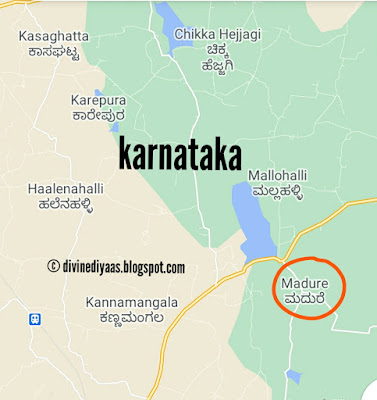
Also Madure in Karnataka

Madure Karnataka


    Not only these places, Tamil Pandyas has ruled many places like Afghanistan, Pakistan, Sindhu province, Iran and Turkey. 
        
        The Indus Valley Civilization was FIRST ruled by Early Pandya Kings and it was flourished during their reign. There were no ARYAN INVASION happened, it was Tamizh Pandya Kings who ruled the entire Akhand Bharat and all around the World. The language and the inscriptions of Indus valley civilization is still not deciphered and linguists are relating it to Proto - Dravidian language, the early form of Dravidian language, in short the early form of Tamizh, which is also called as 'Tamizhi'. The ancient Indus Valley Civilization and it's Truth about Tamizh Pandya Kings will be explained in my next post.
 
       Another set of Pandyas from Kumari Kandam didn't migrate towards India, they have traveled towards Malaysia, Thailand, Indonesia, Australia and expanded their kingdom. It will be explored more in the subsequent parts of Kumari Kandam.

--to be continued...

- Aarthi Thiyagarajan
Saturday, 7 November 2020

Kumari Kandam - Part 3 (Submergence of Kapatapuram)

Lost History of Ancient Tamils / Tamizhs - Submergence of Kapatapuram

            In Continuation from the Part 2 of Kumari Kandam
https://divinediyaas.blogspot.com/2019/12/kumari-kandam-ancient-tamilakam-part-2.html

      From the last two parts of Kumari Kandam, it is evident that Pandyan King Satyavrata headed as Vaivasvata Manu with the help of Matsya Avatar of Lord Vishnu and Adisesha. Saptarishis were also migrated along with the King to the Bharata Kandam. This post will elaborate details about submergence of Second Tamizh Sangam at Kapatapuram.


         Kumari Kandam contains 49 territories which were grouped as seven lands (Ezhuthangu nadu)

  1. Seven Coconut Lands [Elu thenga nadu]
  2. Seven Mango Lands [Elu maturai nadu]
  3. Seven front sandy lands [Elu munpalai nadu]
  4. Seven Back sandy lands [Elu pinpalai nadu]
  5. Seven Dwarf palm lands [Elu kurumpanai nadu]
  6. Seven Eastern Coastal lands [Elu kunakarai nadu]
  7. Seven Hilly lands [Elu kunra nadu]

         In Kanyakumari district, there is a coastal place called 'Thengapattnam', which is named after dense coconut groves. 

        There were 72 kings of Pandyan empire who ruled Kumari kandam for more than 10,000 years. When their capital cities ThenMadurai and Kapatapuram was lost, some of the Pandya Kings have migrated towards North of Tamizhagam and some of them moved towards East and explored many countries. There are many places in the world, ruled by Pandyas which were named in the memory and honor of Kumari Kandam (which will be covered in subsequent parts).


he Pandya kings were said to have belonged to the Lunar race. They claimed Pururavas and Nahusha as ancestors. Pururavas is listed as one of the ancestors in the Velvikudi inscription of Nedunchadaiyan Varagunavarman.
The Pandya kings were said to have belonged to the Lunar race. They claimed Pururavas and Nahusha as ancestors. Pururavas is listed as one of the ancestors in the Velvikudi inscription of Nedunchadaiyan Varagunavarman.
he Pandya kings were said to have belonged to the Lunar race. They claimed Pururavas and Nahusha as ancestors. Pururavas is listed as one of the ancestors in the Velvikudi inscription of Nedunchadaiyan Varagunavarman.
        It is mentioned in the ancient book Kandapuranam that Kumari Kandam covers the land of 700 Kavatam from Pahruli river in the north to the Kumari river in the south. Kavatam is a measuring unit in Tamil, which is still unknown to all. 

Kavadapuram / Kapatapuram - The capital city of Pandyas during Second Tamil Sangam around 5500 BCE during Treta Yuga. It was situated at the northern side of Kumari kandam. It was a port city, originally located near Thoothukudi, which is now submerged under sea.

Kavatai - refers to a type of rich pearls, meaning grabbing. As the oyster grabs the pearls in the mouth, it was termed as kavatai. In Arthasastra, Chanakya refers to the Pearls from "PandyaKapatam".  
     
    Around 57 early Pandya Kings ruled Kapatapuram as their capital for 3700 years. Tolkappiyam was composed during the time of Second Tamizh Sangam at Kapatapuram / Kavadapuram. Several seals discovered in the Indus valley site mentioning about certain religious traditions cited in Tolkappiyam. This proves that Tolkappiyam belonged to the age of the last phase of the Indus valley civilization i.e. 1500 B.C. Almost all Tamil scholars agree that Tolkappiyam belonged to the last phase of the Second Tamil Sangam held at Kapatapuram, which was engulfed by the sea around 2000 B.C.E.

        Therefore, we may safely conclude that Tolkappiyam was written before the submergence, i.e before 2000 B.C.E. The social and cultural history of the Tamils in the ancient Tamil Land were portrayed in Tolkappiyam and it's been validated on the basis of the artifacts and other materials discovered from the megalithic sites in Tamil Nadu and Kerala.

       The first phase of Second Tamizh sangam was dated between 5500 bce - 5000 bce, as 2000 bce was the last phase of second tamizh sangam. So, 5000 B.C.E has been fixed as the date of Kapatapuram, the second capital of the ancient Pandyas. The famous urn burial site Adichanallur is located 21 kms from Korkai. The ancient Korkai port was also called as 'Pandya Kavada' mentioned in 'Kallithogai'. Because this port was once located at the banks of Tamiraparani river near the seacoast and it was part of Kavadapuram / Kapatapuram. The capital city Kapatapuram was originally located near Thoothukudi, which is now submerged under sea. 


        In the last 2000 years, due to the excessive sedimentation, the sea has receded about 6km from Bay of Bengal, which pushed Korkai inland today, that is before the delta of Tamiraparani River. Also, in the course of time, Tamiraparani River has shifted its course towards East and South, earlier it used to mix with the sea near Thoothukudi. 


     The ancient site at Korkai was first excavated in 1827 by R. Caldwell, who found a few urns of giant size. Next, during 1968-69 a team of archaeologists led by R. Nagasamy conducted excavations at Korkai. They discovered a number of inscribed potsherd with Tamil scripts, various objects of copper and iron, perforated terracotta tiles, beads of crystal, conch shells, and pearl-oysters.


        Therefore, we may conclude that the Adichanallur which is 15km from Korkai port, was flourished along with the Kumari Land with its culture and even after the submersion of the latter by the sea.

First Kumari kandam was lost, then Kapatapuram was submerged. What was the reason for subsequent Mega Tsunamis ?? 
Here you go -  it's due to impact of Burckle Crater. A large asteriod / comet which was 29km in diameter, that could kill quarter of world's population smashed into Indian Ocean producing mega Tsunami of 600 feet high. 


        This impacted Indian Ocean around 3000–2800 BCE (around 5000 years ago). This has hit the ocean floor with subsequent mega tsunamis for 4000 years and it was the major reason for the mysterious collapse of major civilization in Asia and Europe during that time period. The waves carried huge amount of sedimentation to the land. Currently, this is lying 12,500 feet below the surface in Indian Ocean. 


     Based on some of the Tamil literatures, Second Tamizh Sangam of kumari kandam was destroyed and submerged by a meteorite impact. So, it is evident from Burckle crater that the event of mega tsunamis and flood were common in all these coastlines. 
       
 This crater has triggered many tsunamis and destruction of land along the coastal lines of India. One of the major such event is destruction and submergence of ancient city Dwaraka. Dwarka was also destroyed by mega Tsunami caused by the impact of this crater in Indian Ocean. Submergence of Dwarka and submergence of Kapatapuram has happened during the same time period 1500 - 2000 BCE, i.e 4000 years before (at the end of Dwapara Yuga).


    Unfortunately, the Early Pandyan capitals Thenmadurai and Kapatapuram, were violently hit by successive tsunamis and engulfed by the sea. The first Tamil Sangam functioned at Thenmadurai, the second at Kapatapuram, the third and the last sangam at the modern Madurai.

        Therefore, the Pandyas have  shifted their capitals first from the Thenmadurai to Kapatapuram and then from Kapatapuram to the present- day Madurai. As a result of this shifting, the Pandyas had three capital cities-Thenmadurai, Kapatapuram and modern Madurai and consequently by the assembly of poets also met in the Pandyan courts in these three places, which leads to the formation of three Tamizh Sangams.  

--To be continued...

- Aarthi Thiyagarajan

Friday, 30 October 2020

Manusmriti about Women - Truth Exposed !!

 Manusmriti about Women - Truth Exposed


What is Manusmriti ?

            Manusmriti meaning "Laws of Manu", also called as 'Manava - Dharma - Sastra'. Manu was this planet's First Law Giver and Manusmriti is the one of the foremost document on Hindu Dharma / Santana Dharma. It deals with set of rules for the humans to follow the path of Dharma and for the betterment of the peaceful society.

        Manusmriti was propounded by Pandya king Satyavrata along with sapta rishis after the great deluge. King Satyavrata was also popularly known as Vaivasvata Manu, the Seventh and current Manu. For more information about King Satyavrata and great flood reach out to the post 

https://divinediyaas.blogspot.com/2020/05/pandya-king-satyavrata-and-matsya.html?m=1


          Manusmriti prescribes 10 essential rules to follow dharma, Knowledge (Vidhya), Truthfulness (Satya), honesty ( asteya), Forgiveness (Kshama), Patience (Dhriti), self - control (dama), Sanctity (Shaunch), absence of anger, control of senses and reasoning. Manusmriti talks about code of conduct and follows dharma, it also talks about epistemology and metaphysics. 

These laws were more of code of ethics !! This Manava Dharma Shastra were followed all over the world and these has been absorbed into various other religions to follow the path of Dharma. 

      Please read the post completely to understand about the authentic verses of manusmriti and get enlightened about politics that revolves around this.

Dating of  Manusmriti:

         Manusmriti mentions about the Holy Saraswati River, which was flowing perennial in India. In those days, Saraswati river was considered as the holiest river than Ganges. This Saraswati river disappeared before Mahabharata War and it is older than Rig Veda. Now, one can get a picture about the period when it was composed.


Manusmriti About Women :

        Laws of Manu mandates that highest respect and regard should be given to women. 


Some of the verses are mentioned below..


यत्र नार्यस्तु पूज्यन्ते रमन्ते तत्र देवता:।

यत्रैतास्तु न पूज्यन्ते सर्वास्तत्राफला: क्रिया:।


Where Women are honored, divinity blossoms there, and where ever women are dishonored, all action no matter how noble it may be, remains unfruitful.


Yatra Narestu pujyantey ramantey tatra devata

Yatreta too na pujyantey sarva tatrafla kriya. (Manusmriti 3-56)

Meaning: The correct meaning of the verse is: Gods (who stand for divine qualities, good deeds, sweet nature and blessings for the family, for obedient children and other coveted possessions) make their abode in the household in which women are treated with respect. 


Prajnarth mahabhaga pujhra grihdipatya

Istriya triyashc geheyshu na visheshosti kashchan (Manu Smriti 1-26).


It means that women bring good luck to a household through procreation; they deserve respect and reverence; they irradiate the house with their presence. In fact there is no difference between the goddess of wealth and women."


SON AND DAUGHTER HAVE EQUAL STATUS


"Those unacquainted with Manu's code will be pleasantly surprised to be informed that Manu is the first law-giver to have ordained that son and daughter enjoy an equal status in the family. He has given this concept a constitutional validity. He says: “putrena duhita sama” (Manu Smriti 9-130) which means that daughter is at par with son in every respect."


Avishashna putrnam dayo bhavti dharmata

Mithunana visergadoo manu svembhuvobriveet(Nirukta iii-1-4)


It means in the beginning of the creation Svayambhu Manu ordained and declared that there is equal right for son and daughter in the ancestral parental property. Manu has infact enhanced the importance of girls in the house-hold by laying down that only daughters (and not sons) are entitled to inherit the personal property of the mother(Manusmriti IX-131)".


STRINGENT PUNISHMENT FOR CRIMES AGAINST WOMEN


"Manu has tried to ensure the security of women by laying down that the kidnappers and killers of women should be awarded capital punishment and the rapists be banished after being tortured (VIII-323, IX0232, VIII-352). Manu has given clear instructions for the redressal of all difficulties, big or small, facing women. Men have been instructed not to quarrel with mother, wife and daughter (IV-180). There is a provision for punishment to persons levelling false charges against them; to those deserting women even when they are innocent; to those who fail to fulfil conjugal obligations towards women (VIII-275,389, IX-4)."


 MARITAL FREEDOM TO WOMEN


"Manu has an ideal approach on the subject of marriage of women. He has conceded to her the freedom of marrying a man of her choice who in her opinion is the most suitable for her (IX-90,91). Marriage is a symbol of affection and respect for girls and, therefore, according to Manu dowry in any form is highly improper and hence forbidden(III-51-54). Earnestly wishing for happiness to women he suggests that it is better to remain unmarried lifelong than to marry a wicked and vicious man (IX-89)."

Also, Manusmriti states that Hindus should leave 7 generations from fathers side and 5 generations from mother side before fixing up a marriage, to preserve the integrity of Y chromosome


Chapter 3.56. The society that provides respect and dignity to women flourishes with nobility and prosperity. And a society that does not put women on such a high pedestal has to face miseries and failures regardless of how much noble deeds they perform otherwise.


Chapter 3.57. A family where women remain unhappy due to misdeeds of their men is bound to be destroyed. And a family where women are always happy is bound to prosper forever.


Chapter 3.58. A family- where women feel insulted or discriminated against and curse their menfolk- is destroyed in same manner as poison kills all those who eat it.


Chapter 3.59. One desiring glory should ensure that he keeps women in the family by giving them respect and pleasing them with good ornaments, dresses, food. Women should always be revered under all circumstances.


Chapter 3.62. A person who does not keep her wife happy causes misery for entire family. And if wife is happy, entire family appears as happiness incarnate.


Chapter 9.26. Women give birth to next generation. They enlighten the home. They bring fortune and bliss. Hence women are synonymous to Prosperity. (Women in family is treated as Kula Devata)


  Now, Manu already declares that women is equal to goddess and should be treated with highest regard and Respect. Then, why he has to contradictingly write against his own words ?? It's clearly proving that FAKE verses have been inserted to this book for political purpose.


For a moment, let's leave Manusmriti and just think about the stories that traveled from our ancestors, did they degrade women ?

1. If Women were slaves and had no freedom, then how did SWAYAMVARAM happened in those days? . Women had rights to ask question and choose her husband.

2. In those days, Queen of the land had much power to rule. Do the FIRST LADY of the country is having such power now ? 

3. Women of the Royal King's family were involved in all political decisions and even in warfare. Girls from the childhood learnt Martial arts as one of the Kala. Is these are being followed in modern times  ?

     The answer to these question proves that Women were powerful and respected in those olden times than Modern times. They all followed Manusmriti.

For example: In Ramayana Rama destroyed Ravana with whole demon clan and in Mahabharta disrespecting Draupadi was the cause for destruction of whole kauravas.


FAKE MANUSMRITI IN POLITICS:

    From the past one decade Manusmriti has been ridiculed for the objectionable verses, which was inserted by Foreign funded agents for the sake of divide and rule politics. 

    Only translated version of Fake manusmriti has gone viral (the one which is degrading Women). WHERE ARE THE AUTHENTIC VERSES? 

    DO WE HAVE ANY PROOF FOR WOMEN SLAVERY THAT HAPPENED DURING PRE VEDIC AND VEDIC AGE?

    MANU WAS NOT A RACIST. ORIGINAL MANUSMRITI DID NOT DEGRADE WOMEN. 

1. If manusmriti is bad mouthing and degrading women, why should the mighty King Ellalan was honoured by the title 'Manu needhi cholan' ? This proves that ManuSmriti was also followed by Dravidians !

2. Along with Manu, sapta rishis were also propounded manusmriti. Sage Agastya / Agasthiyar was one of them. Now, are we going to say sapta rishis were also not dignified towards women ?

    Manusmriti has been translated in a biased mindset with ulterior political move of DIVIDE AND RULE concept. There is no concept of UNTOUCHABLITY in INDIA until the British people arrives. 

       Mahatma Gandhi in his book entitled ‘Varna Vyavastha’ accepts that the objectionable verses found in the Manusmriti are subsequent motivated insertions. Dr.Radhakrishnan, Rabindranath Tagore and other national leaders and scholars too are of the same opinion.

       A FAKE manusrmiti document was cooked by British to divide Hindus, they picked many atheist politician for this purpose. Laws of Manu concerning Dalits and Laws of Manu concerning Women are completely fake and inserted into the book, to divide Hindus and milk votes from particular group of people. These actions had eventually triggered people's emotions and was strategically used during election times for VOTES. 

    It's time for the Hindus to wake up from the baseless allegations of self-centered and biased politicians.  


         In a religion where 4 marriages are legally allowed, Women should wear Burkha, Triple talaq for easy Divorce etc etc, THESE AREN'T DEGRADING / SLAVING WOMEN ??? If the politicians are really concerned about the respect of the Women in the Society, please raise your voice against these current issues prevailing in other religions.. Will it be done ??? 

NO!!!! They won't ! How can they go against their funded parties !! 

       Always only HINDUISM is being ridiculed every time, why not  other religions ?? Are we Hindus are really self - loathing ?? Why should we disown Manusmriti which was the root of Hindu culture ?? People tend to believe the twisted versions of Manusmriti raised by politicians rather than validating them.

     Every time, during Elections one or other concepts / books of Hinduism is being ridiculed and creating a big chaos among the people.

        Enough of the manipulating concepts of Hinduism for cheap political motives and Votes !! Why this Ban on Manusmriti is really coming up now ?? Election time ??? 


    Nowhere in Hinduism women were disrespected. Smriti and Vedas, Upanishadas declared Woman as Goddess and form of Shakti, and should be respected in all circumstances. In Short, Women is the Heart of Hinduism. Be Proud to have Rich Culture, Traditions, Knowledge, Science, Arts....


- Aarthi Thiyagarajan