To receive email notification

Please fill the contact form below to receive email notification when a new post is published in this blogspot.
Showing posts with label Kapatapuram. Show all posts

Friday, 14 May 2021

Kumari Kandam - Part 7 (Persian and Eurasian Countries) !!

Kumari Kandam - Part 7 (Persian and Eurasian Countries) !! - Lost History of Ancient Tamizhs

        Pandya kings of Kumari kandam were excellent explorers of seas and also they had expanded their kingdom beyond Akand Bharat. While exploring the lands around India (prior to the Indus / Sindu civilization), a set of Pandya kings from ancient tamizhakam had established their society near the fertile Sindhu river.  For more detailed information about dravidians of Pre - Indus Valley civilization, reach out to the post below

https://divinediyaas.blogspot.com/2020/12/kumari-kandam-part-5-pre-indus-valley.html 

    The people who have moved to Persian countries before the start of Sindhu civilization were popularly called as 'Proto - dravidians' by historians. Also, Pandya kings had expanded their kingdom till Greece by crossing Sindhu river, that includes Iran, Iraq, Turkey, Syria, Azerbaijan, ancient Mesopotamia regions. The references of tamizh society in these countries are explained in this post. 
Kumari kandam - part 7


    Why am I talking only about Pandya kings of Kumari kandam ? Because, during that time (before 7000 BCE), there were no Cholas, Cheras, Pallavas, Velirs etc. There were only Pandya kings, popularly called as 'Early Pandya kings' to differentiate them from medieval and later period of pandyas.

        Tamizh civilization in Persian countries can be connected in several ways and there are many facts to prove the existence of tamizh civilization over there.... Let us see about one by one... 

1. In Iran

    Tamizh people had reached south of Iran and started a new society called 'Elam', meaning (young ) homeland. The people of elam were called as Elamites, the connection between Elamities, dravidians and Indus valley people are mentioned in the previous part of my post, Kumari Kandam - Part 6.

In the later period, followed by Pandya kings, many other tamizh kings had ruled regions of Persian countries and some other kings served as chieftains of Pandyas. I have put a separate post for 'Tamil Culture and Kings in ancient Iran' in three parts as, Part 1, Part 2, Part 3 .
2. In Turkey

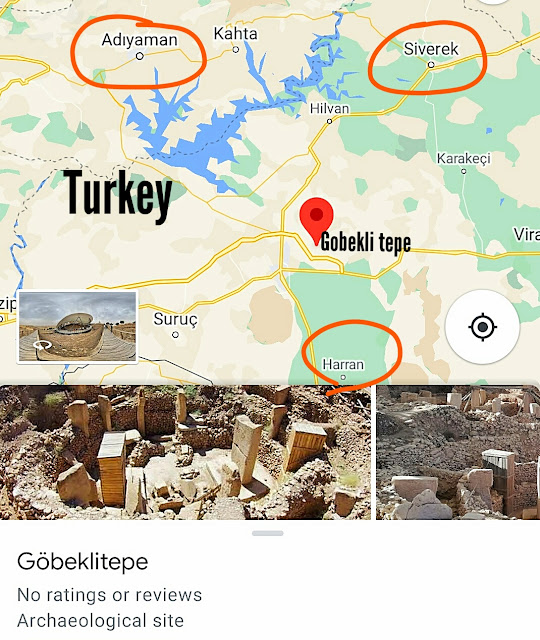
        The famous and the most ancient temple site at Turkey is Gobekli Tepe which was dated back to 10,000 BCE, is situated between Adiyaman and Siverek places. Siverek.... 
Doesn't it sound like Lord Shiva ?? 

This is not the only place that is named after Lord Shiva, there are many other places in Turkey, which was named after him.

 For example: 'Harran' in the picture below (Hara Hara Mahadev !!)

Adiyaman - Turkey

This ancient site Gobekli tepe is situated between Adiyaman, Siverek in the west and east and Harran in the south. It is also one of the proving fact that Gobekli tepe is an ancient Hindu temple, from which Varaha avatar of Lord Vishnu was also excavated. 

Lord shiva was worshiped by tamizh people in Turkey and so many places were named after him.  Why was it tamizhs ? can't they be any other people who worshiped Lord Shiva? To know the answer, reach out to the post below


        There are many significant references about tamizh civilisation and Hinduism in ancient Turkey, which I have covered in my previous posts such as Part 1 and Part 2. I haven't included those references in this post, as it will become lengthy and for more information about tamil civilization in Turkey, reach out to


        Since the kings were from Kumari kandam, the term Kumari / Cumari has been used in many placed in Turkey and the reason for the etymology for these names are still not decoded by the historians and scholars.

Early Pandya kings of Kumari kandam had reached Turkey and there are many bull symbols in and around Turkey to represent them. 

        Apart from my previous posts about Turkey, there are more references for Pandya kings from Kumari Kandam in Turkey, continue to read to know more about it...


Cappadocia
, also known as Katpatuka, Kapadokya is a historical region in Turkey. Cappadocia, was bounded in the south by the chain of the Taurus Mountains that separate it from Cilicia (Original name: Kummani), to the east by the upper Euphrates, to the north by Pontus, and to the west by Lycaonia and eastern Galatia. 

    This cappadocia is derived from 'Kapadapuram' of tamizhakam, the capital city and busy port of second sangam of Pandyas, which was also submerged later due to major tsunamis. Pearls of Pandya Kapadapuram were of great demand and were highly priced. Cappadocia in Turkey was named after this famous city of tamizhakam, later it was then transformed as 'Kapadokia' / 'Katpatuka'. 


        Cappadocia was also known as Hatti in the late Bronze Age and was the homeland of the Hittite power centred at Hattusa. The earliest record of the name of Cappadocia dates from the late 6th century BC, when it appears in the trilingual inscriptions of two early Achaemenid kings, Darius I and Xerxes, as one of the countries (Old Persian dahyu) of the Persian Empire. In these lists of countries, the Old Persian name is Katpatuka. It was proposed that Kat-patuka came from the Luwian language, meaning "Low Country". 
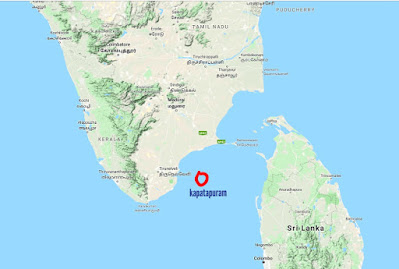
        Similarly, Kapatapuram in ancient tamizhakam was situated at the bottom part of tamizhakam near sea shore, reference picture is attached below.  

Why Katpatuka meaning 'Low country' in Luwian is matching with Kapatapuram's position in Tamizhakam?

Why both the names Kapatapuram / Katpatuka are similar ?

Kapatapuram - Pandya king


    Comana (Komana Pontika) was an ancient city of Cappadocia, frequently called as Comana Chryse i.e. "the golden"( to distinguish it from Comana in Pontus).  

        Isn't this name referring to Ko-manna (King) + Pontika (Pandya was called as Pontika in greece) ???


3. In Greece

    
        There are many references of tamil civilization in Greece, but this post will reveal about points which are only related to Kumari Kandam. Let us see about major points in association with early Pandya kings..

    A) Panticapaeum (Pantikápaion) was an ancient Greek city on the eastern shore of Crimea, which the Greeks called it as Taurica. The city was built on Mount Mithridat, a hill on the western side of the Cimmerian Bosporus. 

What is the meaning of Panti, from the city named 'Panticapaeum' ?

Panti - refers to Early Pandya kings of tamizhakam, who is also called as 'Pandi'..

    Panticapaeum - it is originally known as Pandikapaion, which means the land which is protected by Pandiya kings. 


        Early Pandya kings were called as Pondi / Pontic / Pontus. Pandya kings belongs to solar / sun race of India. Similarly, the king Mithridates VI, the ruler of the Kingdom of Pontus was named after the Sun god. Mithridates is the Greek attestation of the Persian name - Mithra - meaning sun god. The Mithridatic dynasty, also known as the Pontic dynasty. 

Thus, solar race Mithridates / Pontic dyanasty kings are none other the descendants of Early Pandya kings..

        B) Pontic Greek  is a variety of modern Greek originally spoken in the Pontus area on the southern shores of the Black Sea, southern Georgia and today mainly in northern Greece. Its speakers are referred to as Pontic Greeks or Pontian Greeks.

Pontic Greek is an endangered Indo-European language spoken by about 778,000 people worldwide. It's not only a Indo - European language, it's actually a proto dravidian language - also called as ancient Tamili / Tamizh. During World War I, there were a mass cruel ethnic cleansing of Pontic Greeks, Cappadocia Greeks happened. Huge genocide of Greeks was carried out on the basis of their religion and ethnicity....

There are many places in Greece that are named in tamil. Continue to read for more references regarding the same.

    C) Cappadocia by Pontus , Cappadocia was mentioned in the above section in Turkey and it was originally named as Kapata / 'Katpatuka' of Pandya kings. Ancient Indian philosopher, economist Chanakya refers to the Pearls from Kapatapuram of tamizhakam as  'Pandya Kapatam'. 

    Thus, Cappadocia - is named after Kapatapuram of tamizhakam
               Pontus        - is reformed name of early Pandya kings.

For more details about Kapatapuram of Pandyas in ancient tamizhakam, reach out to,


As the Pandyas of Kumari Kandam had ruled Greece, they have named places in memory of their mother land Kumari.


Greek and Latin sources refer to the ancient Tamil country, Tamilakam, as "Lymyrike" or "Damirice" (or Dymirice/Dimirixe or Damirice).
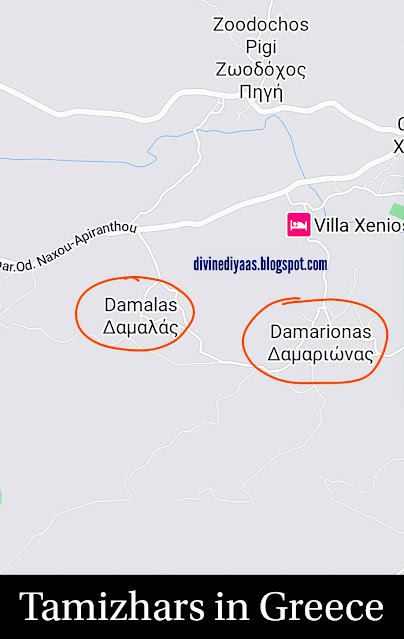
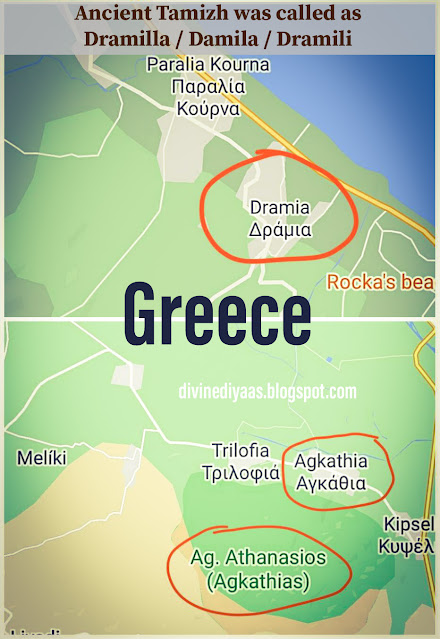
Damalias in Greece

Sage Agathiyar was a powerful Siddhar of tamizhakam, one of the seven great sages who had travelled in the boat of Pandya king Satyavrata during the great deluge of Kumari kandam. Agathiyar had established First tamil sangam in kumari kandam.

How Agathiyar is connected to Greece ?

As Pandya kings had ruled Greece, they named some of places in Greece in the name of great siddhar Sage Agathiyar. See the below picture for reference...

 
Agathiyar in Greece


Korkyra - Is an ancient Greek city and it was one of the three great naval powers. It served as an important port during 700 BCE and the ruins of ancient Greek temples and other archeological sites of the ancient city Korkyra are found in Palaipolis.

What is the meaning of Korkyra ?

    This Korkyra was named after the famous 'Korkai' port of Pandya kings. Korkai port is famous for Pearl fishing and it is one of the major naval port of tamizhakam ruled by Pandya kings.

     This ancient Greek naval port 'Korkyra', is a proof to the point that it was once ruled by Pandya kings of tamizhakam. Else, Why it has to be named after Pandya's important port 'Korkai' ???

Check the orange colored circle at the bottom of this map in the below picture. It is Korkai... It's an ancient port of Pandya kings..


Why everything goes around Pandya kings ?? Why all the cities, ports, kings were named after Pandya kings in Greece? 

Such as,

1. Panticapaeum - Named after Pandya kings

2. Pontic dynasty - Pandiyan Dynasty. Both Pontic and Pandiyan kings belongs to Solar race.

3. Cappadocia in Turkey - is named after Kapatapuram of tamizhakam

4. Korkyra in Greece - is Korkai in tamizhakam.

Why all these cities in Greece are named after Pandiyan major cities and ports ?

        Because, Greece was once ruled by early Pandya kings... Also, there are many places in Greece, which are named in tamizh (More about tamil civilization in Greece will be covered in separate post). Not only in Greece, Pandyas had expanded their territory across Eurasian countries as well...

3. Azerbaijan

        Tamiraparani is an ancient and important fertile rivers of Pandya Kingdom in tamizhakam. It is still actively flowing in Tamil Nadu and reaches Bay of Bengal in the East, but it changed its course of direction in the last 2000 years. During the period of Kumari kandam, Tamiraparani had flowed from tamizhakam to Kumari Kandam. Satyavrata, the great early Pandya king had first seen Matsya avatar of Lord Vishnu as a small fish in this river, so this river plays major part in the history of Pandyas.

Why am I talking about Tamiraparani river ? How Tamiraparani river is linked here in Azerbaijan?

        The Pandya kings who ruled Persian and Eurasian countries, had named one of the river as Tamiraparani in Azerbaijan, which is now called as 'Damiraparan' river. 
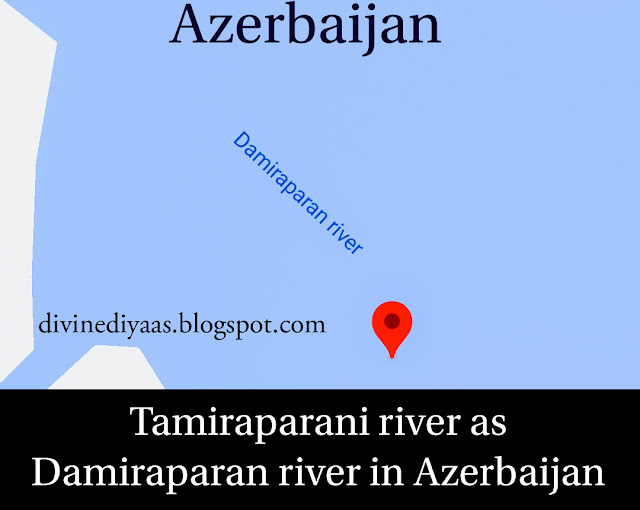
Damiraparani river in Azerbaijan


        Early Pandya kings had also named one of the largest river in Persia as 'Kaveri' (Kaveri is one of sacred rivers of India flowing in ancient tamizhakam), which is now transformed as Mt'kvari river / Kura river. The Kura is an east-flowing river south of the Greater Caucasus Mountains which drains the southern slopes of the Greater Caucasus east into the Caspian Sea. 

Like Kura river, Kaveri is also a southeast flowing river originates from Kodagu hills which flows about 800 km before reaching Bay of Bengal. 


This Kura river is having many tributaries. Let us see about one of it's tributary in Georgia.

4. Georgia

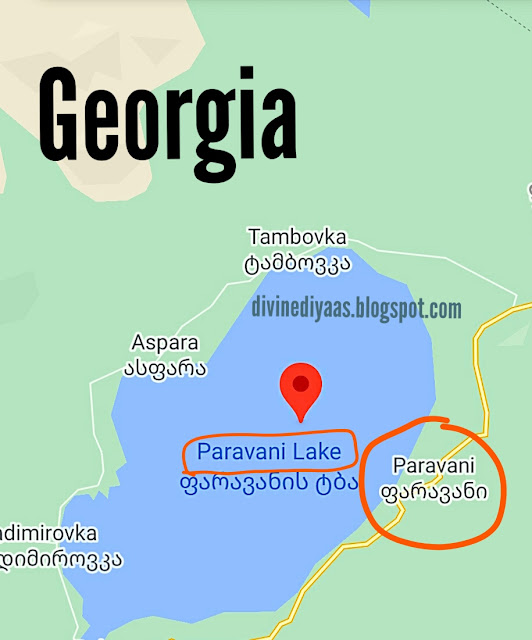
        The Paravani (Georgianფარავანი) is a river of southern Georgia and it is a right tributary of the Kura (Mtkvari).  It is the outflow of Paravani Lake, the river Paravani begins from the southern part of the lake and connects to the Mtkvari to the right. 

Paravar in Georgia

Scholars are not clear about the origin of this name. But the truth is, Paravani is a tamizh word, which is derived from the 'Paravar' caste people of tamizhakam. Detailed information about Paravars and their association with early Pandya kings are explained in the below post,


            As paravars (seafaring, fisheries are their major skill), settled near this river, they had named this river after their caste. To add more strength to this point, the Paravani lake is a popular destination for fishing. Doesn't it makes more sense now??

    Another interesting point to be noted here is, Geophysical studies shows that there is a large structure at the bottom of lake Paravani. Some of the mysterious objects are discovered by divers. According to eyewitnesses, there was a huge object at the bottom of the lake, at least thirty meters long, may belong to Bronze age

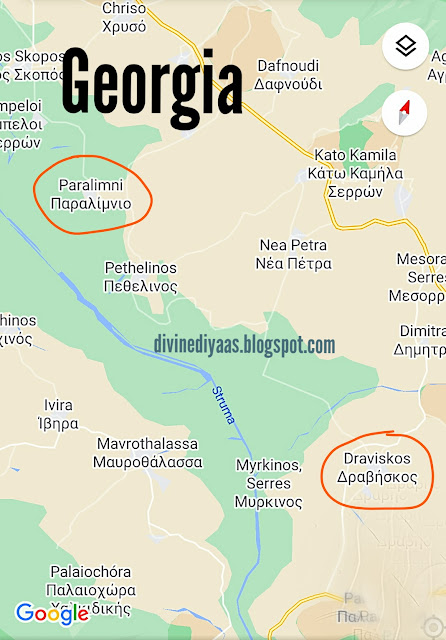
Also, Kartli is an historical region in Georgia by Mtkvari, which is a capital of the Georgia. Kartvelian language was spoken there, which is similar to the structure of the dravidian language. I'm mentioning about only few places in Georgia, which are named in tamizh, detailed one will take separate post.

Dravidians in Georgia

Here in the above picture, paralimni - refers of 'Parali' river of Kumari Kandam and 'Draviskos' - refers to the dravidians.

5. Iraq

        Hatra was an ancient city in the Nineveh Governorate of present-day Iraq. Hatra was the best preserved and most informative example of a Parthian city, Parthian kings are actually descendants of tamizh kings (will put a separate post for this). 

        Hatra city plan was circular and was encircled by inner and outer walls nearly 2 kilometres (1.2 mi) in diameter and supported by more than 160 towers. 


        Cities in Iraq under Hatra kingdom was destroyed by muslims. In early 2015 they announced their intention to destroy many artefacts, claiming that such "graven images" were un-Islamic, encouraged shirk (or polytheism), and could not be permitted to exist, despite the preservation of the site for 1,400 years by various Islamic regimes. ISIL militants pledged to destroy the remaining artefacts. Shortly thereafter, they released a video showing the destruction of some artefacts from Hatra.

        Many historical places in Iraq are destroyed by muslims stating that it's a history of non muslims and they don't want it in their places. There are few places left which is still named in tamizh. Check the picture below for the same.
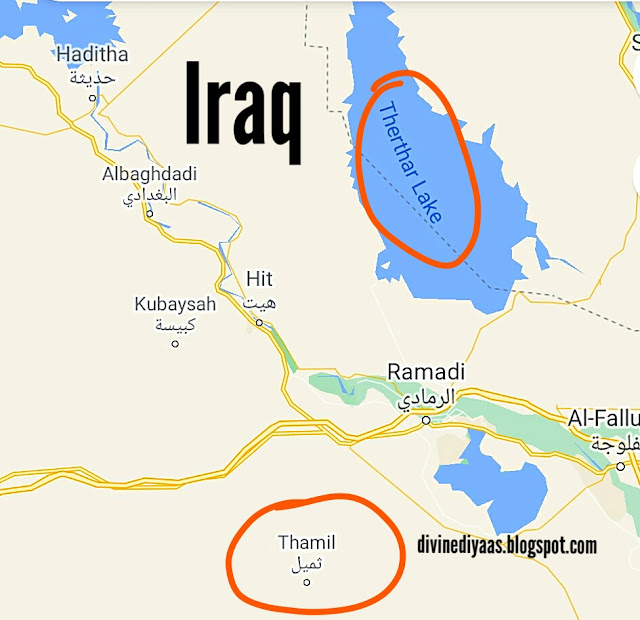
Tamil in Iraq

       In tamizh, Thertha - means pilgrimage and Thertham - means holy water offered to God. 

The main purpose of the Therthar Lake is to collect excess water of Tigris River during flood seasons and when there is shortage of water in both Tigris and Euphrates rivers, this lake will recharge water in them. Moreover, it aims to wash out the salts from the stored water in the lake by continuous draining of water naturally.

6. Syria

Mari, is the most ancient city at Syria, which was built on the western banks of Euphrates rivers by tamizh people. It was the major trading center during 3rd millennium BCE.

        The ancient tamizh civilization people selected an inhospitable area near a bend in the Euphrates River to build their new capital. They built this city as rich center for trade and goods production in Northern Mesopotamia. They dug canal to connect two bends of Euphrates river (Originally called as 'Purattu' river) and used the land to project from this to raise a perfectly circular area that would form as a heart of their new city and the canal that is been passed through it made the uninhabitable location as habitable. Fortifications were constructed, and a grand capital enclosed within two concentric circles took shape, a design it would retain for its entire thousand and thousand years of history.


Along with the construction of the linking canal, these people built two other canals on either side of the city. The eastern one on the eastern side of the river was a navigation canal. The other was an irrigation canal to feed Mari's crops.

This city was named after their storm god 'Mari'. In tamizhakam, 'Mariamma' is a storm goddess. This proves that tamizhs were settled in Syria as well and thus named a city after the goddess 'Mariamma'. Mariamman is a very popular tamizh goddess worshiped in South India. She is considered as Kaval Deivam (Protector Deity) in many villages of Tamizhakam.

7. Sumerians

        Mesopotamia is an ancient historical region of western Asia situated within the Tigris and Euphrates river system, in the northern part of the Fertile Crescent. It occupies the area of modern day Iraq, Kuwait, parts of Syria, Turkey, and regions along the Iran-Iraq border.

Sumerians      
Sumerians of Mesopotamia were originally tamizh people who were from ancient tamizhakam. In this post, I have given country wise references for tamizh people from Kumari Kandam, which in turn covers the regions of Mesopotamia (Turkey, Iran, Iraq and Syria). Thus, it is also proving that Sumerians were tamizh people from ancient tamizhakam.

Sumerian language has relationship with Tamizh, sumerians who were settled in mesopotamia during 4500 BCE and spoke a early dravidian language. The Sumerians and Akkadians dominated Mesopotamia region from the beginning of written history (3100 BCE) to the fall of Babylon in 539 BCE. But, Indus valley civilization is much prior to this, which was dated back to 9000 BCE. This is just a high level information, I will take up a separate post for Sumerians and about Egypt....

        Thus the early tamizh kings and people had spread across persian and Eurasian countries, spoke tamizh, named places in tamizh, practiced tamizh culture and traditions. Did the Pandya kings go only in the western direction and reached Persia, Europe, Asia ??? No, Pandya kings of Kumari kandam had also gone towards Eastern direction... There are also remaining parts of kumari kandam lands over there and it will be uncovered in part 8 of this post....

- Aarthi Thiyagarajan

Monday, 23 November 2020

Kumari Kandam - Part 4 (Expansion across Eastern and Western side of Bharat)

Lost History of Ancient Tamizh people - Expansion of Pandyas across India

        From the last parts of Kumari Kandam, it is evident that Pandyan King Satyavrata headed as Vaivasvata Manu with the help of Matsya Avatar of Lord Vishnu and Adisesha. Saptarishis were also migrated with the King to the Bharata Kandam. This post is going to prove that Aryan Invasion theory is a myth and people weren't migrated from North to South and it was vice versa. 

         From Kumari Kandam, when Kapatapuram / Kavadapuram was in danger and slowly facing destruction due to numerous mega tsunamis, some of the Pandya kings has migrated towards Eastern side of Bharat and reached West Bengal, Odisha and Bangladesh. Pandyas has ruled West bengal before the start of Treta Yuga and from there they have slowly occupied from Eastern side to Northern side of India. 

In Tamil, Bay of Bengal is called as 'Vanga Kadal', 

Kadal means - Ocean and 

Vanga has several meanings - Gigantic Ship, White, Pure. Here it refers to white ocean.

        As West Bengal was the prominent port city of Pandyas, they have named it as 'Vanga'. Here, Vanga meaning 'Ship', that were sailing through the white ocean 'Vanga Kadal'. This is indicating that there were huge volumes of maritime trade that has happened several thousand years ago.

kumari kandam

        So, in Tamil they have named West Bengal as 'Vanga Desam' and the people who lived there were called as Vanga tribes. Before the period of Mahabharata, this place was named as Vanga and in that epic Kunti's son Karna has ruled Vanga and Anga during his reign.

Vanga Desam

        In recent times, V was interchanged into B and it's then called as 'Bengal'. The word 'Vanga' was also mentioned in Tamil Sangam literatures, Pura Nanoru and Andal's Thirupaavai. The seafaring vessels were called as 'Vangam'. Also, there is bird species called as 'Vangaa' mentioned in Tamil verses, which are found only in Madagascar and it's islands. 

         'Vanga' was then transformed as 'Bengal' during the reign of Britishers.  Also, Pandyas have named their capital as 'Tamralipti',  referring to 'Tamaraparani' River which was flowing in Kumari Kandam. This river is still actively flowing now in Tamil Nadu, but it has changed its course of direction in the last 2000 years.


        Early Pandya Kings have named many places in Tamil in West Bengal, Odisha, Maharastra, Karnataka, Goa, Nepal, Assam etc... How can it be Pandyas ? Weren't they Cholas / Cheras / Pallava Kings ? 

     Here you go !! In memory of their mother land, some of the famous cities of Kumari Kandam has been used to name the places in West Bengal, Odisha, Maharastra, Nepal, Assam. In this course of 7000 years, many of those names were forgotten, some names got changed and some names are still in use. 

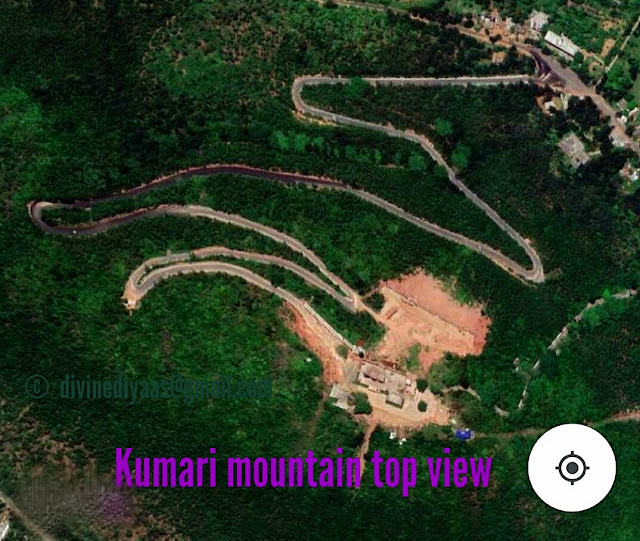
         In Kumari Kandam, there were two main notable rivers, which were Parali and Kumari Rivers, also there was a famous Kumari mountain at the south of Kumari Kandam.

     The same river and mountain names can be found in West Bengal and Odisha. There is a famous TaraTarini temple situated at the Kumari Hills of Odisha. Kumari is a proper Tamizh name.

Kumari Mountain

        Cholas and Cheras haven't seen or ruled Kumari Kandam, Pallavas were later kings in the history of Tamil Nadu. So, this was named by early pandya king.


Also, near to this temple, there is village named 'Kurunjipur'. What is the meaning of Kurunjipur ?? Kurunji is a Tamil word. According to Tamil Sangam literatures, geographical landscapes were divided into 5 categories 
  1. Kurunji - Mountains and it's associated regions, 
  2. Mullai - Forests and it's associated regions, 
  3. Marudham - Agriculture and crop lands, 
  4. Neidhal - Sea shore and coastal areas
  5. Pallai - Desert area. 


    There is also a place named 'Kurunji' in Maharastra, which is near Mahabaleshwar and there is also a place with same name in Kerala as well.  The famous Shri Vaijnath Shiva Temple in Maharastra is situated at the place called Parli (Parali River of Kumari kandam). It is an ancient Shiva Temple.

River Kumari flowing in the Purulia district of West Bengal. 


Kumari River

      Also, there is a proto historic civilization discovered at the valley of Ajay, Kunoor and Kopai at West Bengal. Kunoor , Kopai ?? These are Tamil names. Kopai means cup, Kunoor - place in Tamil Nadu near Ooty. 

        Pandu Rajar Dhibi is an archealogical site at West Bengal, which is dated as chalcolithic site near the banks of Ajay and Kopai rivers.  Pandu Rajar is not Pandu of Mahabharata, it's Pandya Raja of Early pandya, because the remains from that place were dated aback to Chalcolithic age. Early Pandyas were dated corresponding to Satya Yuga and Treta Yuga.


        Also scholars mentions that excavation from Pandu Rajar Dhibi reveals that it has connection to Crete and Mediterranean lands and they were sea explorers. In my previous posts, i have mentioned that early Pandyas were the First sea explorers and they followed the direction of sea turtles for the navigation. Pandya kingdom had the First and Strong Navy Force, to explore and to expand their Rajya. 

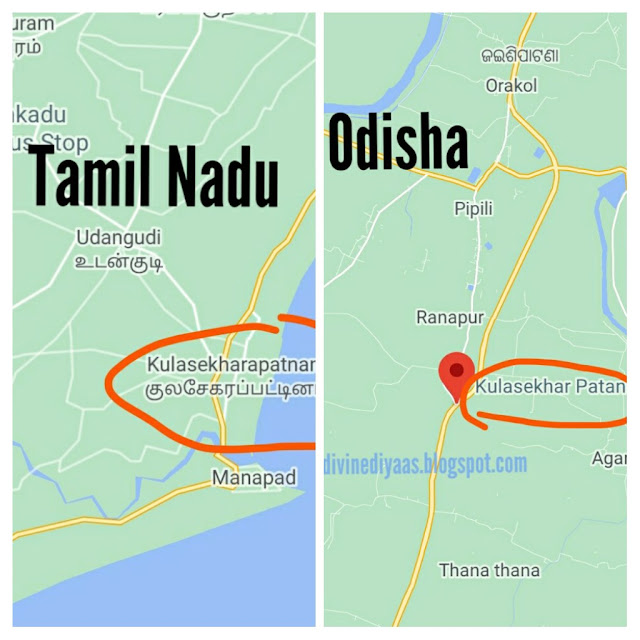
        Early Pandyas and Tamizh people were migrated to the Eastern side of Akand Bharat. Once, there was a famous and powerful Pandya king named 'Kulasekhara Pandyan'. He had ruled the entire South India and Eastern side of India (Not to confuse with the later pandya king in the same name). There are many places in India which were named after him.

Kulasekharapattanam


        Like Kanya Kumari in Tamil Nadu, there are also some places where Kumari is being worshiped. In Nepal there is place called as 'Kumari Temple'. Kumari is a Tamil name. In Nepal, now the practice of worshipping Kumari were subjected to change by the conquest of many Mughal rulers and Britishers.


Kumarikata place in Assam


     In Nepal, there are also places called 'KumarKhod', 'Kumari' etc. There is a holy river called 'Kankai' river flowing through Nepal, it's also called as golden river. In Tamil, 'Kanaka' means - Gold, there is flower named 'Kanakambaram' meaning Golden fire flower, which grows only in Tamil Nadu and Kerala.


     Pandya Kings have also spread across eastern side of Bharat and ruled Bangladesh, Myanmar, Thailand, Cambodia and Vietnam. There are many places in Eastern side of India named in Tamil. Also, they have expanded their kingdom in all sides of India. (Separate post will be published for the same).

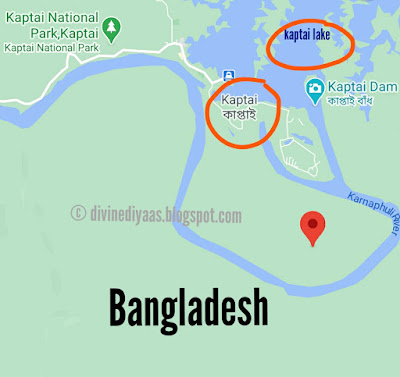
In the map below, Kaptai name was given to a place and lake in Bangladesh. It was named in memory of 'Kapatapuram', in short it was called as 'Pandya Kavada / Kapata' as per Chanakya's Arthasastra.

Kaptai Lake

Madaripur - present day Madurai in Tamil Nadu, which served as capital of Pandyas

Kawadi - Kavada / Kavadapuram, which was a port city of Pandyas. Pearls from this place were pure and priced highly.


Places in Maharastra

Nerur - meaning water place. 'Ner' meaning water in tamil, 'or' / 'ur' meaning place in Tamil. 

Kavathi - Kavadapuram

Parule - Paruli river of Kumari kandam 


Places in Goa

Sanguem - refers to Sangam of Tamil Nadu. In this district, there are ancient petroglyphs of 20,000 years old were identified at Usgalimal. Currently, it us under the ASI.


There are engravings of Bull (Symbol and flag of Pandyas), labyrinths and human figures on laterite stone at that site. 


        During the reign of early Pandyas, these places such as Madurai, Kavadapuram / Kapatapuram, Kavadai, Korkai, Kayalpatinam, Adichanallur, Kudal / koodal, Kanya kumari etc were prospered with great wealth and much fame.

Kayalpada in Odisha - Kayalpattinam in Tamil Nadu. In Tamil, Kayal means - Fish, Carp type fish, 
Pattinam  means - City


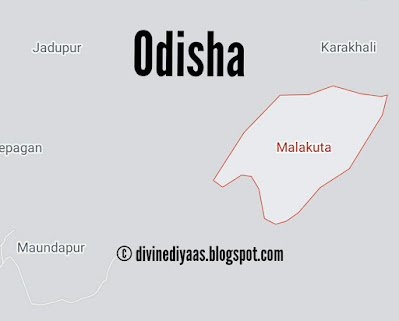
        Chinese traveler Xuangzang mentions about a kingdom further south from Kanchipuram, a kingdom named 'Malakutta', identified with Madurai of Tamil Nadu.

Malkutta


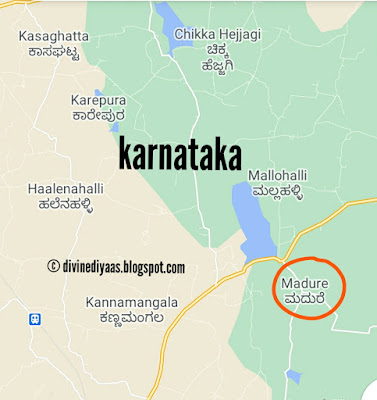
Also Madure in Karnataka

Madure Karnataka


    Not only these places, Tamil Pandyas has ruled many places like Afghanistan, Pakistan, Sindhu province, Iran and Turkey. 
        
        The Indus Valley Civilization was FIRST ruled by Early Pandya Kings and it was flourished during their reign. There were no ARYAN INVASION happened, it was Tamizh Pandya Kings who ruled the entire Akhand Bharat and all around the World. The language and the inscriptions of Indus valley civilization is still not deciphered and linguists are relating it to Proto - Dravidian language, the early form of Dravidian language, in short the early form of Tamizh, which is also called as 'Tamizhi'. The ancient Indus Valley Civilization and it's Truth about Tamizh Pandya Kings will be explained in my next post.
 
       Another set of Pandyas from Kumari Kandam didn't migrate towards India, they have traveled towards Malaysia, Thailand, Indonesia, Australia and expanded their kingdom. It will be explored more in the subsequent parts of Kumari Kandam.

--to be continued...

- Aarthi Thiyagarajan