To receive email notification

Please fill the contact form below to receive email notification when a new post is published in this blogspot.
Showing posts with label Mariamman. Show all posts

Friday, 16 July 2021

Koozh - Most ancient and healthy food in the world!!

 Koozh - Most ancient and healthy food in the world!!


        Koozh / Kuzh is the most ancient and healthiest food in the world. It is the super food of ancient Indians and it is considered as a staple and healthy breakfast.

        Koozh is a probiotic food, prepared using millets through fermentation process. Curd and Koozh were the FIRST probiotic food founded by ancient Indians, around 9000 years before...

       
         Hence, Koozh is the most ancient food in the world. It was prepared using millets such as Ragi / Finger millet or Kambu / Pearl millet / Bajra. Rice was cultivated in the last 5000 years, but before that millets were widely used by Indians. Koozh is considered as an easy, healthy, energetic and filling breakfast. It is in the form of kanji (porridge), so it's easy to consume. 

            Koozh is a part of daily diet of rural and agricultural people. As, it is prepared using millets, it is loaded with proteins, vitamins, minerals (rich in calcium),  dietary fibers and good bacterias, which is good for the gut health. High number of good bacterias are formed during fermentation process of this food and hence it's having a probiotic potential. These good bacterias are responsible to improve the gut health of the body.

        It can also be consumed by babies and children. Even today, in south india, babies will be given Ragi porridge, to gain weight and to improve bone strength. It is a powerhouse of calcium.


Traditional koozh preparation involves fermentation process. Curd is also prepared using fermentation process. Though, it is a simple procedure, koozh has numerous healthy benefits. Fermentation is an excellent innovation in food science. Let us see about the hidden health benefits of fermentation method....

 Fermentation - was FIRST founded by ancient Indians in India. Curd and koozh were the oldest food in the world, which is prepared using fermentation process. During this process, natural good bacterias are formed, which is called as 'Probiotics'. Also, while fermenting millets, the levels of Thiamine, riboflavin and niacin contents will be increased rapidly. 

        
        Fermented foods contains probiotics contents such as lactobacillus bacterias. These bacterias are called as good bacterias, which are improves gut health in the human body. 

        Gut health plays a major role in our immune system. It comprises more than 75% of our immune system. There are about trillions of microorganisms in the gut that promotes normal gastrointestinal function, protects body from the infection and regulates the metabolism.

        Probiotics gives your immune system a boost, it promotes the production of natural antibodies in the body, it helps to maintain good gut health. If you gut is healthy, then your immune system will self heal your body automatically...


        Probiotics promotes the natural production of antibodies in the body and boosts the immune cells.

         Consuming Indian spices, herbs, fermented foods are in practise among the people for several thousand years without any side effects. In Tamil, there is a saying called 'Unnavea Marundhu', Marundhea unnavu', meaning, 'Food is medicine and medicine is food'.

        These traditional Indian foods such as Koozh, took care of the gut health in the body. If your gut is healed, then rest of your body will be healed automatically by the body's immune system. Gut health plays major role in the immune system to work effectively. 

            Now, coming back to koozh, this popular fermented food is highly nutritious and a perfect immunity boosting food. As this food is like malt, it improves the digestion in the body, by converting complex carbohydrates and proteins into simple sugars and amnio acids. The fermented Ragi koozh is rich in amino acids such as valine, threonine, leucine and phenylalanine.

In South India, especially in Tamil Nadu, for many festivals and occasions Ragi koozh is being offered as prasadham to God. In the month of Chithirai (first month of tamil calendar i.e April / May) and in the month of Aadi (July / August), ragi koozh or kambu koozh will be prepared in huge vessels in temples and offered to Amman goddess who is called in different names such as Mariamman / Karu mari / Yellamma etc. 
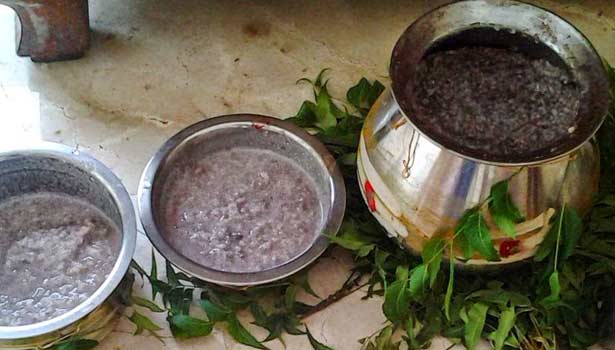

        In the above picture, koozh is prepared for pooja in a brass vessel, who's neck is tied with a garland of neem leaves. 

Kambu koozh / Pearl millet / Bajra:

        Koozh is also mentioned in tamil Sangam literature as healthy traditional breakfast or lunch. Below picture is: Kambu koozh / pearl millet / Bajra koozh...


       This kambu koozh is rich in fiber, high in iron, calcium and vitamin B, B12, essential nutrients, proteins. It gives a sour tang flavor due to fermentation. It can be consumed by adding water, buttermilk, onion, curry leaves, and coriander leaves served with side dishes like green chilies, pickles, spiced mango or dry fish gravy. The microbes present in the koozh is probiotic in nature and contains micro-organisms provide health benefits when consumed


        Millets are widely used by ancient Indians and so it was largely cultivated than rice. Millets were given much importance in the Indian foods.

There is also a song for Lord Murugan that starts with, 'Thaenum Thinai Maavum' - meaning - I offer honey with Thinai flour ie. Foxtail millet. This shows how the millets were valued and given importance by our ancient Indians. 

        The meal made of Thinai / foxtail millet was the staple food of ancient Tamils is called as 'kali' and a drink made out of kali is called as 'koozh'. These foods Kali and Koozh is also mentioned in tamil sangam literatures. Kaikuthal Arisi and the millets are also highly nutritious. 

Below are the different varieties of millets used in India...


        Consuming millet is more healthier than rice, as millet releases a lower percentage of glucose.

Millets have a greater amount of minerals like iron, magnesium, phosphorous, tryphtohan, phosphorus, fibre, B vitamins, anti-oxidants and potassium than rice.

Below millet varieties are largely used in Tamil nadu rural areas...
  • Barnyard Millet (Kuthiravaali in Tamil)
  • Finger Millet (Kelvargu )
  • Foxtail Millet (Thinai)
  • Kodo Millet (Varagu)
  • Little Millet (Samai)
  • Pearl Millet (Kambu)
  • Proso Millet (Panivaragu) 
  • Sorghum (Cholam) 

Phytochemicals:

        Koozh prepared using millets are rich in phytochemicals. phytochemicals are naturally occurring compound, which plays important role in the human body. The phytochemicals may stimulate the immune system, slow the growth rate of cancer cells, prevent DNA damage that can lead to cancer, reduce inflammation and helps to regulate hormones. These phytochemicals act as antioxidants, neutralising free radicals and removing their power to create damage. 

        That's why Koozh is called as 'Super food of Indians'. Ancient Indians regularly consumed this food, they were fit and lived healthy lifestyle for around 100 years without any diseases such as diabetes, cholesterol, obesity, blood pressure etc. 

        My great grand mother, who took only traditional Indian foods had lived up to 97 years without having any of these new diseases. She was fit and healthy. Also, she never took any medicines, even though she gets cold or fever. She knows most of the home remedies, so she follows only those remedies such as Kashayam / kada / herbal drink, pepper rasam, dry ginger paste on forehead to reduce fever etc. She regularly consumed millet based food and she made sure to eat fermented food like Koozh, Idli, Dosa for daily breakfast.

This koozh is also called as 'Kanji', sometimes it's together called as 'Koozh Kanji'.

        This food is famous across Asia and consumed daily. In some Asian countries such as China, Japan, Korea, Taiwan, Burma, Cambodia, Indonesia, Laos, Philippines, Singapore, Thailand, Srilanka and Vietnam, it is called as 'Congee', which is prepared using rice, vegetables or meats through fermentation process.


        It is also eaten as 'Canja', in Portugal. In Polynesian diet, it is called as 'Poi' and it's considered as staple food for people in Hawaii, cook islands, Easter islands, Marques Island etc. In Polynesia, it was prepared using taro roots and it is their most ancient food...

            Traditional Indian foods has plenty of nutritional values for a good health. It's not too late than never, so do change the food style, eat traditional indian foods, include more millets in the diet and spread this knowledge with the next generation kids for a healthy living!

        Koozh is not just a food, it's a food science, which is been under estimated for decades. After globalisation, Indians who are not aware of the knowledge of fermentation, considered traditional Indian foods as cheap and unattractive. Now everywhere in commercial markets, big companies are selling probiotics and fermented foods in an attractive packaged box with a high price. Westerners realised the values of our food...

         It's now high time to return to our roots, choose homemade healthy foods and naturally fermented dishes for a good health of our family!!

Health is Wealth!!

- Aarthi Thiyagarajan

Thursday, 28 January 2021

Tamizh gods in ancient Syria, Turkey, Europe and Russia !!!

Tamizh gods in ancient Syria, Turkey, Europe and Russia !!!


        There are several guardian deities in the villages of ancient Tamizhakam. Some of these deities are still being worshiped in dravidian states of tamizhakam, such as Mariamman, Kotravai, Ayynar / Aiyyanar, Karupa sami etc. These village deities are respected and worshiped in high regard before the confluence of vedic gods with tamizh gods. Several thousand years before, a branch of tamizh people have migrated from the ancient tamizhakam and reached persian gulf, they expanded their region from there, created and developed many new cities with their knowledge, skills,  started new trade centers and settled across Iran, Iraq, Syria, Turkey, Egypt, Greece, Ukraine etc. 

    How can it be said that people in those prehistory places of persian gulf were branch of tamizh people ? 

Because, several thousand years before, people who have lived in those ancient places can be studied by their way of living, culture, their artifacts, their gods, food etc. While examining their way of worship, rituals and Gods, it turned out to be similar to the Tamizh deities of dravidian states of India, especially in Tamil Nadu. First, let us see about tamizh deities one by one followed by places there were worshiped in Asia.

Mariamman:
        
        Mariamman is a very popular tamizh goddess worshiped in South India. She is considered as Kaval Deivam (Protector Deity) in many villages of Tamizhakam. So, she is also called as 'Gramma Deivam', meaning Guardian of the Village. There are different depictions about mariamman according to the regions where she was worshiped. 

        In this modern times, she's been associated with Goddess Durga / Parvati. This post will shed some light about forgotten or hidden history about this goddess of ancient Tamizhakam and it's spread to Mesopotamia, Syria, Europe and Russia before the arrival Vedic times.

Mariamman at Samayapuram, Trichy

    Let us know about the history about the Goddess Mariamman. The word 'Mari' is of Sangam age origin, 

In Tamizh, Mari - means Rain, Amman - means Mother Goddess. 

    Mariamman is a Goddess of Rain and Storm. Mariamman was worshiped by ancient tamizh people, as goddess of Rain and prosperity, who provides abundant rainfall for agricultural crops in the corresponding seasons. The elaborate description of rituals performed by Kurava priestess for Mariamman at Pazhamudircholai are mentioned in Sangam literature. There are several agricultural related seasonal festivals which were celebrated during ancient times, some of them are forgotten now. There are many science behind those agricultural festivals, will pen down a separate post for those festivals and it's science behind it.

    Mariamman, is mentioned in Tamizh culture and worshiped by Tamizh people. Goddess Mariamman is usually worshiped by preparing 'Pongal' in the temple premises by most of the farmers, to pay tribute to the this god for protecting their lands and providing rain for better yields of crops. Devotees also offer 'MaaVilaku', a sweet made out of rice flour, jaggery and ghee. She is the main Tamizh mother goddess of Tamizhakam. She is also considered as god of agriculture and rain.

        In addition to Mariamman, there is one more forgotten ancient Tamizh deity called as 'Kotravai' / 'Korravai' . Kotravai is a Goddess of war, bravery and victory in Tamizh traditions. She is also called as 'Suli', 'Kauri'. Korravai is considered as one of the ancient Goddess, as Kotravai was mentioned in earliest work of Tamizh grammar called 'Tolkappiyam'. Tolkaapiyam corresponds to Sangam age of Tamizhakam. Korram - means Victory, Success and Bravery. She is been mentioned in many poems of Sangam literatures. 


        Kotravai is seen as mother Goddess, fertility goddess and success in agriculture. Depending upon the location, Mariamman and Kotravai were worshiped in ancient Tamizhakam. 

        Both Mariamman and Kotravai were ancient Tamizh goddess who were worshiped by dravidian people, which was before the arrival of Vedic culture. Post vedic culture, both of these goddess were associated with Durga / Parvati. This means that Tamizh civilization was established across Bharat, before the Vedic civilization. The name of the goddess are combined / associated with other vedic goddess. Though the names are merged, it can not be changed when it's being followed as a practice in Tamizh culture and traditions by Dravidian people. Everywhere in this world, though people and gods can be called in different names, but tamizh people can be easily identified by their traditions and culture they follow. Now, lets us see one such example. As the people have migrated across Asia, Mariamman and Kotravai were worshiped interchangeably. 

        Tamizh civilization has spread from Indus region to Afghanistan, Turkmenistan, Uzbekistan and some people from Kumari Kandam has migrated to Iran coastal areas, to save themselves from the major flood and submergence of their homeland (Kumari kandam). From Iran, Tamizh civilization has spread across Iraq, Syria and Turkey. One may think this is absurd, but many artifacts and historical points which are related to Tamizh civilization which were identified in those areas, also there are many cultural and linguistic similarities. I have already disclosed some of the references / connection points about Pre Indus Valley civilization of tamizh people from Kumari Kandam, the Early Tamizh Civilization at Sindhu river that was once ruled by Tamizh Pandya Kings. Similarly, will publish many such posts for ancient Tamizh civilization at Afghanistan, Iran, Iraq, Turkey and Syria before the arrival of Vedic, Christian and Muslim periods.

    In this post, will unfold about one important place at Syria. There are many ancient sites at Syria, one of the important ancient site at Syria's history is Mari. 

MARI:

Mari, Syria

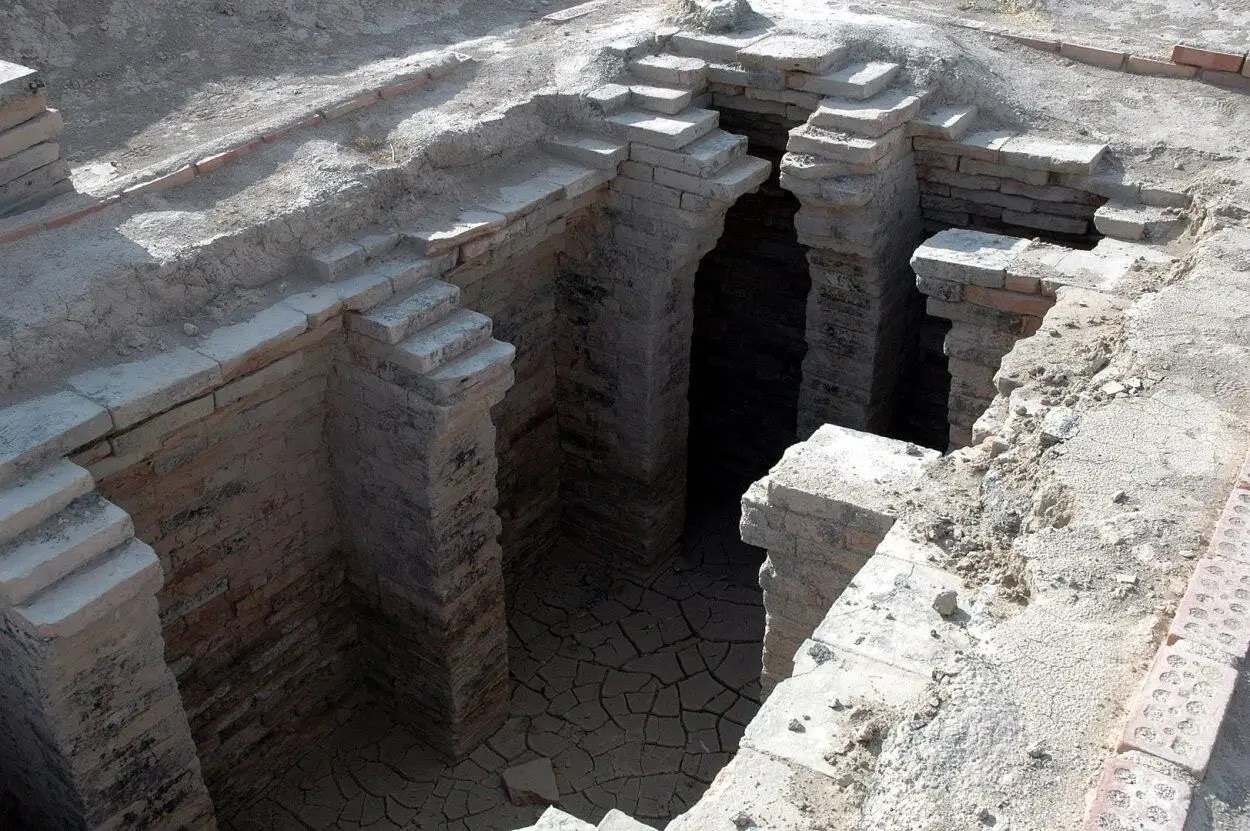
Ruins of Mari

    Mari, is an ancient Semitic city in Syria, also called as Tell - Hariri. It is one of the most famous site in the near East, dated to 3rd millennium BCE. It was destroyed and rebuilt several times. It served as major trade center during third millennium BCE and it was the center for copper and bronze smelting. 


        Country of Mari, written in cuneiform in the picture mentioned below dated as 2090 BCE. How it is connected to Tamizh goddess Mariamman ?


        Mari is ancient storm deity of Mesopotamia and Syria, this city is named after that deity. Mari is an important place and it's been mentioned in many kingdoms of Mesopotamia, Egypt, Hitties (the ancient Indo - Iranian people settled in Syria). Tamizh goddess Mariamman is also an ancient storm deity, who was worshiped by farmers for adequate rain and better yield of crops. 

       A branch of most ancient tamizh civilization was Sumerians, who spread a vast civilization on the banks of Euphrates river in ancient times. Sumer is earliest known civilization of southern Mesopotamia and also one of the first civilization in the world dated back to 6th millennium BCE. In the late 4th millennium BC, Sumer was divided into many independent city-states, which were divided by canals and boundary stones. 

        Each of the Sumer city was centered on a temple dedicated to the particular patron god or goddess of the city and ruled over by a priestly governor (ensi) or by a king (lugal) who was intimately tied to the city's religious rites. So, this city was named after God Mari and it was mentioned as 'Mari' in many unearthed ancient writings at Syria and Egypt.

Warrior with axe at Mari

Chola period, Sulam (One of the Weapon of Mariamman)

        According to researchers, the ancient site Mari at Syria was featured a wealth of prestigious palaces and temples, and art schools where beautiful sculpture and painting works.

        The growth of the city from a small village to an important trading center was due to its diverse economy in the ancient world. The city came to control the trade lanes between different regions such as western Iran, Mesopotamia and parts of Anatolia.  The cargo brought through the city grew to include dates, olives, pottery, grains, timber, and stone. 

        The ancient tamizh civilization people selected an inhospitable area near a bend in the Euphrates River to build their new capital. They built this city as rich center for trade and goods production in Northern Mesopotamia. They dug canal to connect two bends of Euphrates river (Originally called as 'Purattu' river) and used the land to project from this to raise a perfectly circular area that would form as a heart of their new city and the canal that is been passed through it made the uninhabitable location as habitable. Fortifications were constructed, and a grand capital enclosed within two concentric circles took shape, a design it would retain for its entire thousand and thousand years of history.

        Along with the construction of the linking canal, these people built two other canals on either side of the city. The eastern one on the eastern side of the river was a navigation canal. The other was an irrigation canal to feed Mari's crops.

        At some point, around 2650 BCE, this city ceased to be inhabited for reasons unknown. Over the next century, the canals silted up and the city lay empty. This earliest city was occupied by Tamizh people and left the place for some reasons such as no water, drought and so on. 


Now, let us see about goddess Kotravai and Lord Murugan who were worshiped by ancient sumerians. 

Kurunta is the Hittite god of wild animals and hunting. Hitties are anatolian people, that is first Indo european people of east (i.e Tamizhakam) around 4th millennium BCE and settled in Anatolia, modern Turkey. They are the oldest Indo - European ethnolinguistic people. The name of the deity 'Kurunta' and their monarch both derive from a Proto-Indo-European root *ker-, meaning 'head', 'horn'. In the Anatolian branch, the root originated from Hittite word kara - means war  and Cuneiform Luwian zarwaniya ('pertaining to horn').

        Sumerogram is the use of a Sumerian cuneiform character or group of characters as an ideogram or logogram rather than a syllabogram in the graphic representation of a language other than Sumerian, such as Akkadian or Hittite.

Hittite Kurunta is usually written as 𒀭𒆗 LAMMA, where LAMMA is the Sumerogram for "stag", the Luwian deity Kurunta being associated with this animal. 


Hittite god, Kurunta on Stag

    In tamil, Korra - means war (Kotravai - war goddess) and kara - means horn, sea shore. Kokarai is an instrument made out of bull's horn and produces a sound which is like 'ma'. In Hittite kara - means war and ker - means horn, now it is evident that these are tamizh words which were transformed over the period of time.  

Kotravai, mounting riding a stag and mounting on a Bull


        Thirumurukatruppadai, an ancient tamil poem in sangam literature mentions Murugan as the son of Kotravai and celebrates him as “Kotravai Chiruva” and “palaiyol kuzhavi”. Tamil god Murugan is a war god and also lord of hunt, chieftain of hunters and ancient deity of hills. 

        So, Kurunta is none other than tamizh god 'Murugan', also called as 'Kandan' / 'Kumaran', son of Tamil mother goddess Kotravai. Hittie god Kurunta is - war god and hunt, Tamizh god Muruga is - war god and hunt. In hitties, kurunta was represented by Stag (deer), this is also confirming that it's god murugan, who was represented by his mother kotravai's stag. In sangam literature, it is mentioned that Murugan - war god, god of kurunji region (Mountain and it's associated region), Kotravai - war god, god of palai region (dry lands)

Lord Murugan - War god

        So, hitties worshipped mother goddess Kotravai and her son Murugan, as Kurunta. This proves that hitties were none other than migrated Tamizh people from ancient tamizhakam. Also, scholars accepts that Hittites spoke Indo-European language. This is one small example for saying that Hittites are of tamizh origin and there are many such relations to say that they from tamizhakam, more details about them will be disclosed in a separate detailed post. 

Mari in Europe:


        Mari, also called Mari Urraca, Anbotoko Mari ("the lady of Anboto") is the goddess of the Basques.  Legends connect her to the weather. Basques are ethic group of southern Europe, Basque country is the home for Basque people. 

        Goddess Mari is considered as a personification of nature, also called as 'Muruko lady', she is considered as queen of gods, having more mythological powers. She is one of the most ancient gods of matriarchal culture of ancient Europe. Mari is predecessor of Celtic gods in Celtic culture even before Christianity


Mari of Basques

        Mari was associated with various forces of nature, including thunder and wind (similar to tamizh goddess mariamman). Mari was regarded as the protectors of senators. She is depicted as riding through the sky in a chariot pulled by horses or rams. Her idols usually feature a full moon behind her head.


Mari is the main character of Basque mythology, having, unlike other creatures that share the same spiritual environment, a god-like nature. Mari is often witnessed as a woman dressed in red. She is also seen as a woman of fire, woman-tree and as thunderbolt. Additionally, she is identified with red animals (cow, ram, horse), and with the black he-goat.


Mari In Russia


        The Mari people are a Finno-Ugric ethnic group, who have traditionally lived along the Volga and Kama rivers in Russia. Almost half of Maris today live in the Mari El republic, with significant populations in the Bashkortostan and Tatarstan republics. In the past, the Mari have also been known as the Cheremisa or the Cheremis people in Russian and the Çirmeş in Tatar.

Mari religion at Russia

        According to scholars, the ethnic name mari derives from the Proto-Indo-Iranian root márya -, meaning 'man', literally 'mortal', which indicates early contacts between Finno-Ugric and Indo-Iranian peoples. But, actually Mari is a tamizh root word, in tamizh there are two meanings for this word, mari - means rain, also mari - means change. This means that the ethnic group at Russia belongs to a branch of ancient tamizh people who have migrated there. Mari people in Russia are also worshiping tamizh goddess Kotravai and god Ayyanar. The traditions and rituals they follow for worshiping these gods are proving that they have tamizh roots.

        Ukko is the god of the sky, weather, harvest and thunder in Finnish mythology, which is parallel to Uku in Estonian mythology.  It is believed  that Ilmari, another Finnic sky god, is the origin of Ukko. Ukko is held as the most significant god of Finnish people.


        Vakkajuhlat / Vakka festival is dedicated to God Ukko,  also known as Ukon vakat. Vakkas were commonly held in May coinciding with the spring sowing. During vakkas it was customary to consume or otherwise offer a container or some other vessel of an alcoholic beverage or food as sacrifice. 

        The same ritual at the same time (April month), is also being followed by tamizh people for worshiping Ayyanar and Karupu sami, the village guardian deities of tamizhakam. Tamizh people also worshiped these gods by preparing 'Sweet Pongal', for a good harvest and for protecting their lands from natural clamities. During this annual gathering, a large number of goats and chicken are sacrificed for Karuppanar. He is also offered Beedis (country made cigarettes) or cigars and Naravam or some form of modern alcohol.

Aiyyanar / Ayyanar

        It appears that often the Vakka festival was held in the community's sacred grove or hiisi where an animal sacrifice was sometimes also performed as part of the same festival. This ceremony was believed to guarantee good weather for the coming year and thus a good harvest. 

Mari people worshiping at Sacred grove


        Similarly, the same sacred grove worship is being practiced in tamizhakam for several thousands of years. Nature worship is in Indian tradition. Sacred groves represents one form of nature worship which is majorly followed by dravidian people. Sacred groves have temples within them, depending upon the location, different guardian deities are being worshiped over there. This tradition is still being followed by village people for many generations. 

        The villagers believe that these groves provides livelihood directly or indirectly and protect them from natural catastrophes. Many species of trees, shrubs & herbs, climbers etc are grown in a sacred grove called Kovil-Kadu at Tamil nadu. The Kovil Kadu comprises of sculptures of Tamil folk deities (Mariamman and Ayyanar) and saplings from Tamilnadu.  There are many sacred groves in Tamil nadu, Kerala, Karnataka and Andhra pradesh. 

Kovil kadu, a sacred grove at Tamil Nadu, with Mariamman deity


Aiyyanar statue at Kovil Kadu


        Thus, the people of ancient tamizhakam had worshiped gods with proper traditions and rituals according to the seasons with scientific knowledge behind it. They have respected and held gods at high regards and this was not taught new to the dravidian people during Vedic times, these customs and tradition were already in place much before that. From tamizhakam, where ever a group of tamizh people have migrated / settled / ruled in a place, these values of traditions, customs, science, agriculture, medicine and worshiping gods have spread across the World. Many such details about ancient tamizhakam and migrated dravidian people will be published in forthcoming posts.


- Aarthi Thiyagarajan