To receive email notification

Please fill the contact form below to receive email notification when a new post is published in this blogspot.
Showing posts with label Lord Shiva. Show all posts

Monday, 14 June 2021

Early Inventions of ancient Indians - Invention 1 - Chaya Someshwara Temple !!

Early Invention of ancient Indians - Chaya Someshwara Temple - Mysterious Shadow temple of ancient Chola kings!!


            Ancient Indians had invented many priceless science concepts, technologies and given valuable medicinal knowledge to this World. But, these early inventions of ancient Indians are not recognised and acknowledged. In fact, many such valuable inventions of ancient Indians are being stolen and getting patented in the names of foreigners and foreign organisations.

        In this blog, I will bring upon the all those lost, suppressed and stolen work of Indians and will keep a count on it, to know the total number of original inventions from Bharat. This post will throw some light on one such ancient scientific inventions of Indians, which are not recognised by any of the scientists or science organisations in the World.
   
First, let us see about the significance of the temple 'Chaya Someshwara', to know completely about the 2 such ancient scientific inventions of our unsung ancestors. 
        
Chaya Someshwara temple is situated near Hyderabad, Nalgonda district of Telangana. This temple is a live demonstration of early inventions of ancient Indians, which were exhibited in the temples before the westerners could invent it. 
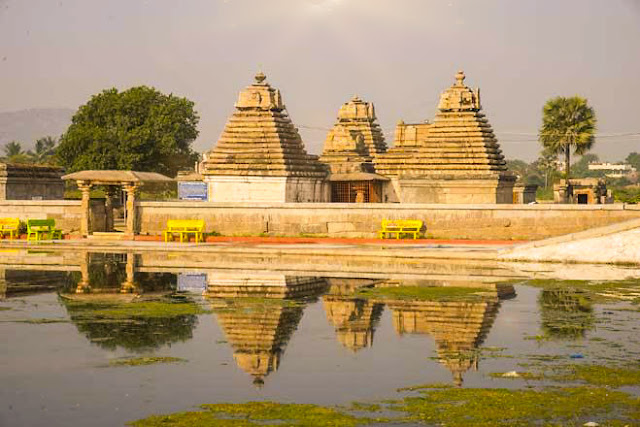

        This temple was built in 11th century CE by great Kunduru Chola kings with a mix of dravidian and kakatiya style of architecture.  

Chaya means - Shadow, 
Someshwara means - Lord Shiva, who is the main deity of this temple.

This temple is famous for its mysterious shadow that falls on Shiva lingam throughout the day, irrespective of the time and position of the sun. 


The Department of Archaeology and Museums had declared it a ‘protected monument’ in year 2000.

        There are three sanctums in this temple, one for the main deity Lord Shiva, in the form of Shiva lingam, second sanctum dedicated to Lord Brahma and third sanctum dedicated to Lord Vishnu, but the idol of Lord Vishnu was destroyed by the invaders and thus currently Lord Shiva's idol has been placed over there. 

Due to the presence of Lord  Shiva, Vishnu and Brahma, this temple was named as Trikutalayam. 

In this temple, there are three types of mysterious shadows that one can experience near each sanctum. Let us see about each sanctum shadow one by one.

Mystery shadow 1
    
          The first sanctum dedicated to Lord Shiva, where there is an everlasting mysterious shadow that falls on Shiva lingam throughout the day, irrespective of the time, direction and position of the sun. The position of shadow also never changes in any day and any time.  

    The pillars in this sanctum, were designed in such a way to cast a unified pillar’s shadow constantly on the shiva. 

Below picture - is the first sanctum, where you can see Lord Shiva over there, in the form of lingam.


Look at the strong shadow that falls precisely on the Shiva Lingam. 

I will explain the mystery about this shadow in 4 points.

Point 1. There are no pillars opposite to the Shiva lingam and to the sanctum. So, what is the source of this shadow? Below picture is for reference, where the pillars are positioned on the both the sides of the sanctum. 


Point 2. Usually, When the position of the sun and the direction of the light changes, the position and shape of the shadow will also change. But, here in this temple, the shadow on the Shiva lingam doesn't change its shape, irrespective of the direction of light, time and position of the sun. It always stands still over the lingam.

Point 3. Even, this shadow can not be removed by standing in front of Shiva Lingam or blocking any pillars in the temple. 
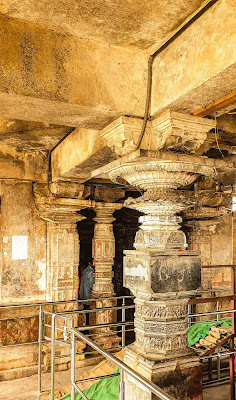

This is the side view of the pillar. Check out the pillar design, it is very unique. The ancient Indians had used an advanced technology to cast a constant shadow on the Shiva lingam without any change in the position of the shadow.


Point 4. You can test the shadow by standing beside any pillar, but can't see your shadow on the Shiva lingam, only the unified same shaped shadow will be visible on the Shiva lingam. So, the source of the shadow and the source pillar is unknown yet.

        The temple was named due to the mysterious shadow/ Chhaya  that falls on the main deity, Shiva Lingam. This shadow is very apparent that you may witness it even today when you visit this temple. This temple serves as an epitome of 'Optical science' invention by ancient Indians. 

        Many scientists, historians, foreigners has visited this temple, but failed to solve the mystery behind this shadow.

Mystery shadow 2:

The second Garbhagriha / sanctum is dedicated to Lord Brahma. 

In this sanctum, if a person stands in front of the god, one can witness 4 shadows of him. That is, his shadow falls on all the four directions. 


Mystery shadow 3:

The third sanctum is dedicated to Lord Vishnu. As Lord Vishnu's idol was destroyed, lord Shiva's idol has been replaced here.

    In this sanctum, if a person stands in front of a God, his shadow will always fall in front of him irrespective of the time in a day.

One of the sanctum in this temple was situated in the West direction facing East, to form a constant shadow over Lord Shiva throughout the day. 

Some scientists speculated some scientific theories behind this shadow. Let us discuss about it one by one.

Science behind this shadow:

        The origin of this mysterious shadow is unresolved over the years and many have speculated some of scientific theories behind this shadow. Let us discuss about these theories 

One such speculation is : Scattering of light 

The pillars in front of the sanctum was designed in such a way that, the light was scattered through pillars and forms a unified shadow over the lingam. 

Westerners found this concept 'Scattering of light' - only around 1800 CE. 

Second speculation is: Refraction of light

The refraction of light is the scientific concept behind this shadow. The unique design of the pillars and the pillar positioning paves way for the single unified shadow on the Shiva lingam, irrespective of the time and direction of the light. 

Westerners found this concept of refraction around 1600 CE.

That is, ancient Indians had mastered the concepts of optical science and implemented it in the temples, before the westerners could invent it. Indeed, westerners have found the refraction of light and scattering of light, about good 700 - 800 years later than the construction of this temple. But, the ancient Indians had invented it much earlier than the age of this temple.

        Why the inventions of ancient Indians are always being suppressed and not recognised ?  

Though we have this temple as a living example and proof for the early inventions of our ancient ancestors, these inventions are neither recognised by any of the scientific organisations nor acknowledged. 

    
        Still, in school and google, we study that westerners have invented the concept of scattering of light and refraction of light in science.

Consistently, the priceless knowledge of ancient Indias were suppressed, stolen and the concepts are being patented in the name of westerners!!!

The great ancient Cholas kings had built many majestic temples with excellent scientific knowledge mixed with it.

Brihadeeshwara temple, Thanjavur:  This temple also deals with the shadow concept. The shadow of the main gopuram doesn't fall on ground during noon. To know more about this temple, reach out to,


Chaya someshwara temple - In this temple,A mysterious shadow falls on Shiva lingam all the day, without any pillars in front of it. In Brahma sanctum, one can witness 4 shadows of himself and in the third sanctum one can witness his shadow on the opposite direction, irrespective of the position and direction of the light. 


        The Brihadeeshwara temple is 1000 years old, which was designed NOT to cast a shadow on the ground at noon and this temple was designed to cast a shadow always on the God.  These ancient architects had an amazing talent in optical science and they strategically decided whether to cast a shadow or not.

        From these two temples of Chola kings, it is obvious that they were experts in optical science and the shadow concept in temples is like a hidden puzzle that needs to be decoded. Chola kings had built impressive temples not only to worship Gods, but also to pass on the priceless scientific knowledge, the architectural skills and precise mathematical calculations to the future generations. 

Why this ancient temple is not listed in the Wonders of World ? Instead, why a memorial place of a Mughal queen (Taj Mahal) which is comparatively not that ancient, was chosen as seven wonders of the World ? Politics to please someone ?

During the Mughal rule and britishers rule, they tried to destroy this temple heavily, but failed in vain. Still, one could see the damaged carvings in this temple.


The carvings of lion and some intricate designs are destroyed by the invaders...


Here are some of the elaborate carvings and unique pillar design of this temple. These pillars were designed in such a way that light was made to bend to cast a unified shadow on the Shiva lingam.


Ruined outer walls at the backside of the temple...


This temple stands for both architectural and scientific marvel of the Chola Kings.

Though there are many scientific theories revolving around this temple, it is surely an impossible task even now for the advanced people, to recreate this temple with the same precision. The phenomenon of light bending around the edges of objects was discovered only in the 18th century - i.e 800 years after the construction of this temple.

As I mentioned in the starting of this post, I'm counting this scattering of light and refraction of light as 2 separate early inventions of our ancient Indians. In this post, I'm registering that Indians were the FIRST one to invent the optical science concepts of Refraction and Scattering of light.

        In my future posts, I will write down more such suppressed early inventions of Indians and will spread the glory of our ancient Indian Kings and their priceless knowledge!

- Aarthi Thiyagarajan

Wednesday, 7 April 2021

Ancient Tamizh kings and Hinduism in Turkey !! - Part 2

Ancient Tamizh kings and Hinduism in Turkey !! - Part 2


In continuation from the previous part of this post,

     In the previous part of this post, I have mentioned about tamizh kings in ancient Turkey and few references about Hinduism. In this part, will disclose in detail about Hinduism and Lord Shiva being worshiped by early tamizh people in Turkey. 


Why am I referring here as tamizh people ? Why not others who had worshiped Lord Shiva ?? Please read this post completely, to know the answer....

7. Hinduism in Turkey

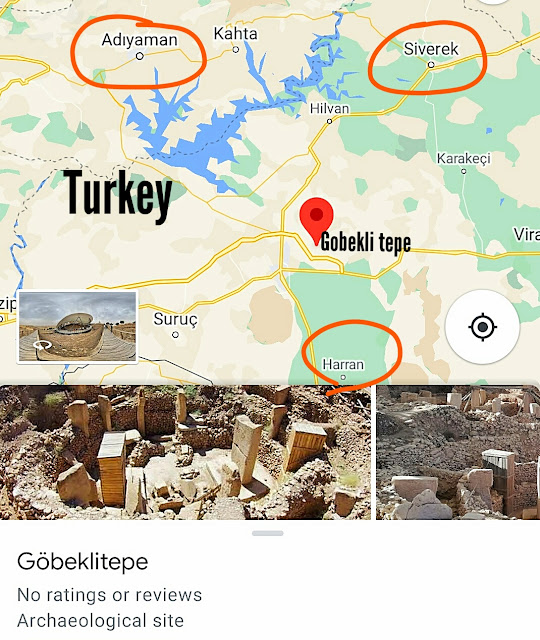
        The famous and the most ancient temple site at Turkey is Gobekli Tepe which was dated back to 10,000 BCE is situated between Adiyaman and Siverek places. Siverek.... Doesn't it sound like Lord Shiva ?? 

[Note: Not to confuse with Sivi, as Sivi was a great tamizh chola king, who was popularly known as 'Sibi' / 'Sembiyan', who cut and gave his own flesh for a dove. ]

This is not the only place that is named after Lord Shiva, there are many other places in Turkey, which was named after him.

 For example: A place in Turkey named 'Harran' in the picture below (Hara Hara Mahadeva !!).  Harran was one of the oldest Mesopotamia settlements. 


In this place 'Harran', early Mesopotamians built a temple for their moon god called Sin, Sumerians called them as Nanna, which was dated back to 3200 BCE.  Recently archaeologists discovered remains of the building in that place.

Sin - Moon god

    This moon god is seated in a yogic position (Padmanasana), with crescent in the head, humped bull on both the sides. These features are representing Hindu god Lord Shiva. The name of the place Harran,  an ancient temple and its remains over there,  Sin - Mesopotamian moon god are proving that Lord Shiva was worshiped by the people over there in different names. Continue to read, for more stronger references of Lord Siva being worshiped in Turkey...

Gobekli tepe: This ancient site Gobekli tepe is situated between Adiyaman, Siverek in the west and east and Harran in the south. As this place is surrounded by Hindu places, it is also one of the ancient Hindu temple, particularly temple of Lord Vishnu, from which Varaha avatar of Lord Vishnu was excavated.  

Why Varaha avatar of Lord vishnu was engraved in Gobekli tepe ?

Because, the neighbouring country parts of Iran and Iraq was once ruled by Asura king Hiranyaksha. During his rule, it was called as Hiranyapura, in tamizh he was called as 'Iraniyan' and hence his region is now called as 'Iran'. For more details about Hiranyapura, reach out to


    At the end of Satya yuga, Lord Vishnu took Varaha (Wild Boar) avatar, killed Hiranyaksha, rescued mother Earth from him and placed Earth in the celestial sphere with an axial tilt of 23.5 degrees. This axial tilt of earth is the reason for us to have different seasons and this determines which part of earth gets maximum sunlight during different period of the year.

Coming back to the topic, Lord shiva was worshiped by tamizh people in Turkey and so many places were named after him.  Why was it tamizhs ? can't they be any other people who worshiped Lord Shiva? 

To make this point more stronger, I have some more references. 

i) Kartikeya: 

        Son of Lord Shiva, was also called as 'Kandha', 'Murugan' etc. I have already mentioned about worship of Lord Kartikeya / murugan in ancient Iran in my previous post (Part 2 ). Similarly in Turkey, there are many places that are named after Murugan in tamizh. Why he has to be named in tamizh ??

For example, the word komurugan,  

In tamizh, Ko - means king

Murugan  - means Lord Kartikeya,  Son of Lord Shiva 

Lord Murugan in Turkey

Kartikeya was also popularly called as 'Kandha' , 'Kumara', 'Murugan' etc


ii) Kocali: 

What is Kocali that is circled in the picture above and below ??

It refers to the region ruled by Lord Shiva. It was also mentioned in many tamizh literatures and Sivapuranam. Sivapuranam is an ancient tamizh work for Lord Shiva, 

In Sivapuranam, there is a line,

 கோகழி ஆண்ட குருமணிதன் தாள் வாழ்க

"Kocali anda kuru manithan thaazh vazhga

meaning, Hail the one who ruled Kocali. Kocali is a tamizh word and that place in turkey is named in tamizh representing Lord Siva's region hence I have mentioned earlier that Lord Shiva was worshiped by tamizhs in Turkey.  

Kocali Turkey

8. Cumari

To reiterate the fact that early pandya kings had migrated from Kumari kandam and reached Persian and European nations, there are some references for the same in Turkey. The term Kumari / Cumari has been used in many placed in Turkey and the reason for the etymology for these names are still not decoded by the historians and scholars.


'Yalpanakaya' -  the place circled in the above picture  refers to 'Yalpanam' place in Sri Lanka and it's named after this place. 'Yal' - means an ancient musical instrument that was originated from ancient tamizhakam.

        Before the arrival of Adiyaman King and other Chola kings, early Pandya kings of Kumari kandam had reached Turkey and there are many bull symbols in and around Turkey. 

There are more references for that Pandya kings from Kumari Kandam, continue to read...


9. Kanesh,   In Persian, it's called as kultepe (meaning: Ash hill). Kanesh, is an archaeological site in Turkey. Isn't it the name Kanesh is similar to Lord Ganesha (First son of Lord Shiva) ?? In tamizh, 'Ka' and 'Ga' will have same letter.

        Kultepe consists of a tell, the actual Kultepe and a lower town, where an Assyrian settlement was found. Its name in Assyrian texts from the 2000 BC was Kanesh, the later Hittites mostly called it as Nesa / Nesha. It is also the site of discovery of the earliest traces of the Hittite language, the earliest attestation of any Indo-European language, dated to the 2000 BCE. 

        The main karum trading was happened at the ancient town of Kanesh. Karum means port in Akkadian and Harbour in Sumerian.  This is the name given to ancient Assyrian trade ports in Anatolia in Turkey during 2500 BCE.  This is an ancient site of Turkey and contains more information about trading with Mesopotamia, Indus Valley regions and it is the key to unlock many historical secrets of tamizh kings. Details about Kanesh will be published in a separate post.

10. Cappadocia, also known as Katpatuka, Kapadokya is a historical region in Turkey. Cappadocia, was bounded in the south by the chain of the Taurus Mountains that separate it from Cilicia (Original name: Kummani), to the east by the upper Euphrates, to the north by Pontus, and to the west by Lycaonia and eastern Galatia. 

This cappadocia is derived from 'Kapadapuram' of tamizhakam, the capital city and busy port city of Pandya kings of second sangam age, which was also submerged later due to frequent major tsunamis. Pearls of Pandya Kapadapuram were of great demand and were highly priced. Cappadocia in Turkey was named after this famous city of tamizhakam, later it was then transformed as 'Kapadokia' / 'Katpatuka'.


Cappadocia was also known as Hatti in the late Bronze Age and was the homeland of the Hittite power centred at Hattusa. The earliest record of the name of Cappadocia dates from the late 6th century BC, when it appears in the trilingual inscriptions of two early Achaemenid kings, Darius I and Xerxes, as one of the countries (Old Persian dahyu) of the Persian Empire. In these lists of countries, the Old Persian name is Katpatuka. It was proposed that Kat-patuka came from the Luwian language, meaning "Low Country". (Kapatapuram was situated at the shore side of southern tamizhakam)

11. Mushika kingdom

        The Eastern Mushki people have moved into Cappadocia in the 1200 BCE along with various Sea Peoples

Who were Mushiki ???

        The Mushkis were a Thraco-Phrygian group people, whose kingdom in the west central part of Anatolia, in what is now Asian Turkey, centred on the Sangarios River. Phrygian spoke an Indo - European language. The inscriptions found at Gordium make clear that Phrygians spoke an Indo-European language with at least some vocabulary similar to Greek. Phrygian clearly did not belong to the family of Anatolian languages.


Scholars clarifies the etymology of the name mushiki, "Mush" as meaning "worker" or "agriculturalist."

This is a wrong!! 

        Mushki is a sanskrit term, Mushki refers to Mushika / Mushaka kingdom of ancient tamizhakam. It was a minor dynasty kings who took power over the region in and around Mushika mountain / Mount Eli, which is situated in present-day Kerala, south India. Thus they were called as Mushika, who went to western side to rule Turkey and other regions..

1. Why tamizh kings were named as Mushika in sanskrit ?

    Mushika is a sanskrit word meaning rats. Rats are called as 'Eli', in tamil and the mountain is called as Elimalai.

But, the truth is, that mountain is not ELIMALAI, it's original name is 'EZHILMALAI'. 

In tamizh, Ezhil - means beautiful, 
kunram / malai - means mountain, together it means - beautiful mountain. 

Ezhil (எழில்) malai - (beautiful mountain) was incorrectly pronounced as Eli (எலி) malai (Rat  mountain), by using wrong 'la' letter. Then, with the same meaning it was translated into sanskrit as 'Mushika' and the kings who ruled over the region were called as 'Mushika dynasty of kings'.


        Early Tamizh poems contain several references about Ezhilmalai. The early historic Ezhimala clan had matrimonial alliances with the Chera, Pandya and Chola chieftains.

Ancient Tamil poems also describe the velir-level chiefdom of Ezhilmalai on the northern edge of Tamilakam on its west (Malabar) coast. The rulers of Ezhilmalai were the most prominent hill chieftains of ancient Kerala. The port known as Naravu was located in Ezhimalai chiefdom (Akam, 97). 

2. Why did Mushika kings go to Turkey ? Only to explore and expand?

Simple answer to this is, 'What comes around, goes around !!'.

        The origin of Mushika dynasty was tracing back to descent of 'Heheya' queen, whose family was killed during Parashurama's slaughter of Kshatriya rulers. 

'Heheya' - refers to 'Kekeya' kingdom during the period of Ramayana. Kaikeyi (mother of Bharatha) was the princess of Kekaya kingdom. Kekeya kingdom was situated at the far western side of Akand bharat, i.e near Caucasus mountain and their kingdom covers Turkey, Georgia, Armenia and Azerbaijan. 

        Thus, Mushika kings of Ezhil malai, went back to their ancestor place - Kekeya kingdom (Modern Greece, Turkey and Georgia) in the same name as Mushki kings.

So, did tamizh people was there in Greece, Georgia and Azerbaijan as well ??? Yes, ancient tamizh people were there in European nations...

One hint for the same,

        Comana (Komana Pontika) was an ancient city of Cappadocia, frequently called as Comana Chryse i.e. "the golden"( to distinguish it from Comana in Pontus). Isn't this name referring to Ko-manna (King) + Pontika (Pandya was called as Pontika in Greece) ???

        More truths about tamizh society in European countries will be unraveled in Kumari kandam - part 7 post....

- Aarthi Thiyagarajan

Saturday, 30 December 2017

Thiruvathira / Arudhra Darshan

Thiruvathirai / Arudra Dharisanam


'Thiruvathirai / Arudra' is the name of the nakshthra in vedic astrology. This festival falls on Dhanu / Margazhi month which is Mid December - mid January as per sidereal calendar, when the Sun enters into Sagittarius. On this month, when the full moon appears in the sky with 'Thiruvathirai' nakshthra (Ardra in Sanskrit), this festival is celebrated, it's the star of Lord Shiva. In English, this star is associated with Betelgeuse / Alpha orionis, which is the second brightest star in the Orion constellation. It is the important festival of Lord Shiva, where women of the house observe fasting and worship the Lord of universe for the longevity of their husband and unmarried women worship the Lord, to get good husband. It is predominately celebrated in Tamil Nadu and Kerala.
 
In Kerala, women celebrates this festival for their husband, where as in Tamil Nadu, they celebrate it as Lord Shiva's birthday, it is also believed that on this day Lord Shiva incarnated in the form of Natarajar, king of dance (Nata - Dance, Raja - King). The Thillai Natarajar temple at Chidhambaram, Tamil Nadu is popularly acclaimed for this festival. 

Significance of Thiruvathira

  • It is one of the oldest festival of Bharat (India), which we celebrate and worship Lord Shiva.
  • This day's night is the longest night of the year.
  • Lord Shiva's cosmic dance will be enacted at Thillai Natarajar Temple, Chidambaram. Below picture, the cosmic dance pose of Lord Shiva called as Aananda Thandavam , 'Natarajar' , the one who founded the graceful dance of bharat 'Bharatanatyam'. The one who learns Bharathnatyam, never missed to do a pose of Lord Natarajar.
 
Natarajar

Thillai Natarajar Temple, Chidambaram


        This place represents 'Aakash / sky', which is one of the five natural elements. Lord Shiva, represents this natural element in the form of 'Lingam', called as 'Aagaya / Aakash Lingam' (Ether). This temple is located in Chidambaram, Tamil Nadu, which is 16 kilometers west from the shore of Bay of Bengal. It's a ten day festival celebrated with much rigor and pomp at this temple. 'Chit' means True Awareness, 'Aum' means sacred pranav mantra, 'Param' means The Supreme being , together, 'Consciousness of Supreme Lord Shiva'. There is also another meaning to this, 'Chit' - wisdom and 'Ambaram' - Atmosphere, together it means 'Atmosphere of wisdom'.

        The deity Lord natarajar can be seen in hall called 'Chitsabha' (Garbha griha), behind this deity, there is a black screen, which is considered to cover the Akasha lingam, actually there is no lingam over there, it is a belief that it's an invincible lingam, usually covered with bilva (Indian Bael) garlands. Invisible ?? or Nothing ?? Or Vacuum ??

        It is Zero point field - ZPF. Zero-point energy (ZPE) is the lowest possible energy that a quantum mechanical system may have. The matter and force fields have zero-point energy. A related term is zero-point field (ZPF), which is the lowest energy state of a particular field.

            The vacuum can be viewed not as empty space, but as the combination of all zero-point fields. It's Zero point Field (ZPE), energy filled in the vacuum (ether) also called as vacuum energy / Quantum energy. All space is filled with this (ZPF) quantum vacuum energy. It fills everything and in doing so changes what we think is a vacuum into a space absolutely full to the brim with energy, technically known as a “Plenum”.

        70 % of our universe contains this quantum vacuum energy and this ZPE works with space & time , it is the cause for the expansion of our universe. In Tamil, there is a very old famous term called 'Chidambara Rahasayam' (Secret in Chidambaram temple), actually what is the secret over there ?

Is the empty space, ether, ZPF. 'Aakasha' in sanskrit means ether / upper sky / atmosphere, which is associated with vacuum in this temple. Our vedas and siddhantic science influenced many westerners and Nicholas Tesla is one of them. Ether is Tesla's fascinating subject, many of his discoveries have been stolen and patented in other westerners name, Tesla secretly kept some his work related to ether which is not discovered till now, he understood our science of siddhis, Brahman, consciousness and energy, he used many sanskrit terms like 'Aakasha', 'Prana', 'Kalpa' in his works.


        Now, why this ether is related to this Thillai Natarajar temple ? As i said above, 'Chidambaram' means Consciousness of the Supreme. When you have the Consciousness, true meaning of Vacuum will be clearly understood, our soul first unites with ether (Aakash), then with the remaining elements of nature, in modern science, Quantum, vacuum, cosmos etc are neither completely explained nor understood, but it was penned down in our vedic science 5000 years ago. Chakras are energy centers of our body, there are 7 chakras in our body which resonates with different frequencies with rainbow colors, they are associated with physical, mental and emotional interactions. These chakras vitalises our physical body and brings about the development of self consciousness. Raising our Kundalini through these 7 chakras awake our consciousness, higher self.


            Now, coming back to Thillai Natarajar temple, Chidambaram, there are only couple of temples, where Lord Shiva is represented by anthropomorphic form rather than Lingam. It is also said that Chidambaram is at the center of World's Magnetic Equator. This is the only one temple in all over India, dedicated to Lord Shiva as Natarajar, the lord of dance. 'Natyanjali' festival devoted to Lord Natarajar is celebrated every year at this temple, which is the opportunity for all classical dancers to perform and pay tribute to the Creator of the Dance. His dance of anger is called 'Rudra Thandavam' and his dance of joy is called as 'Aananda Thandavam'. 


Temple Gopuram with Teppakulam (water storage)

        The cosmic dance of Lord Natarajar symbolizes five acts.
1. The small drum that he holds in his upper right hand symbolizes creation (Srishti)
2. the lower right hand raised in blessing refers protection and symbolizes preservation - Abhaya mudra meaning 'Fear not'
3. the upper left hand that holds the cosmic flame stands for destruction - posing Ardhachandra mudra (Half moon)
4. the foot over the asura (demon) denotes ignorance - obs curation
5. Anugraha - Granting grace. The raised left foot refuges the soul and the left hand pointing down to the foot in Gajahasta pose (Elephant trunk) reveals grace.


During early morning of the full moon night, Maha Abhishekam will be performed to Lord Natarajar and his consort Sivakama Sundari at Raja Sabhai hall, this will happen for about 3 - 4 hours. Then the deities will be decorated with sacred jewels, scented fresh flowers, gems, silk clothes, garlands etc, followed by special poojas. The devotees will stand in a crowded queue to get blessings of the Lord Shiva and Goddess Sivakama Sundari on this festive day, all the people in a single tone loudly chant Lord Shiva's name and slokas.


Spatika Lingam

Spatika means Quartz crystal. Quartz in the shape of Lingam, . There are only few temples, where spatika lingam is present. This Spatika Lingam represented as Lord Chandramauleeshwara is one one of the most ancient spatika linga, was installed by Shri Adi Sankaracharya at this Chitsabha and daily six times pooja will be performed here. Getting the Darshan (View) of this Spatika linga is very blissful, spatika removes negativity, strengthens postivity within a person, liberates from all causes of fear, anger and ignorance. That's the reason this is also called as 'Mukthi Lingam', indeed it is believed that visit to this temple will lead to liberation from cycle of birth and death.

Pooja Procedure at home

A day before Thiruvathirai, we clean the pooja room, pooja utensils and apply turmeric, kumkum on all the utensils. On the day of this festival, women and girls wake up early in the morning, takes oil bath and wear new clothes, will keep fasting on this day (not taking rice, but can eat fruits). First, will decorate pooja room with flowers, will pour oil in all the lamps followed by cotton wicks, Dasangam and Agarbathi's (Scented cones and sticks) will be kept ready. In the early morning, will start preparing neivedhyam (Special food offered to God), on this day the special foods are 'Thiruvathira Kali', 'Ezhukari Kootu', the preparations of these foods are explained below.


     On a small low height platform (Manai in Tamil), we place Lord Shiva's photo and keep the table on the floor. On the 2 sides of the photo, place 2 diyas, Agarbathi, decorate the photo with flowers and garlands. As per our family practice, we use plates for placing neivedhyam , we use banana leaf only on Pongal and Kula devatha Pooja. So, on a plate, will keep betel leaves, betel nuts, bunch of bananas, turmeric sticks, a coconut and prepared neivedhyam. Then, will light all the diyas / lamps , light Agarbathi and will do aradhana (Worshiping by taking rounds around the God) ,then break the coconut into two pieces and keep it back on the plate. Then, will take Deeparadhana (Worshiping using deepam fire and taking rounds around God) and everyone will take blessings from the fire and will put Viboothi, Kumkum on their forehead, married women will apply kumkum on their forehead and mangalsutra. Before sharing prashadham (Neivedhyam) with neighbours, we have to eat it first.
            In my mother's place, we place 'Ammi Kal' in pooja room, 'Ammi Kal' is a traditional grinding stone that is used for grinding cooking paste, chutneys, masalas etc. We were using this method of grinding for ages, it's good exercise for hands and strengthens the hips. On this festival day, we assume the cylindrical roller stone as Lord Shiva and decorate this ammi kal in the pooja room, by drawing eyes with turmeric powder and kumkum, covering the stone with new piece of cloth, adorn the stone with jewels and apply Viboothi (Ash) at last. 


Ammi Kal (Grinding Stone)

Special Prasadham offered

Thiruvathira Kali 

             Kali means cereal cooked like thick paste form using rice, moong dal and jaggery. First, will coarsely grind raw rice , mix moong dal and cook with excess water so that it will be in a paste consistency, to that paste mixture, sufficient jaggery and cardamon powder will be added, will cook till the jaggery blends with the rice paste and then kali is ready.


Ezhu Kari kootu (7 vegetables dish) / Thallagam

              It is side dish filled with 7 fresh vegetables without onion and garlic. Usually, will use Ash gourd, Yellow Pumpkin, Field beans (Mochai), Broad beans (Avarakkai), Brinjal, Chow Chow (Chayote) and sweet potato (Yam and Raw banana can also be used if some veggies are not available), will cook these veggies with more water and to make it thick, will grind freshly grated coconut, with green chilli, coriander , rice flour to a paste consistency and then mix with the cooked vegetables. Will cook this dish till the raw smell goes off (around 5 mins) and turn off the stove. At last, add tempering to this dish using coconut oil, mustard, asafoetida and few curry leaves.


--Aarthi Thiyagarajan