To receive email notification

Please fill the contact form below to receive email notification when a new post is published in this blogspot.

Wednesday, 13 May 2020

Musical Pillars !!

Musical stone pillars in the world  !!

        In South India, Carnatic Music is considered as Sacred and musicians are highly regarded. It is the oldest form of classical music. Samaveda is the origin for Carnatic Music, one can easily find the references of music in the sculptures of Indian temples.


 The stone sculpture of the below picture shows, one man playing Mridangam and a woman playing a Yazh, a classic string instrument.


  Sa, Re, Ga, Ma, Pa, Dha, Ni... One can hear these sound notes from Vocal Singing and Musical instruments, But can these be heard from STONES ??? Yes, these swaras can be heard from the Musical stone pillars of few magnificent temples in South India. Stones play musical octaves !!

                  Music from stones - its a MAGIC !!!, this shows the artistic and scientific knowledge of highly skilled people of Ancient India. This magic won't happen anywhere outside India. There are various ancient traditional temples in South India where the pillars of which has the magical power to generate the sounds of these 7 swaras. Even today, tourist tap on these pillars to hear the musical sounds. South Indian temple architecture, stone antiquities and workmanship has always been a pride for India, in addition to that, these musical stone pillars in the temple added one more feather to the cap. The logic and scientific method behind the music from these stone pillars are still mystery to the World !!!

          Now, let's see the marvelous ancient south Indian temples with outstanding architecture and their mysterious musical stone pillars. 


Sthanumalayan Shiva Temple - Suchindram, Kanyakumari district, Tamil Nadu

               This temple is important for devotees of both Lord Shiva and Vishnu. Sthanu - means Lord Shiva, Mal - mean - Lord Vishnu and Aya - means Brahma, one can see trinity of gods here. It is known for its sculptural wealth, which exhibits the Hindu mythologies and stories about this temple. The interior of the Dravidian style temple complex is skillfully carved with many scenes from Ramayana and Mahabharata Epics. 

suchindram
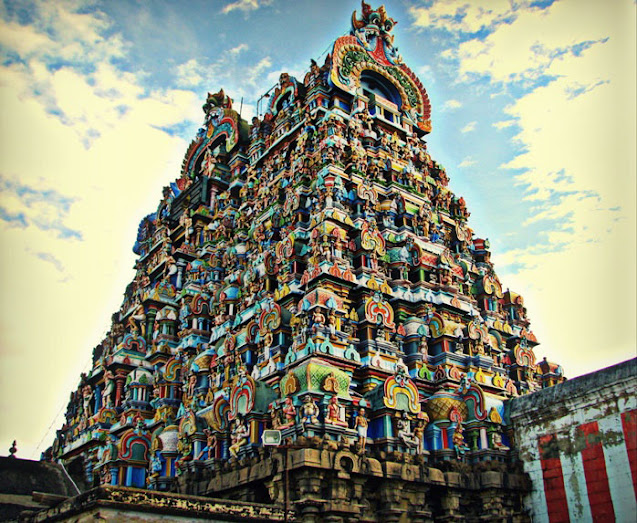
Temple Gopuram

Intricate carving in the Temple Gopuram

          Musical pillars of Suchindram is famous across the world.  These pillars are situated at Alankara Mandapam (Alankara complex) of this temple, there are four musical pillars carved out of single stone with the height of 18 feet each. The stone pillars of Alankara Mandapam emits sounds of various musical notes when its beaten accordingly.  

musical pillars suchindram
                                 Musical pillars at Alankara Mandapa              

            Apart from the sound of seven swaras, these pillars also produces the sound of Tabla and Chenda instruments. This temple is an architectural wonder of the world, music from stone pillars are amusing millions of tourists visiting this place and the technique behind sound from these pillars are still a mystery. Infinite Knowledge and workmanship of Indian architects are highly admirable  !!!
                  

 Vijaya Vittala Temple -  Hampi, Karnataka

                       Vijaya Vittala temple in Hampi is one of the ancient temple of South India. The main deity of this temple is Lord Vishnu. It is the epic center of Hampi's attraction, it is also known for its amazing architecture, grand complex, stone chariots, musical pillars and unmatched craftsmanship. It's the most magnificent and grandest temple in Hampi. 

              The notable feature of Vittala temple is the Musical pillars. There are 56 musical pillars situated at a large Ranga Mandapa (complex) . They are also called as SaRaGaMa pillars, which emits Sa Re Ga Ma swara sounds.


 There are seven thin pillars circulate around one thick pillar at the center. Each of these emits sounds of different musical notes. Each thick pillar gives supports to the ceiling of the Mandapa.

Ranga Mandapa with ceiling

             One can actually hear the music notes, if you tap on them gently. These seven minor pillars emit different musical notes , each note from these pillars produce different sounds , they will also change itself as string and wind instrument while being played / tapped. 
                The reason behind rhythmic sounds from these stone pillars are unknown. Many white invaders and Mughals tried to destroy the richness of the temple by lighting fire on these pillars. But it just reduced the decibel of the music, the sound was not stopped. During British reign, they cut two pillars to know the logic behind and what's there inside, but they only saw an empty pipe in that. 

              
            From time to time, this temple has witnessed many invasion of rulers. Today, this temple is also called as 'Ruins of Hampi', though many invaders tried to destroy the glory of this temple, they couldn't succeed it completely, they destroyed some of the structures and wall, but couldn't ruin more due to its hardness and toughness, That is the strength of this outstanding temple!.  Not only the architecture and craftsmanship, the construction quality was also so strong that it is still standing majestically with pride of Mastery of Indians. 

Nellaiappar Kovil - Tirunelveli, Tamil Nadu

                  Nellaiappar kovil is one of the most prominent temple located at Tirunelveli city of Tamil Nadu.  Lord Shiva is named as 'Nellaiappar' in this temple, Nellaiappar means 'Protector of Paddy', in Tamil 'Nel' means Paddy. There is mythological story for this temple, which will be covered in my next post.

nellaiappar temple


           It is known for its countless exotic stone carved sculptures, extensive corridors adorned with towering pillars carrying intricate carvings. The thousand pillar hall is famous for its architectural excellence. This temple represents Tamara Sabha (Copper Hall), one of the famous five halls where Lord Shiva has performed the cosmic dance. It is more than 1300 years old with marvelous architecture and mystifying musical stone pillars dedicated to Lord Shiva, the Cosmic Dancer who keeps the universe vibrating with his rhythmic beats.


              The musical pillars in Mani Mandapam which produces musical swaras with various pitches when struck. Mani Mandapam got its name from a hanging bell in the middle of the mandapam, each huge musical pillar was carved out of single rock comprises of small columns around. This mandpam (hall) is placed before the Main deity hall, it was designed in such way that musical prayer will be performed in front of God and for cultural events. 
                These pillars occur in cluster and set manner such that vibrations are generated from the neighboring pillars, when one pillar is tapped. There is a center thick pillar consisting of 48 small thin pillars carved from one piece of stone.  


There are three types of musical pillars.

Type Sruti - can produce musical swaras , basic seven notes
Type Gana - Produce basic tunes that make carnatic Ragas 
Type Laya - Produce Tala (Rythmic beats) when tapped

Also structurally there are two kinds of music pillars,

Tapping Pillars - music is produced from the stone pillar while tapping on it with fingers
Blowing Pillars - Sound is produced by blowing into the holes of the stone pillars

               The musical stone pillars at this temple is unique, because it was designed in the combination of Sruti and Laya types.  Nobody knows the intelligence of how these were designed to resonate musical frequency. 


Meenakshi Amman Temple - Madurai, Tamil Nadu

                Madurai Meenakshi Amman temple is considered as one of the Wonders of the World, for its gigantic tall Gopuram (Tower), rich sculptures, high walls, artistic ceiling and tales embedded with each of them. There are four entrances for this temple facing four directions , the colorful intricates on the outer Gopurams never failed to impress the first time visitors. 


 It is a vibrant and rich beauty of Dravidian style architecture, with an estimate of around 33,000 sculptures in this temple.


             It takes one separate post to write about the glory of this temple. So, now coming to the topic of musical pillars, there are five musical pillars just outside the hall of 1000 pillars. There is grand hall named as 'Hall of 1000 pillars' (Aayiram Kaal Mandapam in Tamil), it actually contains 985 sculpted pillars.
                These pillars were arranged brilliantly that from whatever angle one looks from within, the pillars looks in rows and rows. 


                 The pillars at the beginning and at the end of the rows are the bigger ones with small pillars surrounding them and the one at the bottom could also be rolled. These are musical stone pillars, which produce musical notes while tapped. Today, It is not allowed to tap on these pillars now, in order to preserve them.


Musical pillar at Meenakshi Amman Temple

Alwar Tirunagiri Temple -  Thoothukudi district, Tamil Nadu

               It is famous Vishnu temple in Tamil Nadu. It was flourished during Pandya dynasty. The main attraction of this temple is its musical pillars, here both tapping and blowing pillars are found. 


nagaswaram pillar

            The stone Nagaswaram (Double Reed wind instrument) is one of the interesting feature of this temple. There are many other temples in South India, where you find musical pillars.

            The heritage sites are the excellent examples to show infinite knowledge of Indian artisans and their skilled workmanship. Sculptures of many musicians and music instruments are found on the walls of temples, which shows the wealth of carnatic music from ancient times.


  These striking temples and stupendous architecture evinces that the Carnatic Music was considered highly divine and integral part of our culture. 


- Aarthi Thiyagarajan

Thursday, 7 May 2020

Mighty Pandya king and Matsya Avatar of Lord Vishnu

Mighty Pandya King and Matsya Avatar of Lord Vishnu
       'Matsya' Avatar is the First and Foremost avatar of Lord Vishnu's 'Dasavatar' (10 Forms of Lord Vishnu, which he took on the Earth during different Yuga cycles). Lord Vishnu took his first avatar as 'Matsya' / 'Dolphin' during the declination of Kumari Kandam - the lost land of ancient Tamizh people, which was then ruled by Heroic Pandyan Kings. Pandyan Kings were the first and only rulers of the World then.

        Kumari Kandam - The lost land of ancient Tamizh people. It was the Cradle of all civilizations in the World, Land of Lord Shiva, ruled by mighty kings of Pandya dynasty. Kumari Kandam comprises Wide spread of nature's wealthy resources, the place of magnificent palaces, architectural wonders, also called as Fountainhead of Knowledge, it was Source of Science, Medicine and Martial arts, famous for its engineering marvelous in Temples, Power of language and  Birth place of Tamizh Civilization. 


pandya king


           According to many Hindu holy literatures like Matsya Purana, Vishnu Purana and Kurma Purana, there were seven sacred mountains which covered the Greater India. They are Mahendra, Malaya, Sahaya, Suktimat, Riksha, Vindhya and Paripatra mountains.  In Matsya purana and Vishnu Purana, it was mentioned that " Matsya (Fish), the first avatar of Lord Vishnu, appeared as small fish to the Dravidian King Shraddhadeva / Satyavrata (Meaning: Always Truthful),  while he was washing his hands in a river, which was flowing down from the Malaya Mountains. He was also known as Vaivasvata, the son of Vivasvana and therefore known as Vaivasvata Manu (Current and Seventh Manu)."

           The little fish asked the King to save him. So, in order to save the fish, the King has put the fish in a jar of water. But, the fish kept growing bigger and bigger, then the King has put the fish into a big pitch, but it turned out to be less for the fish, then he transferred the fish into a well. The Well was also not sufficient for the ever growing fish, so the King Satyavrata changed the place and put the fish into a huge tank which was about 16 miles height and 8 miles breadth. But, that effort was also failed due to the significant growth of the fish, then placed the fish into the river and then finally he placed the magical fish into the ocean, there it looked like a huge Dolphin. 


     Matsya Avatar of Lord Vishnu, revealed himself to the King Satyavrata and forewarned him about the massive flood, which will destroy his land. He asked the King to build a huge boat to facilitate the Kings, Rishis, Source of Food, animals etc. So, the King has a built a giant boat, which housed his family, Saptarishis, Nine types of Seeds and Animals and sacred books. He also asked his people to migrate towards Northern side of Bharata Kandam, before the attack of subsequent Tsunamis. 

matsya avatar

     So, from Kumari Kandam many kings, chieftains and people migrated towards North. During the diaspora, due to the change in ocean currents and Tsunamis, some people has moved towards East and some traveled towards Western directions. 

        At the time of deluge, Lord Vishnu appeared as horned fish and AdiShesha (King of Serpents) appeared as rope, with which the King fastened the boat to the horn of the Fish. 


          With the help of Lord Vishnu's Matsya Avatar and the Serpent, the giant boat with the Pandya King, Chieftains and animals has survived through the flood and it perched on the top of Malaya Mountains. After the deluge, Manu's family and Sapta rishis repopulated the Earth. Sangam literature refers this Malaya Mountain to the present day 'Pothigai Hills' in Tamil Nadu.  From Kumari Kandam, Vivasvata Manu / Sathyavrata reached the Pothigai hills ( Also called as 'Agathiyar Malai') and expanded his kingdom in Southern India. As the Kumari Kandam sub continent was lost, he didn't go back to his motherland and continued to rule in Bharata Kandam. 

    Agasthiyar Malai in western ghats are much older and Sacred than later formed Himalayas. Many people claim that mountain Malaya is the present day Himalayas. A Big No to that false claim!! During a drastic flood, practically people from the low lying areas will try to reach a nearer higher altitude places for safety. Likewise, people from the Southern land (Kumari Kandam) tried to reach out to the nearby high altitude mountain, i.e Pothigai Hills which is only 50 kilometers North from Kanya kumari. Thus, the sacred mount Malaya can't be related to the Himalayas, as it is very far from Kumari Kandam. 

      Later, The King Satyavrata and the Saptarishis propounded the code of laws for the betterment society known as 'MANUSMRITI', it was said to be the text given by the first Manu(Swayambhu Manu), Son of Brahma (Lord of Creation). Satyavrata / Vaivasvata Manu is the seventh Manu of current Manvantra proposed 'Manusmriti'. 

    Manu is not a name of a particular person, it is a title given to the person who has been chosen to lead the humanity, Manu is the progenitor of all human races. All human beings are born from Manu's race and therefore called as 'Manavas' (In Tamil, Manithan, Maanidan). Each Manu rules an aeon called 'Manvantra'. 
      

Scientific Reason for the Deluge in Kumari Kandam: 

        This flood occurred during beginning of Satya Yuga. Satya Yuga started around 11,350 BCE (Will pen down a Separate post for Yuga Cycle with Detailed Explanations and Reference ). In the last 14,500 years, sea level rose high upto 100 meters as the ice glaciers was melting rapidly, due to the increase in Earth's temperature. This coincides with the date of last glacier melting period where the Earth faced more warmth. The melting rate of glaciers were high, which caused the waters to flow rapidly to reach oceans. This sudden rise in sea level caused Tsunamis and floods.


       At the end of each Manvatra, a great flood will occur. Here, at the end of Sixth Manvantra, this flood occurred during the reign of Pandya King Satyavrata and destroyed this oldest civilization in the World. King Satyavrata as Vivasvata Manu headed the human race in the Seventh Manvantra with the help of Lord Vishu as 'Matsya' Avatar.


Is King Satyavrata , a Pandya King of Kumari Kandam ??

           There can be many dravidian rulers, how a Pandya king could be referred as Vaivasvata Manu / Satyavrata ? 

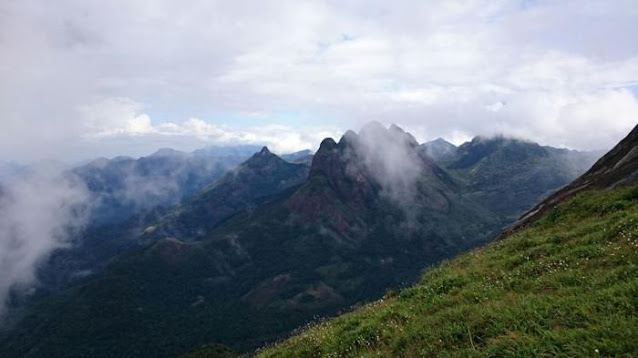
   The answer revolves around the key 'Malaya' mountain. Malaya mountain is older than Himalayas and it is considered as the one of holiest mount in India. As Maharishi Agastya spent most of his lifetime at this Malaya mountain, it was also called as 'Agasthiar Malai' situated in the Western Ghats of India. Agasthiar Malai / Pothigai Malai is the only place in the World, where there are many distinctive types of flora, fauna and animal species are found that can't be found anywhere else in the World. Very rare types of poisonous Spiders, leeches and snakes can also be found here. (These rare species and seeds were bought from Kumari Kandam through the Giant Boat)


agasthiyar malai
Agasthiyar Malai / Pothigai Malai

                                     Agasthiyar Falls


A)         From the verses of Matsya Avatar, it's understood that Satyavrata / Vivasvata Manu was a Dravidian King from South of Bharata (i.e) Kumari Kandam and Saptarishis were also part of his Kingdom. In the purana, it was initially mentioned that king washed his hands in the river flowing down from Malaya mountain, which is current Pothigai Hills. What was that River ??

Tamarabarani - the ancient sacred river, which was originated from the Holy Pothigai hills and gushed towards Southern direction reaching Kumari Kandam, it glided parallel to the coastal line of Tamil Nadu. (Present day, it's not flowing towards South, it has changed his course to eastern side and reaches Bay of Bengal). It was the only river which connects Malaya Mountain and Kumari Kandam, which was situated at the South of Bharat.

So, River Tamarabarani flowed from Malaya mountain, reached Kumari Kandam and it was flowing fiercely over there. When the King Satyavrata was washing his hands in the river, that little fish appeared to him and asked for help. Also, Pandya Kings were the only rulers of the World before the start of Satya Yuga and there were NO CHOLAS and NO CHERAS during those times. 


AA)         As the king reached Malaya mountain and settled down there till the nature stabilizes, he worshiped and praised the mountain which saved the life on the Earth. He started his empire from the Mountain and to honor the holy hill, he named his son after the mountain as Malayadhwaja Pandiyan, the Second King of Pandyan Dynasty in Vaivasvata Manu (Note: He is not the same one who was mentioned in Mahabharata, This Malayadhwaja Pandyan King corresponds to Satya Yuga).

B)        Pandya King changed his Flag symbol to Fish, as a gratitude to Lord Vishnu's Matsya Avatar. The fish symbol of Pandyas was related to Matsya Avatar of Lord Vishnu during the flood, thus it is proving the truth that the early pandyan King was the ONE who was referred as Satyavrata / Vaivasvata Manu in the Matsya Purana. Also, as Matsya Avatar is the first avatar of Lord Vishnu, it is corresponded to Satya Yuga, which was also coincides with the name of this Pandya King, Satyavrata.


fish symbol


        This Tamirabarani river, Malaya Mountain, Dravidian King Satyavrata, his son Malayadhwaja Pandya, Pandya's Fish flag, Maharishi Agasthiyar (One of the Sapta Rishis in the Boat) are proving the fact that Kumari Kandam was real and in Kumari Kandam there were no Cholas and Chera kings. Cholas and Chera dynastys were formed only after the submergence of Kapatapuram, the place where second Tamil sangam was held. So, obviously King Satyavrata was a Pandya King from Kumari Kandam, who headed the human race as Vivasvata Manu from Bharata Kandam.

       This Massive flood occurred at the end of Sixth Manvantra, during the reign of Caksusa Manu. 

  This is proving another fact that the Pandya king Satyavrata has ruled Kumari Kandam before the beginning of seventh manvatra (present manvantra), which was before Satya Yuga and the period of Vedas.  


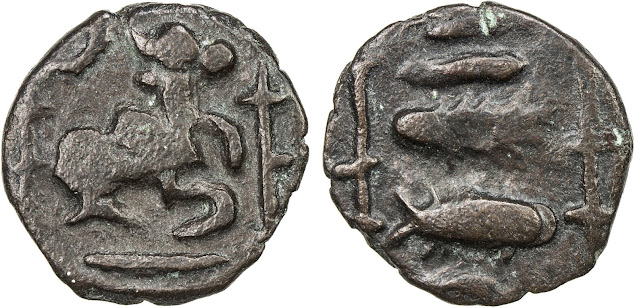
Pandyan kingdom has 2 different royal symbols: Bull and Twin Fish. 


     Before the arrival of massive Tsunami, they have started to explore the world, Pandyas traveled across seas, established their kingdom in many countries with their flag Bull / Twin Fish / Single Fish. They have named many of their established places in Tamizh, they were the first explorers of the World.

pandya coins
            Coins of Early Pandyas with Bull symbol (Left Coin) and Twin Symbol Symbol (Right Coin)


       Though the symbols of early Pandya Kings were destroyed in India, it can be seen in other countries. Example: In Sri Lanka , Pandya's twin fish symbol was carved in granite Stone, bas relief from Koneswaram temple at Triconamalea, which carved by later Pandyas. 


koneeswaram

      
         Kulasekara Pandyan was the first ruler of the Kumari Kandam during the period of Caksusa Manu, the Sixth Manvantra. Lord Shiva as Soma Sundara Pandyan established First Tamizh Sangam at Thenmadurai of Kumari Kandam. Vivasvata Manu / King Satyavrata has ruled ancient Kumari Kandam with Bull as their symbol before the deluge, ancient tamizhs considered Bull as symbol as Masculinity and Valor. In Tamil, Pandi / Pandya ('Pandaya') means Early / ancient. This clearly mentions that 'Pandya nadu' means ancient Country, which was ruled by Pandya kings . 

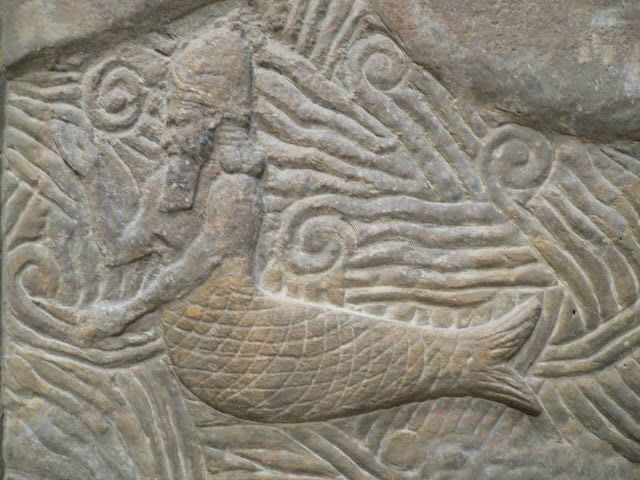
    Lord Vishnu's Matsya Avatar and King Satyavrata's boat are depicted in various country's stone carvings as Gilgamesh Flood, Noah's Flood theory etc. Ancient Sumerian stone carvings represents Vivasvata Manu's boat with Lord Vishnu in Matsya Avatar. According to modern archaeologists, Sumerian civilization is said to be one of the oldest civilization in the world. Early Pandyas were prior to them, their dates were put forward and suppressed the hidden truths about Tamizhs !!! 


Sumerian Tablet 


Babylonian Great Flood

Sumerian Merman God - Matsya Avatar

            Ancient Tamils / Tamizhians were also traveled towards South East direction and settled there due to the sunken land of Kumari Kandam. 

       Even now, in many places and structures we can see the symbols used by ancient Tamils. Many words were taken from Tamizhi / Tamil and adopted in the modern languages.  Language spoken by African Tribes, Australian Tribes, Andaman and Nicobar Tribes, Lakshadweep tribes are identical to Tamizh. 


-- Aarthi Thiyagarajan


Thursday, 6 February 2020

ADIMURAI - The First Martial science in the World

ADIMURAI - The First Martial science in the World

         In continuation from my previous post which elaborates about the oldest martial arts from ancient Tamizhagam. The origin, glory and history of ADIMURAI were explained over there. 

In this post, the different Stages, Sub stages of AdiMurai and its details are explained.       

      The world's first martial arts was from Tamizhagam and it was called as 'Adi Murai'. In Tamil, 'Adi' means 'To hit', 'Murai' means 'Method', together it means 'Laws / Methods of Hitting' . It is the oldest martial arts and  it has laid foundation for various other types of martial arts and fighting techniques in the world. More than a martial arts, it is called as Martial / Combat science. 

        To learn first level of Adi murai, one must go through severe physical fitness trainings and exercises. AdiMurai places more emphasis of unarmed combat and gives more practice on this part, which makes the student to come up with unlimited number of different striking techniques. Only after mastering the unarmed combat, one can learn the fighting techniques using weapons .


         Adi Murai is also called as Varma Murai, Adi Murai is the mother of all Martial arts in the world and the most famed Kalaripayattu is not an exception to this. From this ADIMURAI, many martial arts were evolved in the Eastern and Western side of the World.        

    A modified version of Adi murai is incorporated into Kalaripayattu schools in Kerala in the named of 'Thekkan Kalari' (In Tamil, Tekkan means Southern).
      
                 When the mighty Pandya Kings ruled the Rich and fertile land 'Kumari Kandam', they were excelled in Martial arts and Science as well. Where ever they explored, Pandyas conquered the place as they were exemplary in ADIMURAI and War techniques. Adimurai Aasans (Teachers) will teach this fighting styles to Soldiers at the King's Palace and to the Soldiers getting trained for the battlefield. When Pandyas and Chola kings ruled the world, they have introduced this fighting style to the local people and now it's been called in different names across the globe. 

       ADIMURAI was first introduced by Maharishi Agathiyar, who is the First Siddhar and Father of Siddha Medicine. ADIMURAI was also mentioned in Sangam literatures and as stone carvings at many temples in India .


ADITHADI against a wild Animal

       The first and basic level of ADIMURAI is ADITHADI, which is an unarmed combat. Shaolin Kung fu, Karate, Taekwondo were born out of this ADITHADI. It comprises of Striking, Blocking, Grappling and combination of all the three methods.

Adi Murai is combined with Vaasi Yoga (Yoga for Well being / Meditation) and Varma Vaithiyam (Healing Science) combinedly to form a art called as 'Varma Kalai', which is the base of Siddha Medicinal system. Not to confuse Varma Kalai with Adi murai, they both are different. (Varma Kalai will be pen downed as a separate post)

Adi Murai consists of three major and important stages / levels. They are

1. Adi thadi (Unarmed Combat)
2. Ayudha Murai (Weapon based combat science)
3. Varma Adi (Pressure point attacks) 

Let us see one by one starting from 'Adi Thadi'.

1. Adi thadi - It is an unarmed combat, one has to defeat the opponent either by using hands, legs or head butts. It is broadly classified into three components. 

A. Adi (Attack) - Striking Sequences - Kuthu Varisai

         In this sub level, first striking sequences will be taught. It teaches about 

 Striking with Hands - Kai Kuthu Varisai (In Tamil), 
 Striking with legs - Kaal Kuthu Varisai (In Tamil)
 Striking with Head butts - Nethi Adi (In Tamil)

      These Adithadi and Kuthu varisai fighting techniques were practiced from 10,000 BCE, during the era of Kumari Kandam. At that time, it was primarily used to save themselves from dacoits, thieves and wild animals.


Shaolin Kung fu


Bokator in Cambodia

  Kuthu varisai - In tamil 'Kuthu' means Punch and 'Varisai' means sequence. This Kuthu Varisai is also called as empty handed Silambam. In the martial arts of Silambam, before going to the weapon based fighting techniques, empty handed striking sequences will be taught. Kuthu varisai has different stages of training, such as Solo patterns and pair patterns. 

   It was taught as a part of Adithadi, but it can be taught as standalone martial arts as well. Also, it is an empty handed martial arts which employs fighting techniques based on the movement of aggressive animals. The basic stands and posses of Animals and Birds are 

1. Tiger
2. Snake
3. Eagle
4. Monkey
5. Elephant


       Tamil Kshatriya Prince Bodhi Dharma from Kanchipuram went to China and taught Kuthu Varisai, the empty handed fighting techniques to the Chinese people to protect themselves from local bandits. He was a Master of Adi Murai, Adithadi, Kuthu Varisai, Varma Kalai and Silambam. He was also called as 'Father of Shaolin Kung fu' and 'Father of Eastern Martial arts' .


Stone carving of Bodhidharma at Shaolin Temple

      Bodhidharma is the founder of martial arts at Shaolin Temple.  The Shaolin Kung fu and Japanese Karate was born out of Kuthu Varisai. 

           The basic fight patterns of Kuthu varisai is similar to Katas of Karate, Kung fu and Taekwondo. It has six different style of basic punches. In Advanced level, there are 20 different styles of punches. 

Note: For punches alone, kuthu varisai has many different styles and levels. After punches, it deals with Kicks, Defensive stances and much more.

     The advanced level of Kuthu varisai is much lethal and advanced than the highest level of Karate and Shaolin Kung fu. 

In addition to Kuthu Varisai, breathing exercise, Yoga and meditaion are taught. All these techniques can also be found in Shaolin Kung fu taught by Bodhidharma.


B. Thadu (Block) - Blocking Sequence - Thadu Varisai

         Blocking with Head, Blocking with Hand and Blocking with legs techniques will be taught. 

In Tamil, it is called as 'Thalai Thadupugal' - Blocking with head
'Kai Thadupugal' - Blocking using hands
'Kaal Thadupugal' - Blocking using legs


C. Pidi (Grapple) - Grappling Sequence - Pidi Varisai

         Locks, counters and throws. There are six stages of grappling levels practiced with students.  

1. Basic Grappling
2. Advanced Grappling
3. Defensive patterns
4. Offensive Patterns
5. Close Combat methods
6. Full contact fight

In the basic stage alone, there are 10 different styles of grappling


 Grappling technique depicted in the stone carving


 Adi Varisai - Attacking Sequence

         Adithadi practitioners will first learn Striking using Hands, legs and headbutts, Blocking and Grappling sequences like locks, counters and throws. At the final stage of Adithadi, there is a method called 'Adi varisai' which teaches about the combination of striking, grappling and counters that uses every part of the body and whole body power will be used for maximum power in the strike. 

      It teaches 3 variations for every strike. Once these techniques are learnt, the practitioners will use them in different combinations for unlimited attacks and defenses.

    Once the students has learned all these levels of unarmed combat, they will perform pair fighting by using these techniques. 

       This first lesson of Adi Thadi is called in different names across the globe, such as
  •  China - Shaolin Kung Fu, 
  •  Japan - Karate, Jujutsu
  •  Korea - Taekwondo, 
  • Malaysia - Pencak Silat, 
  • Indonesia - Pencak Silat, 
  • SriLanka - Angampora, 
  • Cambodia - Bokator, 
  • Thailand - Muay Thai, Muay Boran 

Towel as Self Defense

      In olden days, all the Men in Tamizhanagm put a towel on their shoulders, when they step out of their home. That Towel can also be used as a weapon against the enemies to fight with. You can't see this type of fighting technique anywhere else in the World. A Towel can also be used in self defense. 


     This unarmed combat 'ADITHADI' is the source for many martial arts in the world, being called in different names


2. Ayudha Murai

Next component of Adi Murai is called as 'Ayudha Murai', which is a weapon based combat science. Ancient Tamilakam had many unique and powerful weapons. Ayudha Murai teaches about many different types of attacks using these unique weapons. 

1. Neel Kambu (Long stick)

2. Kathi (Knife)


3. Vettu Kathi / Aruvaal


4. Vaal (Sword)


5. Vaalum keedayamum (Sword and Shield)


6. Surul Vaal (Flexible round Sword). 

This is the deadliest weapon, which is very sharp and dangerous. It requires less strength to swing, it works based on the centrifugal force. If a person is not trained enough to handle this weapon, it can hurt themselves badly. This weapon was borrowed from Ayudha Murai to Kalaripayattu. This weapon is also used in Silambam martial arts. When not in use, it will be coiled around the waist as a belt.


7. Sedhi Kutchi (Small stick)


8. Katari


9. Valari

This iron returning weapon was invented by ancient Tamizh people, which was also used in Wars by Tamizh Kings. With this weapon as a model, Boomerang was developed by Australians. The history and root of this weapon was recorded in Tamizh Sangam Literature 'Purananooru'.


        Many other weapon fighting techniques are also taught in Ayudha Murai. In reference to these martial arts dating back to Sangam era, there were many fighting weapons excavated from the Adichanallur, an archaeological site at Tamil Nadu.


         Ayudha Murai is a deadly weaponary art and does not have sports component to it. It has several stages and lessons to it

1. Kaaladi varisai - Footworks sequence


2. Ayudha Varisai - Weapon sequence


3. Sandai paada Murai - Fighting against skilled opponent with weapon


4. Padai Veechu - Fighting against multiple armed and unarmed opponents


         This Ayudha Murai techniques were incorporated into Cambodian martial arts by Chola Kings of Tamil Nadu. It was called as 'Bokator', an oldest existing martial arts of Cambodia. 

        The stone carvings at Cambodian temple, depicts the Ayudha Murai fighting techniques using a weapon called 'Aruval'. (Weapon Number 3, mentioned in the Ayudha Murai section)


Aruval weapon used in Cambodian fight

3. Varma Adi

           Varma Adi is the final and advanced stage of Adi Murai. Varma Kalai and Varma Adi are not the same, Varma Adi deals with striking at the vital pressure points of the human body either in an empty hand or using a blunt weapon (stick). Varma is also called as Marma points located at the specific parts of the body and application of pressure in those points will affect the vital energy (Prana) of the body and Nadis of the body. 

Varma Kalai and Marma Kalai are not the same. Varma Kalai is based on Siddhar tradition and Marma Kalai based on Ayurvedic traditions.

      There are 108 pressure points in our human body, in Tamil it is called as 108 Varmams / Marmam in Malayalam, Marmam - means Secret in Tamil, that is secret points of the body. Varma Adi teaches about the locations and angles of attacks / Strikes to hit at those pressure points. These points are targeted to kill / to disable the opponent quickly with minimal effort. Varma adi is taught to students only after the expertise of Adithadi and Ayudha Murai stages. But, these are also taught at the advanced stage of Adi Murai and Kuthu Varisai (Kuthu Varisai is part of Adi Thadi)


 Varma Adi is the last and most advanced stage of ADIMURAI. The learners who completes this stage successfully will get the title as 'Aasan' (Teacher) / 'Varma Yogi'. Varma Adi is also called as

  • 'DIM MAK' in China, 
  • 'KYUSHO JUJUTSU' in JAPAN, 
  • 'SYSTEMA' in RUSSIA,
  • 'FILIPINO KYUSHO' in Filipino etc
There are three component of Varma Adi. They are

  1. Mudhrangal (Finger positions)
  2. Miyangal (Centers)
  3. Adigal and Adangal (Attacks and Revival)
MUDHRANGAL - Finger Positions

       First in order to strike at the vital point of the body, bare hands can not be used. There are certain finger positions, which are used for specific type of attack at particular points. There are 12 basic finger positions (Note : basic number is 12, more than 12 finger positions can be used based on the knowledge of the learner)


MIYANGAL (Centers)

        This teaches about the 108 vital points of the human body and its functions. 


Adigal (Attacks) is broadly classified into  2 different types of Varmam 

A. Padu Varmam (Lethal point attack)

     There are 12 dangerous vital points in our body, attack on which causes fatal and severe effects on the opponent.


1. Varma Puzhi Adi

      This stage teaches about the concept of striking at 108 vital pressure points of the human body. Each Varma points gives different effects on the body. Note: In order to strike at the vital points, finger positions, centers / points at the body and the type of strike together makes an attack.

       Varma Adi will paralyze an opponent immediately, some type of attack will kill the opponent in the time period of 3 months or 6 months depending on the pressure points being attacked.
                
2. Varma Naramb Adi

         Varma Naramb Adi deals with technique of striking at specific nerves of the human body.  In Tamil, Naramb means Nerves. 

It teaches about the nervous system of the human body and the special nerve points. Varma Naramb Adi is used in both martial arts and healing (Varma Vaithiyam). In Varma Vaithiyam, Naramb Adi is taught as one of the lesson to heal human injuries.


            Using this Narmab Adi technique, striking at specific nerves of the human body will make the opponent to disable, paralyses, collapse and even can kill them. This technique is also used in 'Varma Vaithiyam', to heal the affected person and makes them to re gain their consciousness.


3. Varma Elumbu Adi

           Varma Elumb Adi deals with fighting technique of striking at bones and joints of the human body. In Tamil, Elumb means Bones. This technique teaches about the bones and joints of the human body. 


 As mentioned in the Naramb Adi, this Elumb Adi is also used in healing bone fractures and joint injuries. 

           Now a days, this martial arts aspect of this technique is not taught and  it is mostly used only in healing as 'Elumbu Murivu maruthuvam' (Bone fracture treatment). Only few families, who has the palm leaf manuscripts knows this Elumb Adi details. 


B. Thodu Varmam (Commom point attack)

     There are 96 Varmam points in our body which are triggered by specific touch. These are not deadly, but it can paralyze the opponent, will be made to disable their organ movements and its functions.

Adangal (Revival), it teaches about the revival techniques to heal the injuries in the body, which are caused by the attacks. There are 51 Adangal in the human body. These Adangals are used to cure /  to rectify injuries caused to the Varma points / Caused by the Varma point. There are many more methods of revivals, but it is broadly classified as 

A. Miyam Adangal (Revival at center)
B. Podu Adangal (Common Revivals)

More about revivals will be covered in 'Varma Vaithiyam' section of Varma Kalai post.

           Now, coming back to Varma Adi, Varma Adi is the last and most important component of Adi Murai. Adi Murai is the only martial arts in the world which teaches about pressure points (Varma points) of the body in detail. Also, in this Varma Adi another unique and mastermind concepts are taught. 

Amirtha nillai (Nectar Placement).  That is, the effectiveness of the attack on Varma points varies with the movement of the Moon. The most effective point changes with the movement of Moon, starting from toe to head and vice versa once in fifteen days. The movement will be of X shape. The Varma points and it's position will travel in opposite direction. This technique can't be found in any other martial arts in the world. 


        This proves that The Ancient Tamizh Sages have already discovered that the movement of moon IS RELATED to cycle of  human body. Need more proof about Knowledge of Tamizh Siddhars ??!!


   There are many such unique techniques (Kuthu Katai Technique, Knock outs using Internal energy etc), which are not revealed to public, it is kept as secret and it is only known to specific families, which are passed through generations. These Unique techniques can not be found in Kalaripayattu, Angampora, Dim Mak, Systema, Jujutsu, Bokator, Atemi - Waza, Karate, Kung fu, Taekwondo, Muay Boran etc


      Varma Adi is also practiced in China in the name 'Dim Mak', as taught by Bodhidharma. 


Karate , Jujutsu and Atemi - Waza were originated from Varma Adi.


Kali, a Filipino martial arts


Varma Adi as 'Systema' in Russia, which mainly focuses on empty handed striking techniques.


           Currently, this Adimurai is a dying martial art of Tamil Nadu, which needs to be revived and the history needs to be rewritten to loudly state about the glory and origin of ADIMURAI. Let the World know about the different types of Martial arts and science  such as ADIMURAI, SILAMBAM, MALYUDHAM and VARMA KALAI which were widely practiced during the era of Ancient Tamizhagam (10,000 BCE).


- Aarthi Thiyagarajan