To receive email notification

Please fill the contact form below to receive email notification when a new post is published in this blogspot.
Showing posts with label zodiac. Show all posts

Wednesday, 21 April 2021

Significance of ancient tamil calendar !!!

The World's most accurate calendar & Oldest calendar in the World!! 

       Tamil calendar is the most accurate and the oldest calendar in the World. Several thousand years before, ancient siddhars of tamizhakam had founded a calculation system and formed a precise tamil calendar, on which even a milli second is not compromised / adjusted. This post will unveil the accuracy of tamil calendar founded by ancient siddhars and the reasons behind it's accuracy. 
        
    Westerners are saying that Gregorian calendar is the most accurate one. This post will compare the accuracy of both the calendars, miscalculation of Gregorian calendar, the reason behind the 'practising leap year', the adjustments made in the western calendar, missed days in history and currently missing days are explained in detail. 


What is Gregorian calendar?

          The calendar that we use today across the World is 'Gregorian calendar'. It is a solar calendar based on a 365-day common year divided into 12 months of irregular lengths.  The Gregorian calendar is today's internationally accepted civil calendar and is also known as the Western or Christian calendar.    

Pope Gregory XIII introduced the Gregorian calendar in 1582 and Julian Calendar was used before this. 

        The romans devised a complicated lunar calendar with 365 days and named it as 'Julian calendar' and it was put into effect by Julius Caesar in 46 B.C. However, as they miscalculated the length of the year, the system was flawed. Over the years, the Julian calendar didn’t sync with the seasons, which became noticeable in the 1570s that leads to producing a calendar that was off by ten days. 

    It meant that Easter which was traditionally observed on March 21, fell further away from the spring equinox with each passing year. 
        
Equinox - means equal length of day and night. This event occurs when the Sun crosses the Earth's plane of equator i.e both Sun and equator aligns in a straight line. 


There are 2 equinoxes, one is called as Spring equniox which occurs in Spring season (March 21) and other one is autumn equinox which occurs in autumn season (September 23).

Coming back to the topic, Julian calendar was modified and a new calendar was introduced in Ceasar's time for 2 reasons,

    1. To fix the date of spring equinox as March 21, resulting that Easter can never occur before March 21 or after April 25. 

    2. To correct the length of the year and to be in synch with the Solar year.


Reason Behind Leap days and Leap year:

        In ceasar’s time, romans made modification to reduce the average length of the year to correct the drift against solar year. So, in addition to 12 months, they had 27 - 28 days extra and called it as intercalary month. After so much of effort, Ceasar's reform tried to resolve this problem permanently aligned with solar without any human intervention and introduced a change called 'leap days' and leap years to match the calendar with the seasons every year. This is how leap days came into existence.

Thus, leap days and leap year was introduced to compensate a day and to be in synch with the solar year calculation. While introducing this calendar many days were missed and people woke up 13 days later....

13 Missing days in the history:

        When the new calendar was made official on October 4, 1582, people woke up the next day to a new date - October 15. 

1582 isn’t the only time in history that days vanished from a calendar. When England switched to the Gregorian Calendar on September 2, 1752, they woke up on September 14. And, because we were still a colony, this meant the occasion happened in their colonised States as well.

There are also more recent examples. In Alaska, October 6, 1867, was followed by October 18, 1867. The reason was that up until this point, Alaska was a part of Russia — a country that didn’t use the Gregorian Calendar.

Russia switched in 1918 and Greece in 1923. Because these countries waited so long, they had to skip over 13 days.


        MOST IMPORTANT POINT TO BE NOTED HERE IS, ASTRONOMERS ARE NOT USING THIS GREGORIAN CALENDAR, THEY ARE SAYING THAT THIS IS USELESS !!

        The calendar which made adjustments for extra days and introduced leap year for their mistake, which skipped several days in the history, is now called as 'THE MOST ACCURATE CALENDAR IN THE WORLD !!!'  

WOW !!!  Is this called as Accuracy ?? Are we still thinking that we are slaves ?  Do we still think that we are far behind than the westerners ? Why do we have to blindly accept a faulty one as accurate, when we have the precious, error - free and the MOST ACCURATE TAMIL CALENDAR  (SIDEREAL SOLAR CALENDAR) in place ???


        Tamizh calendar is the oldest and the accurate calendar in the World !! There is no such concept of intercalary month, leap days and leap year !! 

It was devised by ancient siddhars several thousand years before. It is a precise one, it has every minutiae details about the calculation of Time, revolution cycle of all planets and position of zodiacs as well. Astronomers, Astrologists are using this calendar for years...

     Ever wondered, how tamil calendar is accurate ??? By the end of this post, one will understand why did I say that it is the most ancient and the most accurate one !!!


Before knowing about the accuracy of tamil calendar, let me disclose more missing days of Gregorian calendar. Earlier, you all have read about the missing days in history, now I'm going to unveil about the continuously missing days in this system, i.e as per the calculation of this calendar, several days are getting missed out even now and it will occur in future as well. 

How the days are getting missed out now (present) and in future ? 

Continuously Missing days in Gregorian calendar:

        Leap day is a technique used to compensate the missing days. Gregorian calendar was introduced with a minor modification of the Julian calendar, reducing the average year from 365.2563 days to 365.2425 days and adjusting for the drift in the 'tropical' or 'solar' year that the inaccuracy had caused during the intervening centuries.

This extra .2425 days per year is compensated as one leap day in every 4 years and hence called as leap year. 


    What will happen, when someone copies from a different system without any complete understanding about it? Mistakes, Adjustments, Corrections etc... A small correction, doesn't look like a mistake in short durations, but in long run, it will create discrepancies and will take a bigger picture. Here, in this post, I'm going to explain about that correction that failed terribly, went unnoticed for years and still blindly followed by billions of people.... Truth never dies...

The actual and accurate time taken by Earth to complete one round around the Sun is 365.25636 days, but it is considered as little less in Gregorian calendar.

How 365.25636 days is the correct one ? Why Gregorian days are not accurate ? Continue to read, to know the answer....

How Tamil calendar is the correct and precise one?

        In Tamil calendar, a year is calculated based on the position of the earth with respect to the zodiacs near the sun. This system is totally based on revolving of the earth around the sun with respect to the zodiacs and is independent of revolving of the moon around the earth. Westerners call this as 'Sidereal solar system'.

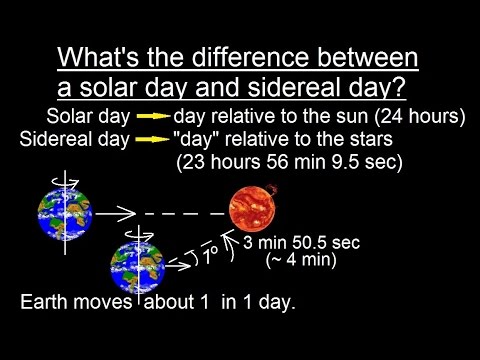
See the difference between Gregorian's solar and Tamil's sidereal solar system for a day... Check the accuracy of Sidereal solar day in the picture below....


Check which one is calculating the accurate 360 degree rotation of the Earth correctly and which one is differing.....

Tamil calendar - Sidereal system - is calculating the precise 360 degree rotation, while the Solar one is calculating more than 360 degree i.e 360.9 degree rotation as ONE DAY !!
       
This is the accuracy of tamil calendar which was founded by the ancient brilliant siddhars, who had powers !!

There are more details in this post about the accuracy of tamil calendar....

Now, coming back to the topic of currently missing days in Gregorian calendar, check the differences between both the calendar...

Tamil Calendar       -> Sidereal year -> One year = 365. 2563 days

Gregorian calendar -> Solar year      -> One year = 365.2425 days

Does this small decimal gap makes lot of difference ??

Yes !! Due to this, there are several days being missed out in this calendar currently and in future as well. Also, a year is getting completed earlier than the actual year completion !!!

Currently Missing days and incomplete year in Gregorian calendar:

Let us take the decimals of of the year calculation and compare...

Gregorian -> (365)0.2425 = 5 hours and 48 minutes = 348 minutes

Tamil        -> (365)0.2563 = 6 hours and 9 minutes = 369 minutes

The total difference between these two calendar is 21 minutes per year. 

Thus, according to Gregorian calendar, every time the new year occurs 21 minutes earlier than the actual year completion. This missing minutes doesn't affect much for few centuries, but as several centuries passes by, it does makes a lot of difference.... How ??

For 1 year, the difference is 21 minutes. So, for 100 year, the difference is 2100 minutes = 35 hours = 1 day and 11 hours. 

That is,  1 day and 11 hours are missed per century in Gregorian calendar. Let us consider from this year as example, from 1-Jan-2021 to 1-Jan-2121, one and a half days will be missed out (the actual century completion will be on mid of 2 - Jan-2121). This type of missing days will be repeated for every century....

From the year 1582 - 1982 AD, there are 400 years and as per this calculation, 5.8 days are missing... i.e 400 years will be completed only on 6th Jan 1982...

So, for 1000 years, 14.58 days will be missed out. 

For example: This Gregorian calendar was implemented on the year 1582. Considering from 1st January 1582 to 1st January 2582, there will be 14.48 days difference, i.e 1000 years will be completed only by mid of 14th January 2582. Hence, per millennium 14.58 days are being missed out.

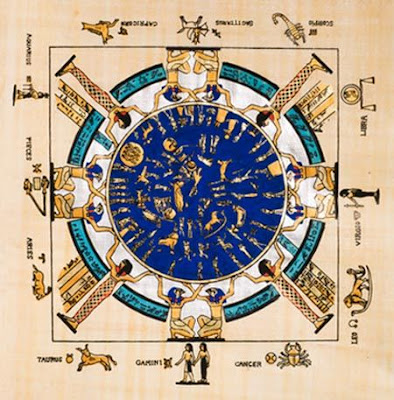
        The tamil calendar - zodiac and sun based calculation is the most accurate one and it was also followed by many ancient civilisations such as Mayans, Egyptians etc...

Zodiacs used by Egyptians
       
         In terms of astronomy, the Sidereal Calendar is a solar calendar that follows the annual motion of the sun relative to the stellar zodiac, rather than to the equinoxes and solstices.

Ancient Measuring system of Tamizhs:

        In ancient tamizhakam, there was a practise of using oldest measuring units in tamil. There are several similarities between measurement system between tamizhakam and Indus valley civilisation. Recent excavations from Keezhadi site revealed existence of oldest measuring system, which is older than the Vedic civilisation.

        Many text books are saying that this zodiac and sun based calculation, called as sidereal solar system was founded by Aryabhata. Enough of suppressing the glory of tamizh people !!! This post will expose the truth!!!

The sidereal solar system was founded by ancient tamil siddhars, who existed before the arrival of Vedic civilisation!!!

        Keezhadi and Indus valley civilisation were ancient tamizh civilisation and they were older than the Vedic civilisation. The tamil measuring system used by them in those regions are the proof that it was founded by ancient tamizh people and not Aryabhata, who belonged to later period...

As per ancient measuring system followed by tamizhians, the lowest measuring time is 66.66 milli seconds, which is the time taken by the human eyes to flap once. There are different terms for the units such as 66.66 milli seconds, 0.125 seconds, 0.25 seconds, 0.40 seconds, 0.50 seconds, 0. 80 seconds and 1 second. 

          So, there are 7 different measuring units from milli seconds to 1 second range. Ancient tamil people did such a precise calculation for  measuring units of time !!!

        Even milli seconds were given importance, was precisely calculated and had formed a calculation system. Here are the measuring systems used by ancient tamizhians...

From 66.66 millisecond - 1 second measurement:
  • 10 kuzhigaḷ (குழிகள்) = 1 miy (மிய்) = 66.6666 millisecond-the time taken by the young human eyes to flap once.
  • 2 kaṇṇimaigaḷ (கண்ணிமைகள்) = 1 kainoḍi (கைநொடி) = 0.125 second
  • 2 kainoḍi (கைநொடி) = 1 māttirai (மாத்திரை) = 0.25 second
  • 6 miygaḷ (மிய்கள்) = 1 நொடி(noḍi) / ciṟṟuḻi (சிற்றுழி) = 0.40 second-the time taken for a bubble (created by blowing air through a bamboo tube into a vessel 1 சாண் (cāṇ) high, full of water) to travel a distance of one சாண் (cāṇ).
  • 2 māttiraigaḷ (மாத்திரைகள்) = 1 kuṟu (குறு) = 0.50 second
  • 2 noḍigaḷ (நொடிகள்) = 1 viṉāḍi (வினாடி) = 0.80 second-the time for the adult human heart to beat once
  • 2​1⁄2 noḍigaḷ (நொடிகள்) = 2 kuṟu (குறு) = 1 uyir (உயிர்) = 1 second

From 2 second to 4 minutes:

  • 5 noḍigaḷ (நொடிகள்) = 2 uyir (உயிர்) = 1 cāṇigam (சாணிகம்) = 1/2 aṇu (அணு) = 2 seconds
  • 10 noḍigaḷ (நொடிகள்) = 1 aṇu (அணு) = 4 seconds
  • 6  aṇukkaḷ (அணுக்கள்) = 12 cāṇigam (சாணிகம்) = 1 tuḷi (துளி) = 1 naligai - vinadi  (நாழிகை வினாடி) = 24 seconds
  • 10 tuḷigaḷ (துளிகள்) = 1 kaṇam (கணம்) = 4 minutes

Minutes, hours, day, week, fortnight, month, season, year, cycle and an epoch calculation

  • 6 kaṇangaḷ (காணன்கள்) = 1 nāḻigai (நாழிகை) = 24 minutes
  • 10 nāḻigaikaḷ (நாழிகைகள்) = 4 cāmam (சாமம்) = 1 ciṟupoḻutu (சிறுபொழுது) = 240 minutes = 4 hours
  • 6 ciṟu-poḻutugaḷ (சிறுபொழுதுகள்) = 1 nāḷ (நாள்) = 1 day = 24 hours

  • 7 nāṭkaḷ (நாட்கள்) = 1 vāram (வாரம்) = 1 week
  • 15 nāṭkaḷ (நாட்கள்) = 1 aḻuvaluvamam (அழுவம்) = 1 fortnight
  • 29​1⁄2 nāṭkaḷ (நாட்கள்) = 1 tingaḷ (திங்கள்) = 1 lunar month
  • 2 tingaḷ (திங்கள்) = 1 perum-poḻutu (பெரும்பொழுது) = 1 season

  • 6 perum-poḻutu  (பெரும்பொழுது) = 1 āṇdu (ஆண்டு) = 1 year
  • 64 āṇdukaḷ (ஆண்டுகள்) = 1 vaṭṭam (வட்டம்) = 1 cycle
  • 4096 āṇdukaḷ (ஆண்டுகள்) = 1 ōḻi (ஊழி ) = 1 epoch

Even today, while calculating auspicious date and time for marriages, we used to calculated naligai.

Decimals are also given important for perfection, want to know how much priority is given to accuracy of maths ??

There are so many units for fractions in tamils, here I have mentioned only some of them... 

Fractions
  • 1 – Onru - ஒன்று
  • 3/4 = 0.75 – mukkāl - முக்கால் 
  • 1/2= 0.5 – arai - அரை 
  • 1/4 = 0.25 – kāl - கால் 
  • 1/5 = 0.2 – nālumā - நாலுமா 
  • 3/16 = 0.1875 – மும்மாகாணி –mummākāṇi this is called as Mukkhani
  • 3/20 = 0.15 – mummaa -மும்மா 
  • 3/320 = 0.009375 – araikkāṇi muntiri- அரைக்காணி முந்திரி  
  • 3/5120 ≈ 5.85938e-04 – kīḻ mūndru vīsam - கீழ் மூன்று வீசம்  
  • 3/6400 = 4.6875e-04 – kīḻ mummā- கீழ் மும்மா  
  • 1/74481555456000 ≈ 1.34261e-14 – sintai - சிந்தை 
  • 1/1489631109120000 ≈ 6.71307e-16 – katirmunai - கதிர்முனை 
  • 1/59585244364800000 ≈ 1.67827e-17 – kuralvaḷaippiḍi - குரல்வளைப்படி
  • 1/3575114661888000000 ≈ 2.79711e-19 - veḷḷam - வெள்ளம் 
  • 1/357511466188800000000 ≈ 2.79711e-21 – nuṇmaṇal - நுண்மணல் 

  • 1/2323824530227200000000 ≈ 4.30325e-22 – tērttugaḷ –தேர்த்துகள் 


In english, do we have any such defined unit / terms in modern fraction???

  Gregorian calendar contains fixed number of days in every month except February and it has both leap days and leap year. Where as Tamizh calendar, there are no leap days and leap year,  the number of days in a given month can vary between years. Sometimes, Tamil months may even have 32 days.

Check the tamil calendar for the last 6 years in the picture below, to understand it better.... 'Sithirai' / 'Chithirai' is the first month in tamil calendar.


        In sidereal solar calendar, time taken by the Sun to pass through each zodiac ranges from 29.4 days to 31.6 days. Month-wise average number of days starting from Chithirai are 30.9, 31.4, 31.6, 31.5, 31.0, 30.5, 29.9, 29.5, 29.4, 29.5, 29.8, 30.3 days.

        The actual number of days in any month could vary as per the exact time when sun enters and leaves the particular zodiac. So, there is no chance of leap days in tamil calendar....

Vidyashankara temple, Sringeri

        To signify the calculation of year and transition of Sun between zodiacs, there is a temple built by ancient tamil people in Sringeri, Karnataka called 'Vidyashankara temple'.

         This ancient temple was built in dravidian style architecture, the pillars were precisely built with angle and geometrical patterns. This temple has six doorways.  The eastern half of the structure is called as mantapa, which is surrounded by twelve pillars (popularly known as rasi stambhas), marked by the twelve signs of the zodiac. They are constructed in such an ingenious way that the rays of the sun fall on each pillar in the chronological order of the twelve months of the tamil calendar. Each column is topped by a Yali with a rolling stone ball in its mouth.


    Every morning when the sun rays enter, they hit at one specific pillar indicating particular solar month of a year.

        The rays of the sun fall on each of pillar in the order of the twelve solar months. On the floor, there is a large circle, marked with converging lines to indicate the direction of the shadows. This is one of the example of tamil people with their expertise in angles and geometry....
    Inside the temple, on the floor, a circle is drawn with lines corresponding to the shadows cast by each pillar. There are five shrines here. The main shrine has a Shiva Linga and the Garbhagraha is topped by a majestic square vimana.


       Ancient tamil people's expertise in angles, geometry and their vast knowledge about astronomy is being reflected in this temple design. This temple is a proof for accuracy of sidereal solar system, it's an example for astronomical and mathematical knowledge. It's an architectural wonder with a perfection in design and astronomical values.... 

     Tamil calendar is one of the oldest calendar in the world. It has the most accurate and has unique name for every calendar year for 60 year cycle. Why only 60 years in a cycle ?? 

60 year cycle of tamizh calendar

        The sexagenary cycle also known as the Stems-and-Branches or ganzhi, is a cycle of sixty terms, each corresponding to one year, thus a total of sixty years for one cycle. This system was widely used in ancient tamizhakam and China. Below are the sixty names for 60 year cycle...

60 year cycle in tamizh

        The whole tamizh astrology was built based on the tamizh calendar. Ancient tamizh sages were experts in astrology and calculated the year cycle precisely several thousand years before. They had brilliantly classified the visible sky into 12 rashis (constellations).  For example, in  Nava grahas, Saturn and Jupiter had the longest cycle around the sun.

Jupiter takes 12 years to complete 1 rotation around the sun 

    Thats why in Astrology we have Jupiter transition (குருப்பெயர்ச்சி) from one zodiac to another zodiac every year, i.e the jupiter resides in each zodiac for 1 year and thus when it reaches the last zodiac, 12 years will be completed which denotes 1 complete rotation of Jupiter around the sun.

 Saturn takes 30 years to complete 1 rotation around the sun 

        Saturn Transition (சனிப்பெயர்ச்சி) occurs every 2.5 years (12*2.5 = 30 years). That is, saturn resides at each zodiac for 2.5 years and to complete 1 full rotation around sun, it takes 30 years. 

      All the 9 planets align themselves in the same position for every 60 years. It is also related to 5 revolutions of Jupiter around the Sun and 60-year orbit of Nakshatras (stars). Ancient tamizh people had already calculated this and that is the reason for having 60 year cycle in tamizh calendar.

        This 60 year cycle system is being practised from the ancient times.  The similar system of calendar and 60 year cycle is also used in other countries such as China, Japan, Korea, Taiwan and Vietnam. This 60 year cycle has contemporary role in Chinese astrology and fortune telling...

        This is the significance of tamizh calendar, it is the accurate and oldest calendar in the World. It has abundant knowledge about the astronomy which was founded by our ancient genius siddhars. Siddhars were the fountainhead of knowledge, astronomy, medicine, arts, science and technology... 

        Those who are following sidereal solar system should be proud about their ancestor's expertise and knowledge. It is not only a tradition, it has more of scientific facts and precise astronomical calculations in it. Its our duty to continue and to transfer this precious knowledge to the next generation of kids with pride.....


- Aarthi Thiyagarajan

Tuesday, 13 April 2021

Why Tamil new year is being celebrated in April ?

Why Tamil new year is being celebrated in April ?


Advance Happy Tamil new year!! Chithirai Thirunaal nal vazhthukal!!

        This post will explain about the scientific reasons behind the tamizh new year date that was chosen by our ancient ancestors, significance of tamizh calendar with zodiacs and this post will also throw some lights on why Pongal was not considered as new year, with appropriate tamizh literary references...


Chithiral thirunaal

        
        Tamil New Year is  originally called as 'Chithirai Thirunaal ', meaning first day of Chithirai month in tamizh calendar. On this day of tamizh new year, many people from different states and countries also celebrate it as their New year. For example, Sinhala people, people from Kerala, West bengal, Assam, Punjab, Malaysia, Burma, Thailand and much more...

Every year, tamizh new year falls on Chithrai month - 1st day i.e mid of April month (13th / 14th / 15th / 16th date). With respect to the modern calendar / Gregorian calendar, tamizh new year dates will vary....

How did ancient tamizh siddhars calculate new year

         Siddhars of astronomical brilliance had precisely calculated the position of the Earth, Sun, Moon, stars and planets. They had founded a system to calculate a year for Earth, Jupiter and other planets. Tamizh calendar is the accurate and oldest calendar in the world. 

What is Tamizh calendar ?

        Ancient tamizh calendar is calculated based on the postion of the Earth (Ulagam), Sun (Suriyan) and the corresponding position of Zodiacs (Rashis). 
Why Zodiacs / Star constellations are important in tamizh calendar
    As I have mentioned earlier, the position of the Earth is calculated with respect the Zodiacs / star constellation and the Sun. Zodiacs are both complex and plays major role in astronomy, astrology and astrophysics. Let us see about the importance of zodiacs in tamil culture...
        To calculate auspicious dates for occasions like marriages, house warming ceremony etc stars play a major role. In tamil culture, an auspicious date will be fixed with respect to the tamizh month, stars and lunar days. 
For example: If a child is born on April 14th 2021 i.e Chithirai month - 1st day, then will check the birth star of the baby during the time of birth i.e Barani star occurs on that day, so baby's birth star will be barani. We will note down the birth time and birth star of the child. 
        In the next year, we will celebrate the child's birthday in Chithirai month when the birth star Barani occurs, it may not be 1st day of the month like previous year, it will occur at any day. When the barani star occurs in chithirai month, that is considered as the baby's birth day.
    So the date is not fixed, only the tamizh month and birth star is fixed to calculate birthday of a person. There are 27 stars / nakshathras in the astrology

    We do Aysuh homam (ritual) on a person's birth star, the 60th / 70th / 80th birthdays of a person will be celebrated with rituals on the birth star of a person on their birth tamizh month. Even, in temples while performing archana (personal pooja), the priests will ask for the birth star of a person and not birth dates. 
        Also, in ancient times when there was no printed calendars, people used to calculate the days, time and seasons for agricultural activities based on zodiacs and sun position. Early Pandya kings were experts in seafaring and explored many countries in the World, what navigation system did they use to sail their ships ?? 
    
        They used stars as their navigation partner. With respect to the position of the stars in the sky, they used to identify the direction and season and sail their ships accordingly. Sailors and Navy people will have more knowledge about stars, to navigate in the oceans. Thus stars are very important in our lifes. Not only for humans, stars play major role in astronomy as well!!
How the position of Earth is calculated with the Zodiacs ??
    Earth goes around the Sun in an elliptical orbit with an axial tilt of 23.5 degrees. The Earth travels in an elliptical path around the Sun through 360 degrees (Paakai in Tamil) and the time taken to complete one revolution around the Sun (Suriyan in Tamil) is called as Year (Aandu in Tamil). 
    When the Earth completes its orbit, it represents the completion of a year. Now, Earth always doesn't rotate in a same / average velocity, the velocity of the Earth differs with respect its distance from the Sun, so the number of days in a tamizh month differs when the earth transits from one place in the orbit to another. 
    Now, to calculate the complete rotation of the Earth, let us see about the elliptical path of the Earth around Sun with zodiacs in the background. Check the picture below for reference...

        In the above picture, Sun is at the center and Earth is behind the Sun. The small green colour elliptical path is the path of Earth around Sun with zodiacs at the background. 
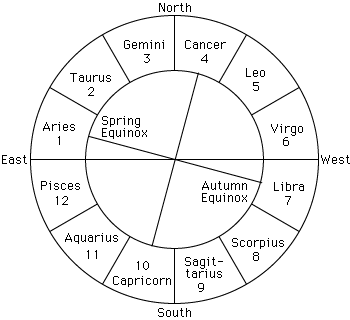
        The circumference of the elliptical path traveled by the Earth (Ulagam in Tamil) with the Sun at the center - are divided into twelve equal arcs / angles / degrees for each zodiac. In other words, this path is taken as 360 degrees and it is divided in to 12 equal angles for 12 zodiacs, i.e each zodiac will have an angle of 30 degree. 
    The angular segments traced by each arc measuring 30 degrees is called as House (Veedu in Tamil or Rasi in Sanskrit). 
Like in the picture below, its in 2D..

Thus, the earth passes through twelve zodiacs / houses in a year. Actually, it is the Earth which enters into each Zodiac while revolving around the Sun. But, when we see it from Earth, it appears to be Sun is moving (relative motion) through zodiacs that are nearer to it. So, when the earth is moving in it's orbit, we say that the 'Sun travels through it's nearest zodiacs (rasis)'. 
In tamizh, these twelve zodiacs / houses are named as, 
1. Meda Veedu            - Mesham         - Aries
2. Idapa Veedu            - Rishibham     - Taurus
3. Mithuna Veedu       - Mithunam      - Gemini 
4. Kataka Veedu         - Katakam         - Cancer
5. Singa Veedu           - Simmam         - Leo 
6. Kanni Veedu          - Kanya             - Virgo
7. Thula Veedu          - Thulam            - Libra
8. Virutchika Veedu   - Vrichikam       - Scorpio
9. ThanuVeedu           - Dhanur           - Sagittarius
10. Makara Veedu      - Makaram        - Capricorn
11. Kumba Veedu      - Kumbham       - Aquarius 
12. Meena Veedu       - Meenam          - Pisces
Why Aries is considered as first Zodiac ? Why not other Zodiacs???
        Because, when we draw a line from Earth to Sun such that Earth's equator passes through the sun in a same line at 0 degrees, then that is considered as base to calculate the position of zodiacs. 
   The first 0 degree is called as First point of Aries, this term is mostly used by sailors and Navy people. This means, when the Earth orbits around the Sun and at a particular position Earth's equator and Sun's postion aligns in the same line, i.e the the angle between Sun and the Earth's plane of equator is 0 degrees. 
    Check the picture below for reference, where 'Line to Sun' and Equator aligns in a straight line, that point is considered as 0 degrees...
        This 0 degree is considered as starting point of the year and from here Earth's orbit is divided into12 equal parts at an angle of 30 degree for each zodiac. From this position of Earth, when we look at the zodiacs nearer to the Sun, Aries was identified as the nearest zodiac to the sun and is positioned between 0 degree and first 30 degree angle.
    Hence, Aries is considered as first zodiac and also called as First point of Aries. Like wise all other zodiacs occupies 30 degree angle in the Earth's orbit. 
Like, Aries was positioned in the sky from 0 degree to 30 degree, followed by taurus which occupies next 30 degree i.e 30 - 60 degree and it continues till 360 degree of Earth's orbit where Pisces, the last zodiac occurs at the last 30 degree position. 
How the movement of Earth with respect to Sun and Zodiac are calculated?  
  In the below picture, check the position of Sun, Earth and Zodiac (Scorpio).  This alignment represents that Sun is in Scorpio, as Scorpio is positioned at the background of Sun (When we look from the position of earth). 
        
        This means that while the Earth is rotating in it's orbit, Sun is moving from Scorpio to Sagittarius zodiac (Mid November to Mid December). Thus, the earth's orbit is divided into equal angle of 30 degree and when the Sun transits from Pisces to Aries, i.e from last zodiac to first Zodiac, it represents the completion of one full revolution of earth around the sun i.e completion of one year. 
        The period of travel of the Sun in each zodiac / house is called as 'Thingal' - a Month (also known as Maadham in Tamil and Maasa in Sanskrit). Hence, Sun travels through the twelve zodiacs or Rasis to complete one cycle, that is,  it takes twelve Thingals to complete one cycle, which is called as an 'Aandu' - a Year (also known as Varudam in Tamil and Varusha in Sanskrit). 
    The time when the Sun enters into 'Meda rasi' or 'Mesha rasi' was traditionally called as New Year by the tamizh people.
    Check out the picture below for the reference, outer circle refers to Earth orbit. So when the earth orbiting around the sun, from the position of Earth, when the sun reaches Meda / Mesha (Aries) zodiac i.e transition of Sun from Pisces to Aries marks completion of a year. This event is also called as 'Mesha Sankranthi'.
    Thus, as per tamizh calendar, we will always celebrate our new year on the next day, after the transition of sun from pisces zodiac to aries zodiac, which marks start of spring season 'Illa venil kalam', also represents the beginning season of farming.
How did the ancient people precisely divide zodiacs at 30 degrees each?
        Ancient tamizh people were experts in angles and geometry, with that knowledge they had created many architectural brilliance in India, such as Brihadeeswara temple -  where the shadow of the temple doesn't fall on the ground at noon.
Chaya someshwara temple - it was brilliantly designed with angles and geometry that though there are many intricate pillars in the temple, it's designed to cast an unified shadow which always falls on the Shiva lingam inside the sanctum, irrespective of the position of the Sun.

    That's the mastery of our ancient ancestors, who were the power house of science, geometry, astronomy, architectural and medicinal knowledge...
This method of calculation is called as sidereal solar calendar by westerners.  These zodiacs / rasi and Sun based calculation was also followed by many ancient civilization people such as Egypt, Mesopotamia, Maya, Inca etc..

Tamizh new year , Vishu (Malayalam New Year), Vaisaki (Sikh New Year), Burmese New Year (Thingyan), Cambodia New Year (Choul Chnam Thmey), Lao New Year (Songkran), Sinhalese New Year (Aluth Avurudda), Thailand New Year (Songkran), Assamese New Year (Bohag Bihu) are all celebrated on the same day.

Note: Brahui people of Pakistan also celebrate their new year on the same day of tamizhs. Brahui people are Brahui tribes who speak dravidian language and lives in Pakistan, Afghanistan and in parts of Iran. I have already mentioned in my previous posts that these countries from Pakistan to Turkey were once ruled by tamizh kings and there was an established tamizh society over there. I have also published many posts which uncovered references to the tamil civilization in persian countries.

        Now, the new year of Brahui people is adding more strength to my point that Pre Persian and Pre Indus Valley civilization belongs to tamizhs, to know more reach out to,


Why Pongal is not considered as New year ?

    Pongal / Makar sankranthi is the day when the Sun transits into the Capricorn zodiac i.e Makara rasi. Pongal is the major harvest festival in India and in many other countries. 


During Pongal, Earth's angle with respect to Capricorn is at 300 degrees. Also, as pongal is the harvest festival, it represents the near end of the agricultural activities. After the harvest, farmers will take time to trade the crops from the field, storage plans and seasoning the land etc. This is kind of ending stage in the farming cycle, so how does it qualify to represent a beginning of a new year ???

        In Cambodia and Thailand, people celebrate their new year on mid April, stating that in the new year, new seeds will be sown thus the new year is marked as symbolic representation of beginning of a new crop.

    Also in ancient tamizhakam and Kerala, people use to harvest more millets, veggies, fruits than rice that they used to sow seeds in April - May before monsoon time. So, by both astronomically and agriculturally pongal is not considered as new year by ancient tamizhs. 
( References for tamil literature for Aries being considered as first month is mentioned in the section below)

Thus, Pongal is not considered as New year and some people with vested interest are trying to portray Pongal as new year stating that April / Chithirai new year is a vedic culture. 

        This is absurd !! I want the tamizh readers not to disown our ancient traditions founded by our genius siddhars and not to underestimate the knowledge of our ancestors. Changing the new year date is a trap to erase our identity, long lived culture, history and our knowledge !!!

        Westerners are keen on our knowledge of astrology, astronomy,  traditional home remedies, herbal medicines, yoga, significance of temples, mantra sounds, ancient architectures etc.  Already westerners are saying that the concept of sidereal solar calendar (this is exactly same as tamil calendar) was first invented  by them and are manipulating the history. Now, it's time for us to know the truth about our traditions and the science behind it !!  

Not to fall prey for the divide and rule politics of people with personal agenda!!!  

       All these knowledge about astrology and astronomy was taken by westerners from tamizh siddhars and had patented it in their names. The ancient most tamizh siddhar was Agathiyar / Agastya who had lived through all the three yugas, from Satya yuga to Dwapara yuga had calculated this zodiac and sun based system, he had also calculated the position of other planets and its cycle.

         The knowledge about astronomy, astrology are travelling across generations of tamizh people, so calculating sun's position with respect to the zodiac is not new to the tamizh people. 

       My husband's grandfather is a great astrologist, long time back he had predicted his date and time of his death, which turned out to be accurate !!  In Hinduism, before marriage, we do horoscope matching for bride and groom. My husband's grand father had predicted horoscope matching for many people and all his calculations were precise !! My grandfather was an astrophysicist, he had learnt it with much passion.

            But, recently there are some people without a complete knowledge about the astrology are trying to cheat people for their personal financial gain. The knowledge and science of astrology and astronomy are getting diluted nowadays, its time to revive the knowledge before it gets completely wiped out..

For those who are asking questions like, Why Chithirai is the first month ? Why not to consider Thai as the first month ? Wasn't thai pongal followed by our ancestors as new year ?? Here you go for the references about new year in tamizh literature....

References in tamizh literatures

        There are some literary references in tamizh which mentions that tamizh people had considered Chithirai as the first month, with respect to the transition of sun into mesha rasi. 

 Lines 160–161 of Neḍunelvāḍai, which is part of the Sangam literature, some of the earliest Tamil literature goes like this…

“திண்ணிலை மருப்பின் ஆடு தலையாக 

விண்ணூர்பு திரிதரும் வீங்கு செலல் மண்டிலம்” - 

Which basically means, “the sun that passes through various signs of the zodiac, starting with the sign indicated by a goat that has strong horns.” 

    The ‘goat that has strong horns’  refers to  Mesha Raasi / Aries.  

There are also other references in Purananooru, Tholkappiyam, Silappadhikaram and Manimekalai which are mentioning that Chithrai is the first month of a year. 

        Thus ancient tamizh people had considered Chithirai as first month and celebrated new year in chithirai month not in 'Thai' or makara month. So to the people with vested interest, do not to try to manipulate tamizh people by saying that 'Thai Pongal' is the new year and Thai is the tamil first month !!! It is absolutely a lie !!!


Some more references from tamizh literatures...

“வலிமையான கொம்பை உடைய ஆடு (மேழம்/மேடம்) முதலான உடுத்தொகுதிகளின் ஊடாகச் சூரியன் இயங்கும் வான் மண்டலம்” என்பதாகும்.

        Tamil Literature Nedunalvaadai says that Aries is the first zodiac Month from which the Sun transits from pisces and enters into Aries. Hence, the tamizh calendar is based on sidereal solar calendar and Chithirai is the first month. Here are some of the festivals which are being celebrated with much pomp and vigour during Chithirai month.

Chithirai Thiruvizha - a 30 days festival in Chithirai, which is the longest festival in the World, where first 15 days are attributed to Goddess Meenakshi, daughter of Pandya king who marries Lord Shiva. The next 15 days are attributed to Lord Vishnu as 'Alagar'.

Chithra Pournami - This pournami (Full moon) will always falls on 'Chithra' star. This combination of Chithra star on full moon day in chithirai month was never changed over the years. This chithra pournami is celebrated more grandeur than full moons of other months, such was the importance given to this month. Also, usually this full moon on Chithirai will be more bigger and brighter than the full moons of other months...

        In this post, I have only explained about the calculation of tamizh new year date, but there are much more aspects in this tamizh calendar.  The significance of tamizh calendar, the accuracy of tamizh calendar with respect to Gregorian and Julian calendars and why Ugadi (telugu new year) and tamizh new year are falling in different dates, all these will be explained in detail in my future posts..


- Aarthi Thiyagarajan